-
الصناعات
-
التصنيع العام
-
معالجة النفايات
-
مسبقة الصنع
-
قوة
-
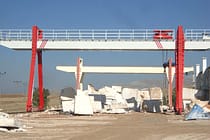
حجر
-
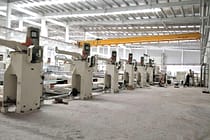
صناعة الورق
-
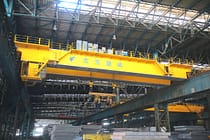
انتاج المعادن
-
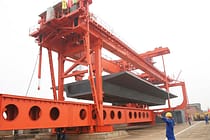
بناء الجسر
-
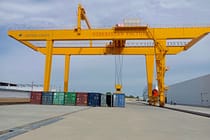
رافعات الموانئ: لمناولة الحاويات والمواد السائبة
-

الرافعات العلوية لصناعة البترول والغاز: تعزيز الكفاءة التشغيلية
-

الرافعات البحرية لتحميل البضائع بكفاءة على السفن
-

الرافعات العلوية لصناعة السيارات: حلول أتمتة فعّالة
-
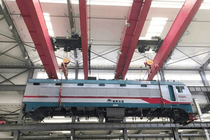
حلول الرافعات العلوية للسكك الحديدية: وضع المسارات، وصيانة المركبات المتحركة، ومناولة الحاويات
-
الرافعات العلوية للأغذية والمشروبات: حلول موثوقة للتعامل الفعال
-
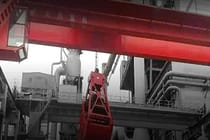
رافعات علوية لتصنيع الأسمنت والزجاج والطوب والخرسانة الجاهزة بكفاءة
-
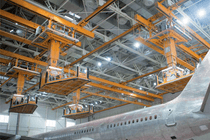
الرافعات العلوية لصناعة الطيران: صيانة وتجميع الطائرات
-
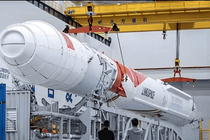
الرافعات العلوية في مجال الطيران والفضاء: رفع دقيق لإطلاق الصواريخ ونقلها
-
-
منتجات
-
الرافعات العلوية
-
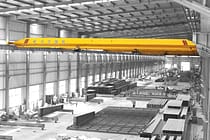
الرافعات العلوية ذات العارضة الواحدة
-
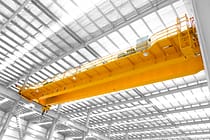
الرافعات العلوية ذات العارضة المزدوجة
-
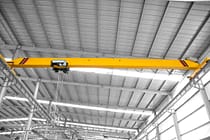
رافعات علوية أحادية العارضة من النوع الأوروبي
-
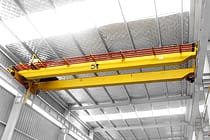
رافعات علوية مزدوجة العارضة من النوع الأوروبي
-
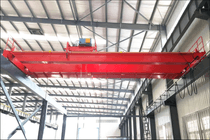
الرافعات العلوية المقاومة للانفجار
-
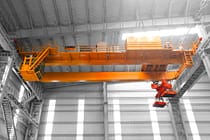
الرافعات العلوية المغناطيسية والإمساك
-
الرافعات أحادية السكة
-

الرافعات العلوية مسبك
-
رافعات علوية معزولة
-
رافعات علوية ذات ارتفاع رأس منخفض
-
الاستيلاء على الرافعات العلوية
-
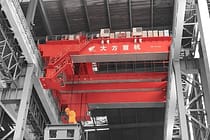
رافعات علوية مغرفة
-
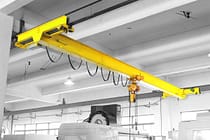
رافعات علوية معلقة
-
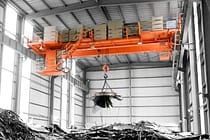
الرافعات الكهرومغناطيسية العلوية
-
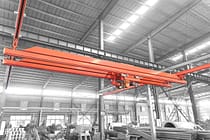
رافعات محطات العمل: تصميم خفيف الوزن، سهولة التركيب، وتشغيل سلس
-
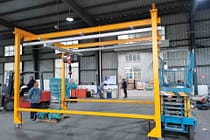
رافعات جسرية لمحطات العمل المستقلة
-
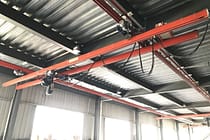
رافعة جسرية مثبتة على السقف
-
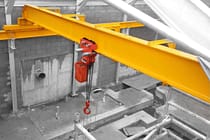
الرافعات العلوية اليدوية
-
-
رافعات
-
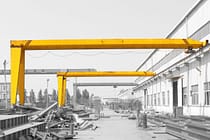
رافعات نصف قنطرية
-
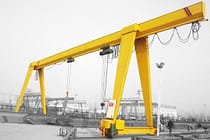
الرافعات الجسرية ذات العارضة الواحدة
-
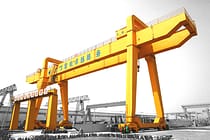
الرافعات الجسرية ذات العارضة المزدوجة
-
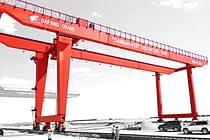
الرافعات الجسرية للحاويات
-
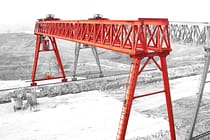
رافعات جسرية تروس
-
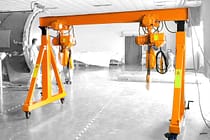
الرافعات الجسرية القابلة للتعديل
-
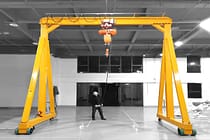
الرافعات الجسرية المحمولة
-
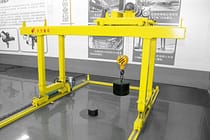
الرافعات الجسرية الأوروبية
-
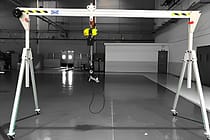
الرافعات الجسرية المصنوعة من الألومنيوم
-
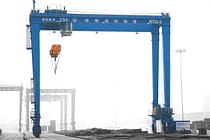
رافعات حاويات ذات إطارات مطاطية
-
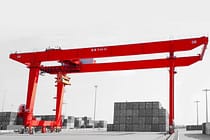
رافعات حاويات جسرية مثبتة على سكة حديدية
-
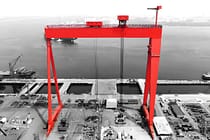
رافعة جسرية لحوض بناء السفن
-
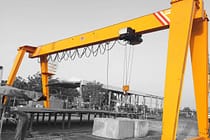
رافعات جسرية أوروبية أحادية العارضة
-
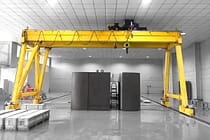
رافعات جسرية أوروبية مزدوجة العوارض
-
- الرافعات الجيب
- رافعات خاصة
- روافع كهربائية
- عربات النقل
-
الرافعات العلوية
-
قطع غيار رافعة
-
دلاء الاستيلاء
-
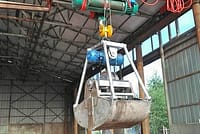
دلو كهربائي من الفولاذ المقاوم للصدأ
-
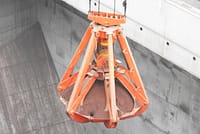
قابض ميكانيكي بأربعة حبال لقشر البرتقال
-
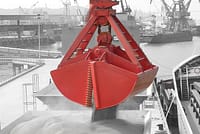
دلو ميكانيكي مزود بأربعة حبال صدفية
-
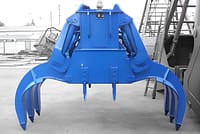
مقابض كهروهيدروليكية مستطيلة الشكل
-
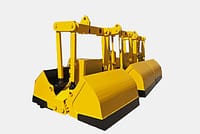
مقابض صدفية هيدروليكية كهربائية
-
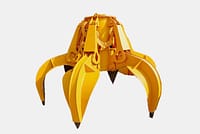
قابضات قشر البرتقال الكهربائية الهيدروليكية، قابضات الصبار الهيدروليكية
-
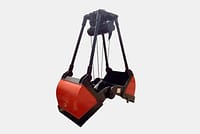
محرك كهربائي
-
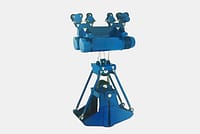
دلو كهربائي أحادي السكة مع رافعة أحادية السكة
-
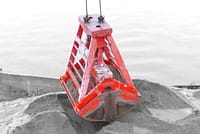
جهاز التحكم عن بعد بمقابض صدفية
-
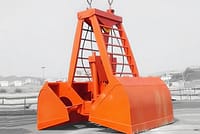
قابضات ميكانيكية ذات حبلين
-
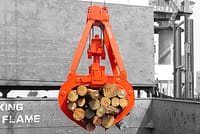
مسكات الأخشاب
-
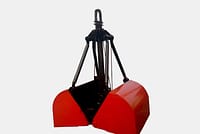
دلو حمل بحبل واحد
-
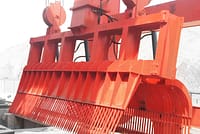
آلات تنظيف رفوف القمامة
-
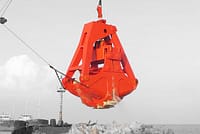
التجريف الاستيلاء
-
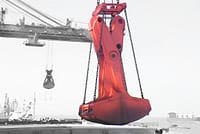
تقليم الاستيلاء
-
- ناشرة الرافعة
-
قطع غيار الرافعات
-
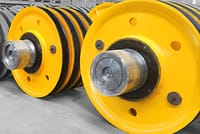
بكرات الرافعة
-
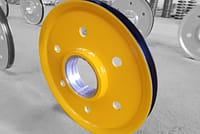
حزم حبل الأسلاك
-
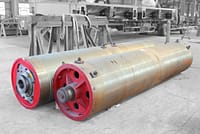
طبل حبل الرافعة
-
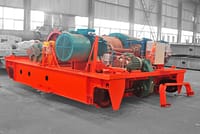
عربة كرين
-
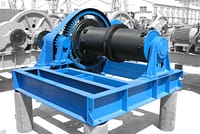
ونش كهربائي
-
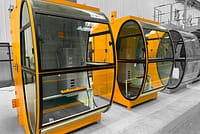
كابينة مشغل الرافعة
-
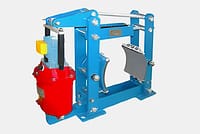
فرامل الرافعات العلوية
-
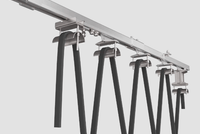
كابلات الرافعات العلوية
-
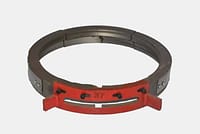
أدلة حبل الرافعة العلوية
-
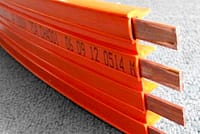
موصلات الرافعات العلوية وخطوط إمداد الطاقة
-
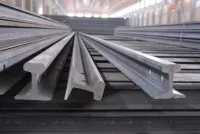
قضبان الرافعة العلوية
-
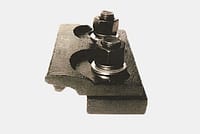
مشابك سكك الرافعة العلوية
-
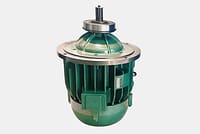
محركات الرافعات العلوية
-
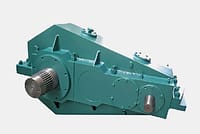
مخفضات الرافعات العلوية
-
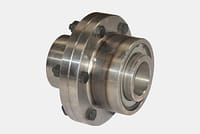
وصلات للرافعات العلوية
-
- عجلات الرافعة
-
دلاء الاستيلاء
- شركة
- اتصال





-
الصناعات
-
التصنيع العام
-
معالجة النفايات
-
مسبقة الصنع
-
قوة
-
حجر
-
صناعة الورق
-
انتاج المعادن
-
بناء الجسر
-
رافعات الموانئ: لمناولة الحاويات والمواد السائبة
-
الرافعات العلوية لصناعة البترول والغاز: تعزيز الكفاءة التشغيلية
-
الرافعات البحرية لتحميل البضائع بكفاءة على السفن
-
الرافعات العلوية لصناعة السيارات: حلول أتمتة فعّالة
-
حلول الرافعات العلوية للسكك الحديدية: وضع المسارات، وصيانة المركبات المتحركة، ومناولة الحاويات
-
الرافعات العلوية للأغذية والمشروبات: حلول موثوقة للتعامل الفعال
-
رافعات علوية لتصنيع الأسمنت والزجاج والطوب والخرسانة الجاهزة بكفاءة
-
الرافعات العلوية لصناعة الطيران: صيانة وتجميع الطائرات
-
الرافعات العلوية في مجال الطيران والفضاء: رفع دقيق لإطلاق الصواريخ ونقلها
-
-
منتجات
-
الرافعات العلوية
-
الرافعات العلوية ذات العارضة الواحدة
-
الرافعات العلوية ذات العارضة المزدوجة
-
رافعات علوية أحادية العارضة من النوع الأوروبي
-
رافعات علوية مزدوجة العارضة من النوع الأوروبي
-
الرافعات العلوية المقاومة للانفجار
-
الرافعات العلوية المغناطيسية والإمساك
-
الرافعات أحادية السكة
-
الرافعات العلوية مسبك
-
رافعات علوية معزولة
-
رافعات علوية ذات ارتفاع رأس منخفض
-
الاستيلاء على الرافعات العلوية
-
رافعات علوية مغرفة
-
رافعات علوية معلقة
-
الرافعات الكهرومغناطيسية العلوية
-
رافعات محطات العمل: تصميم خفيف الوزن، سهولة التركيب، وتشغيل سلس
-
رافعات جسرية لمحطات العمل المستقلة
-
رافعة جسرية مثبتة على السقف
-
الرافعات العلوية اليدوية
-
-
رافعات
-
رافعات نصف قنطرية
-
الرافعات الجسرية ذات العارضة الواحدة
-
الرافعات الجسرية ذات العارضة المزدوجة
-
الرافعات الجسرية للحاويات
-
رافعات جسرية تروس
-
الرافعات الجسرية القابلة للتعديل
-
الرافعات الجسرية المحمولة
-
الرافعات الجسرية الأوروبية
-
الرافعات الجسرية المصنوعة من الألومنيوم
-
رافعات حاويات ذات إطارات مطاطية
-
رافعات حاويات جسرية مثبتة على سكة حديدية
-
رافعة جسرية لحوض بناء السفن
-
رافعات جسرية أوروبية أحادية العارضة
-
رافعات جسرية أوروبية مزدوجة العوارض
-
- الرافعات الجيب
- رافعات خاصة
- روافع كهربائية
- عربات النقل
-
الرافعات العلوية
-
قطع غيار رافعة
-
دلاء الاستيلاء
-
دلو كهربائي من الفولاذ المقاوم للصدأ
-
قابض ميكانيكي بأربعة حبال لقشر البرتقال
-
دلو ميكانيكي مزود بأربعة حبال صدفية
-
مقابض كهروهيدروليكية مستطيلة الشكل
-
مقابض صدفية هيدروليكية كهربائية
-
قابضات قشر البرتقال الكهربائية الهيدروليكية، قابضات الصبار الهيدروليكية
-
محرك كهربائي
-
دلو كهربائي أحادي السكة مع رافعة أحادية السكة
-
جهاز التحكم عن بعد بمقابض صدفية
-
قابضات ميكانيكية ذات حبلين
-
مسكات الأخشاب
-
دلو حمل بحبل واحد
-
آلات تنظيف رفوف القمامة
-
التجريف الاستيلاء
-
تقليم الاستيلاء
-
- ناشرة الرافعة
-
قطع غيار الرافعات
-
بكرات الرافعة
-
حزم حبل الأسلاك
-
طبل حبل الرافعة
-
عربة كرين
-
ونش كهربائي
-
كابينة مشغل الرافعة
-
فرامل الرافعات العلوية
-
كابلات الرافعات العلوية
-
أدلة حبل الرافعة العلوية
-
موصلات الرافعات العلوية وخطوط إمداد الطاقة
-
قضبان الرافعة العلوية
-
مشابك سكك الرافعة العلوية
-
محركات الرافعات العلوية
-
مخفضات الرافعات العلوية
-
وصلات للرافعات العلوية
-
- عجلات الرافعة
-
دلاء الاستيلاء
- شركة
- اتصال



Overhead Crane Wheel Types and Inspection
جدول المحتويات
Overhead crane wheels support the crane and its load while enabling travel along the rails. Their tread profiles, flange designs, and mounting arrangements affect travel stability and wear. This guide covers common overhead crane wheel types, wheel assemblies, bearing supports, horizontal guide rollers, and key inspection points.
Common Overhead Crane Wheel Types
Classification by application
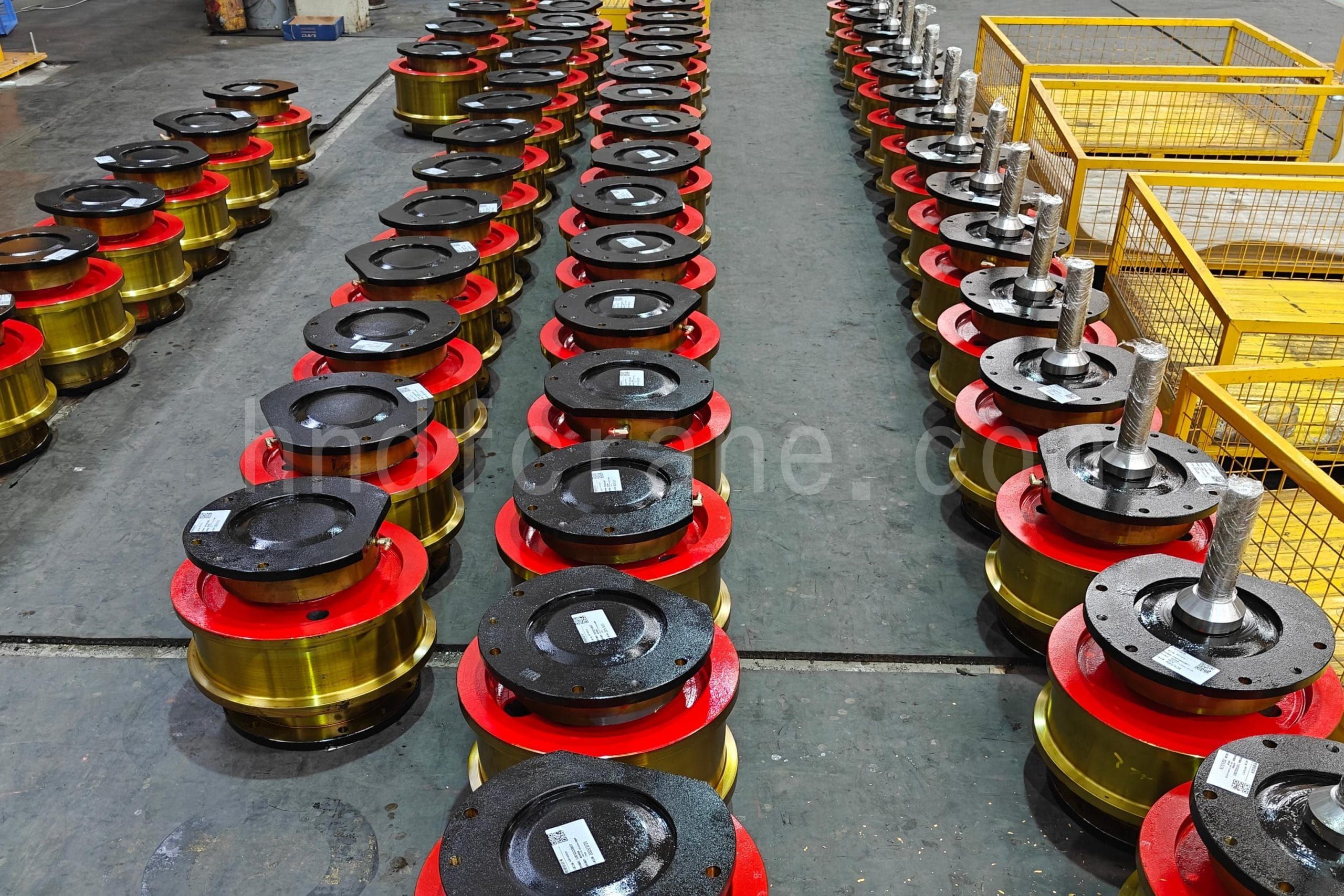
- Rail-running wheels: Usually used on the bridge and trolley travelling mechanisms of overhead and gantry cranes. They have the widest range of applications.
- Suspended crane wheels: Run on the lower flange of an I-beam or box girder in single-girder cranes.
Classification by tread profile
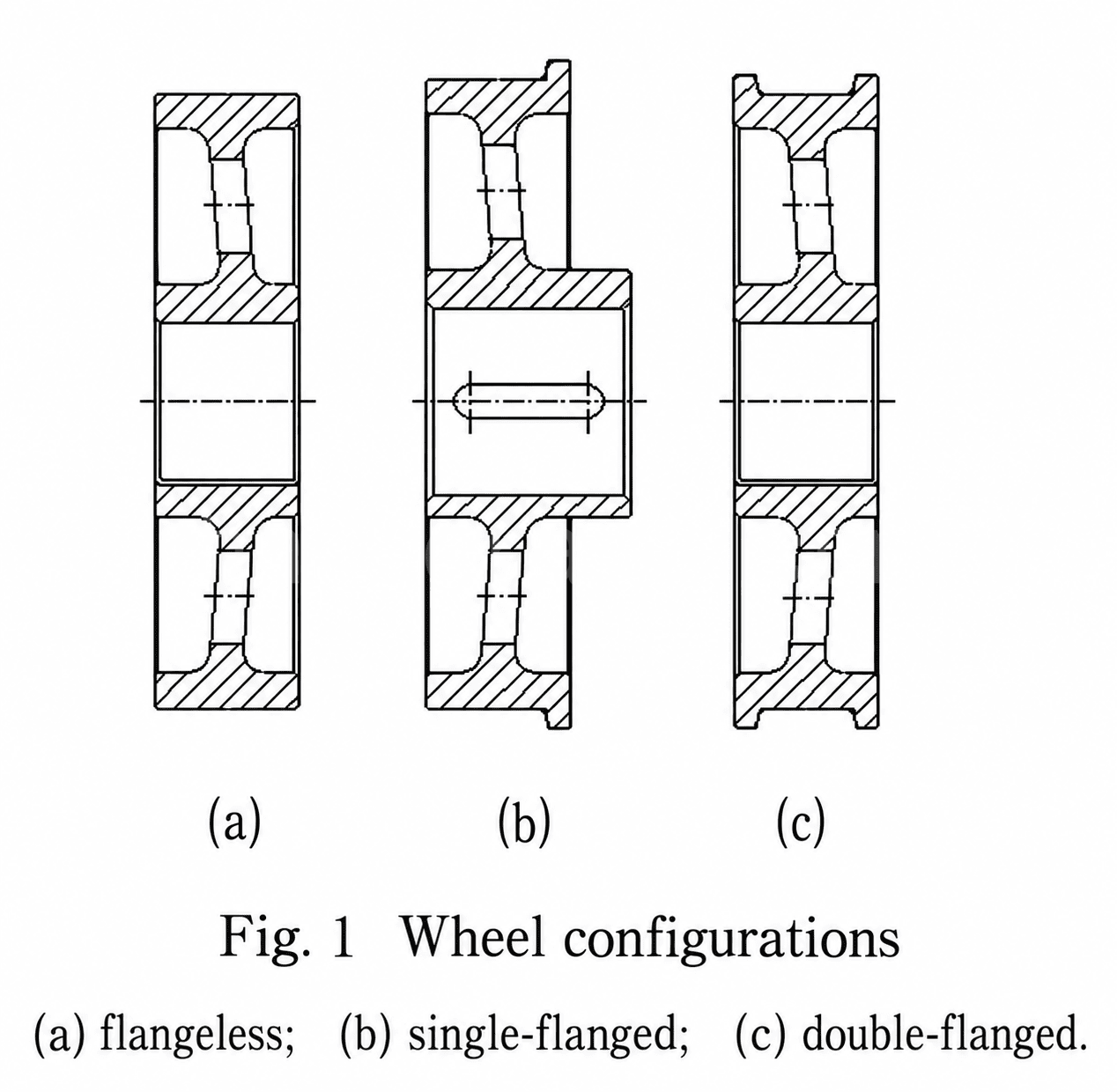
- Cylindrical-tread wheels: The most common type.
- Conical-tread wheels: A common taper is 1:10. Concentrated-drive bridge-crane travelling mechanisms sometimes use conical-tread wheels to improve travel performance under skewing conditions. Hoist trolleys running on the lower flange of an I-beam may also use conical wheels.
Classification by flange arrangement
- Double-flange wheels: Commonly used for the bridge travelling wheels of overhead and gantry cranes.
- Single-flange wheels: Commonly used for overhead-crane trolley wheels.
- Flangeless wheels: These wheels have no flange to provide lateral restraint, so derailment is possible and their application is limited. Flangeless wheels may be used only when horizontal guide rollers are installed on both sides of the wheels.
Wheel flanges are normally provided to prevent derailment. The flange height is approximately 15–25 mm and the flange has a 1:5 slope. The exact dimensions must be determined from the wheel drawing, crane type, and applicable standard. Bridge-crane travelling mechanisms commonly use double-flange wheels. When the trolley gauge is small, an appropriate flange arrangement may also be used to reduce the amount of wheel machining.
Wheel-Support Arrangements
Crane wheel-support arrangements can generally be divided into two types:
- Fixed-axle arrangements;
- Rotating-axle arrangements.
The specific arrangement should be selected according to the travelling mechanism, wheel-set layout, and maintenance requirements of the crane.
Wheel-Set Components and Types
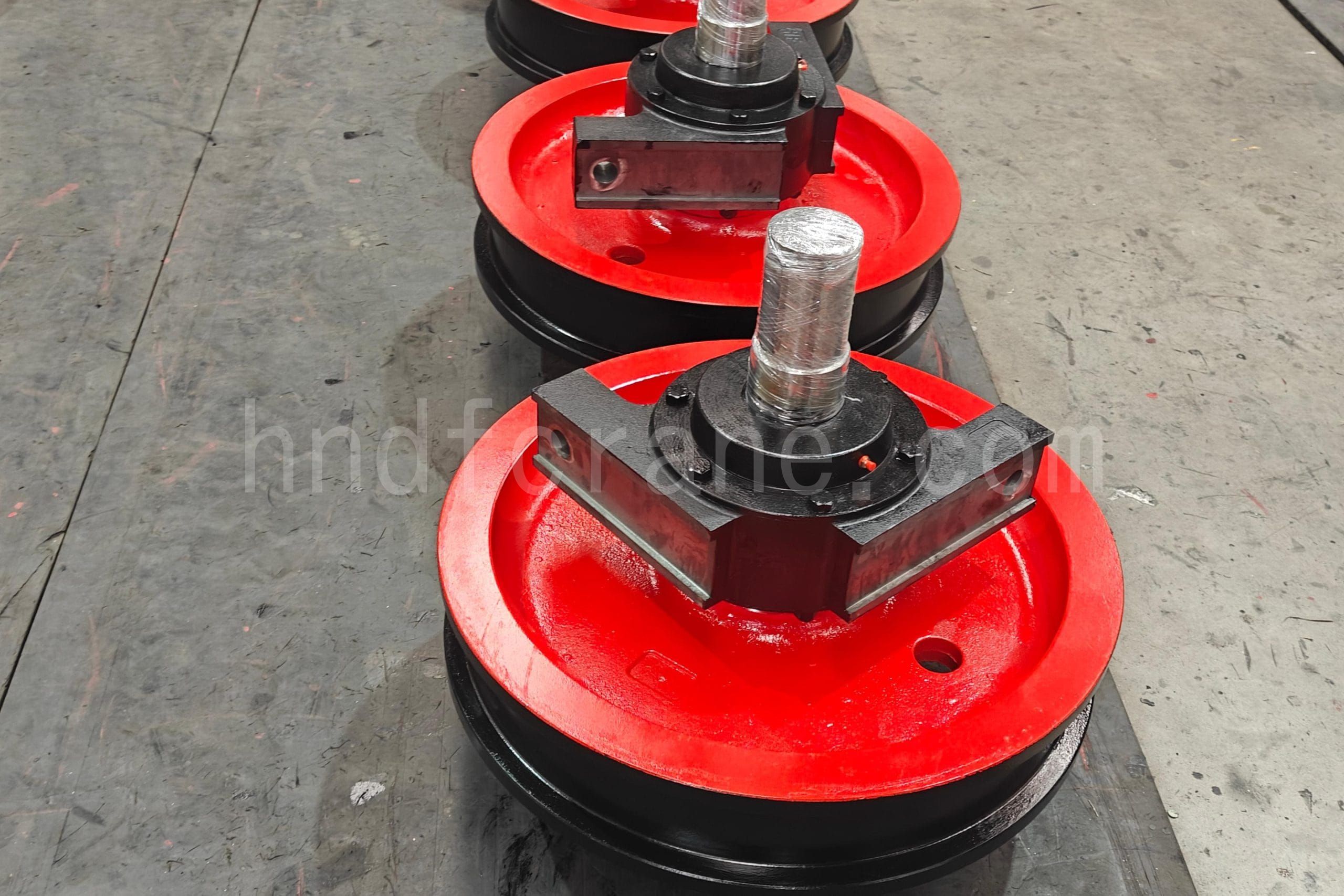
A wheel set is an important component of a travelling mechanism. It normally consists of a wheel, wheel axle, bearings, bearing housing, end covers, and fasteners.
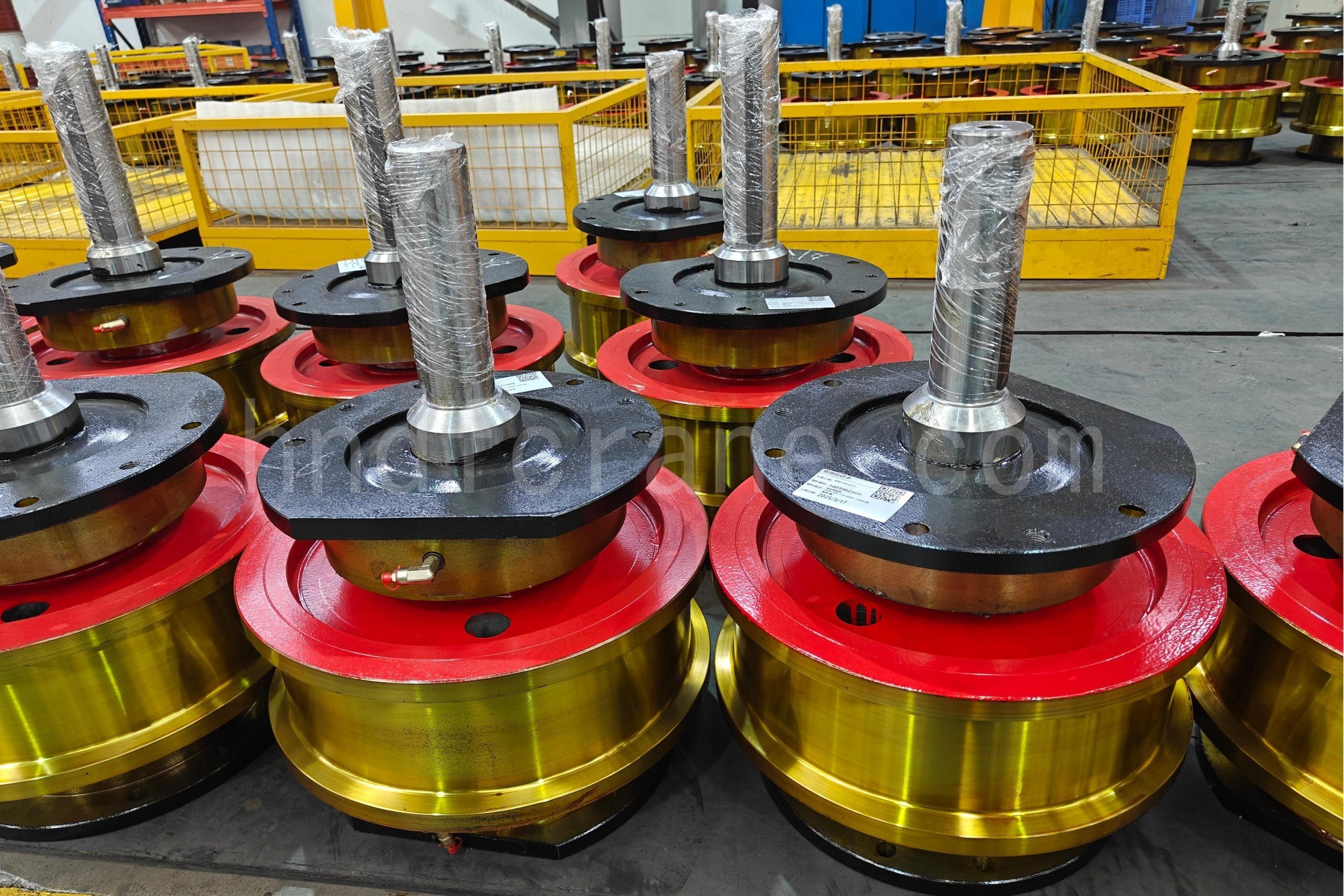
Common wheel materials include ZG340-640, CL60, and 42CrMo. Other cast steels, rolled steels, or forged steels may also be selected according to the design requirements. After machining, the hardness of the tread and the inner side of the flange is HB 300–380. When the wheel diameter is less than 400 mm, the hardness at approximately 15 mm below the surface, or at approximately 20 mm below the surface when the wheel diameter is greater than 400 mm, should not be lower than HB 260. These material and hardness data must be checked against the applicable wheel standard, drawing, and manufacturing process.
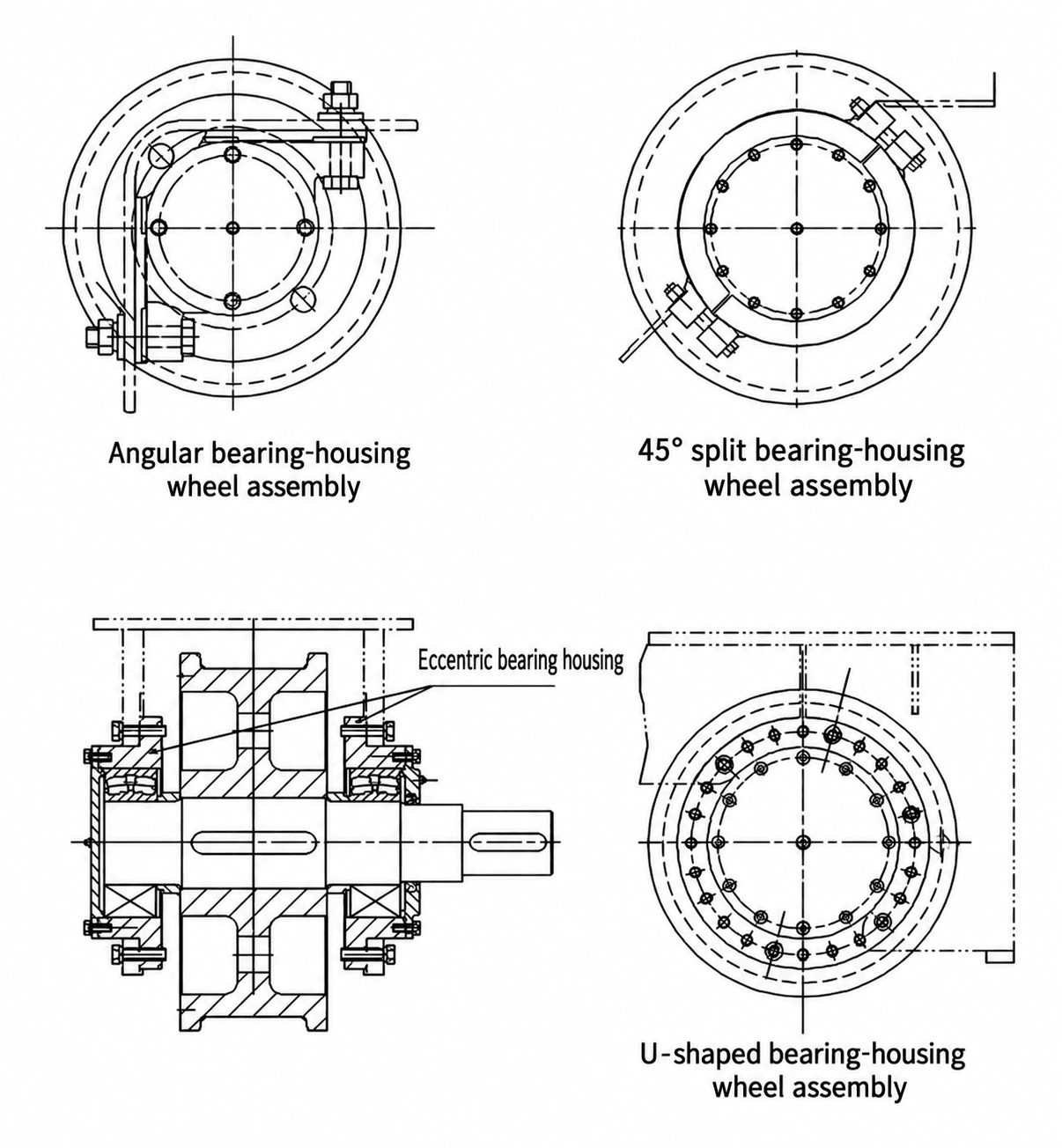
Wheel-set bearing housings commonly use angular bearing boxes. A 45° split bearing housing or a U-shaped bearing housing may also be used according to the design.
A U-shaped bearing housing allows the wheel installation position to be adjusted within a certain range. By adjusting the rotation angle of an eccentric bearing housing, the wheel height, lateral position, and skew can be adjusted by approximately ±0.5 mm. The actual adjustment range must be determined from the equipment design and field measurements.
Horizontal Guide-Roller Arrangements
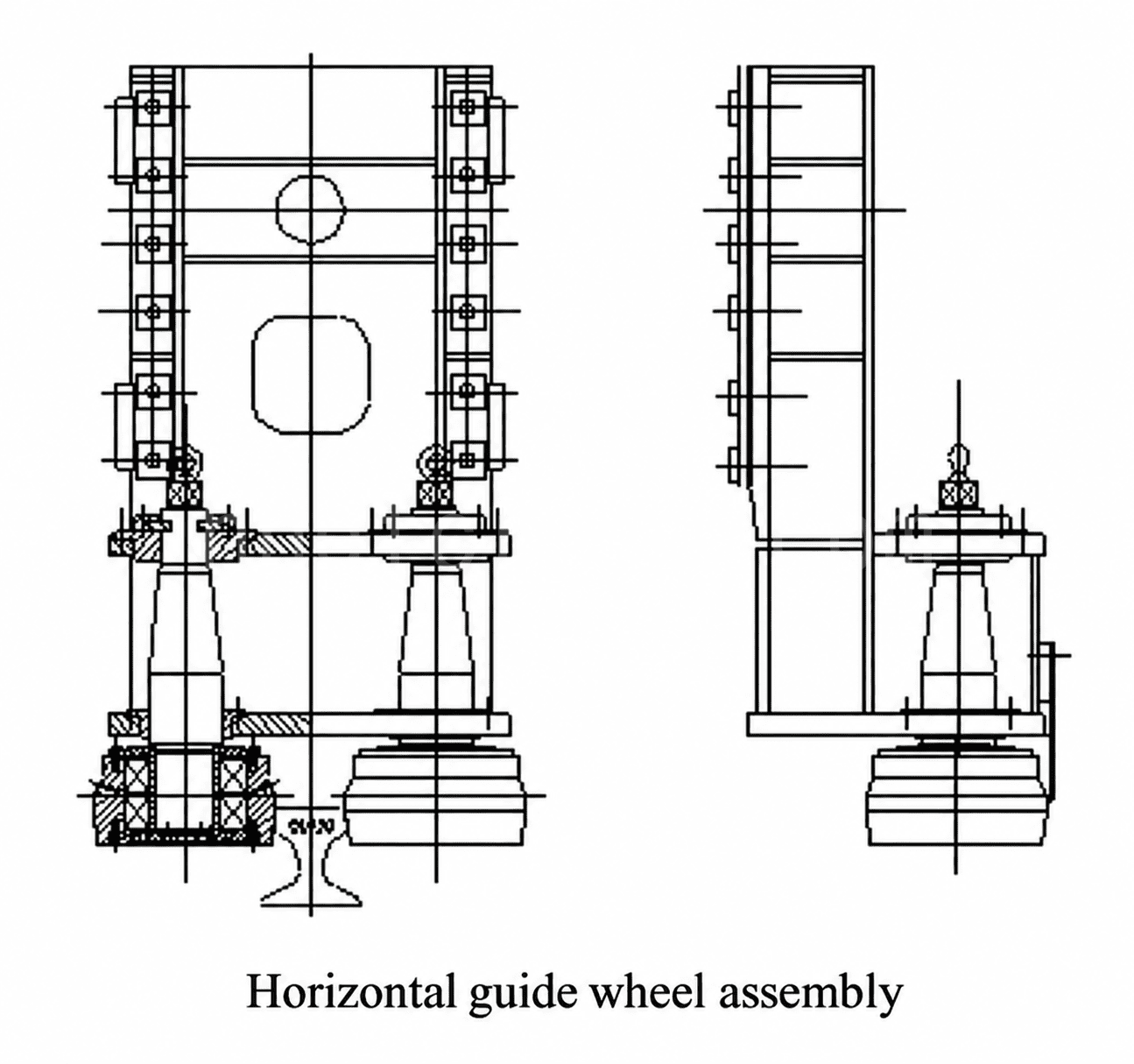
Horizontal guide-roller arrangements can usually be installed at both ends of the end carriage on one side of a crane bridge. They help reduce skewing and rail gnawing during travel.
The clearance between the guide rollers and the rail can be adjusted to compensate for guide-roller wear or to correct the relative position. The guide-roller axle is usually eccentric. Rotating the eccentric axle adjusts the position, after which a bolted pressure plate fixes the setting. The horizontal adjustment is approximately ±5 mm; the exact value must be determined from the structural drawing and operating conditions.
Key Points for Overhead Crane Wheel Inspection
Overhead crane wheels should be inspected regularly in accordance with the equipment maintenance program and applicable standards.
- Use a small hammer to check the wheel tread, flange, and spokes for cracks. If a crack is found, stop using the wheel and replace or repair it according to the applicable technical requirements.
- Check whether the wheel tread is flat and even. If wear has formed a step, machine the wheel or replace it according to the remaining dimensions and repair conditions.
- Check flange wear. When the wear exceeds 50% of the original flange thickness, evaluate the wheel and consider replacement. The actual discard limit must be determined from the applicable standard, the manufacturer’s drawing, and the safety assessment.
- During a major crane overhaul, remove the wheel set for cleaning and inspection. Check the bearings, seals, and lubrication. Whether all bearings need to be replaced should be decided from the inspection results and maintenance procedure.
- Check whether the fit between the wheel axle and wheel bore is loose. If looseness is found, evaluate whether to replace the wheel axle or related components. Looseness or damage in the coupling, gear bore, or keyway should also be handled according to the maintenance requirements.
- Check angular bearing boxes and other bearing housings for cracks, deformation, and loose connections. Replace cracked parts.
Measures to Extend Overhead Crane Wheel Service Life
Overhead crane wheels are load-bearing components. Poor rail installation and wheel manufacturing deviations can cause skewing and slipping during operation, accelerating wear and leading to premature replacement. The following three measures may help extend wheel service life, subject to the crane’s design requirements:
- Increase the wheel flange height.
- Use conical wheels with a greater tread taper as drive wheels.
- Apply deep-hardening heat treatment to the wheel tread to improve wear resistance. However, excessive tread hardness can cause severe rail wear. The typical hardness range for the wheel tread and inner flange surfaces is 300–380 HB.
خاتمة
Extending overhead crane wheel service life requires proper wheel selection, manufacturing quality, accurate installation, and well-maintained rails. Abnormal flange wear, tread damage, or rail skewing should prompt an investigation into the underlying cause. Correct wheel and rail matching, regular inspections, and timely maintenance can help reduce premature wear, downtime, and replacement costs.
Looking to select or replace overhead crane wheels? Share your crane model, wheel load, wheel dimensions, and rail specifications with us to get a wheel assembly solution suited to your operating conditions.

أنا سيندي، ولدي 10 سنوات من الخبرة العملية في صناعة الرافعات واكتسبت ثروة من المعرفة المهنية. لقد اخترت الرافعات المرضية لأكثر من 500 عميل. إذا كانت لديك أي احتياجات أو أسئلة حول الرافعات، فلا تتردد في الاتصال بي، وسأستخدم خبرتي وخبرتي العملية لمساعدتك في حل المشكلة!
أرسل استفسارك
- بريد إلكتروني: sales@hndfcrane.com
- واتساب: +86 191 3738 6654
- برقية: +86 191 3738 6654
- هاتف: +86-373-581 8299
- فاكس: +86-373-215 7000
- إضافة: منطقة Changnao الصناعية ، مدينة Xinxiang ، مقاطعة Henan ، الصين
 وي تشات
- الرافعات العلوية
- الرافعات العلوية ذات العارضة المزدوجة
- الرافعات العلوية ذات العارضة الواحدة
- رافعات علوية أحادية العارضة من النوع الأوروبي
- الرافعات العلوية المقاومة للانفجار
- الرافعات العلوية المغناطيسية والإمساك
- الرافعات أحادية السكة
- الرافعات العلوية مسبك
- رافعات محطات العمل: تصميم خفيف الوزن، سهولة التركيب، وتشغيل سلس
- الرافعات الجيب
- رافعات الجيب المثبتة على الحائط
- رافعات جسرية متحركة على الحائط
- رافعات الجيب القائمة بذاتها
- رافعات ذراعية من الألومنيوم: خفيفة الوزن، ذراع دوارة ناعمة لسهولة الرفع
- رافعات ذراع التوازن: رفع خفيف وفعال للتجميع الميكانيكي لمسافات قصيرة
- رافعات ذراعية يدوية قائمة بذاتها: حلول رفع يدوية فعّالة للعمليات في المساحات المحدودة
- رافعات ذراع كهربائية قائمة بذاتها: حل كهربائي بالكامل لرفع سريع وعالي القدرة
- رافعات ذراع مفصلية: رفع دقيق مع مرونة الذراع المزدوجة
- رافعات
- الرافعات الجسرية ذات العارضة المزدوجة
- رافعات نصف قنطرية
- الرافعات الجسرية ذات العارضة الواحدة
- رافعات جسرية تروس
- الرافعات الجسرية للحاويات
- الرافعات الجسرية القابلة للتعديل
- الرافعات الجسرية المحمولة
- الرافعات الجسرية الأوروبية
- الصناعات
- التصنيع العام
- معالجة النفايات
- مسبقة الصنع
- قوة
- حجر
- صناعة الورق
- انتاج المعادن
- بناء الجسر
- رافعات الموانئ: لمناولة الحاويات والمواد السائبة
- الرافعات العلوية لصناعة البترول والغاز: تعزيز الكفاءة التشغيلية
- الرافعات البحرية لتحميل البضائع بكفاءة على السفن
- الرافعات العلوية لصناعة السيارات: حلول أتمتة فعّالة
- روافع كهربائية
- رافعات حبل الأسلاك الكهربائية
- الرافعات الكهربائية
- رافعات كهربائية من النوع الأوروبي
- الرافعات الكهربائية الأوروبية: تشغيل سلس، وانخفاض الضوضاء، وكفاءة الطاقة
- رافعات يدوية: مثالية لمهام السحب والرفع
- رافعات سلسلة يدوية: رفع يدوي للمناطق التي لا تتوفر فيها الطاقة
- رافعات كهربائية ذات ارتفاع منخفض: تصميم مضغوط لتحقيق أقصى قدر من كفاءة المساحة
- رافعات السلسلة الهوائية: التعامل السلس للاستخدام الصناعي
- رافعات سلسلة يدوية مقاومة للانفجار: مصنوعة من سبائك نحاسية مقاومة للشرر للمناطق الخطرة
- رافعات سلسلة كهربائية مقاومة للانفجار لرفع الأحمال في المناطق الخطرة
- عن
- حالات
- أخبار
- الأسئلة الشائعة
- تحميل
- المدونات
- أدوات حساب حمولة عجلات الرافعة عبر الإنترنت
- VR بانوراما
- اتصل بنا
- بريد إلكتروني: sales@hndfcrane.com
- واتساب: +86 191 3738 6654
- برقية: +86 191 3738 6654
- هاتف: +86-373-581 8299
-