









产品介绍
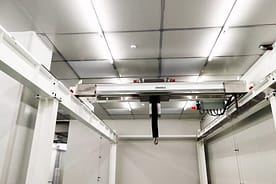
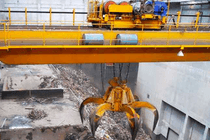
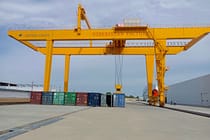
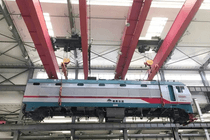
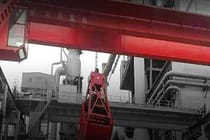
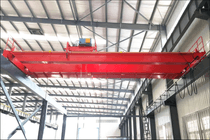
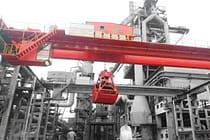
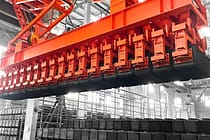
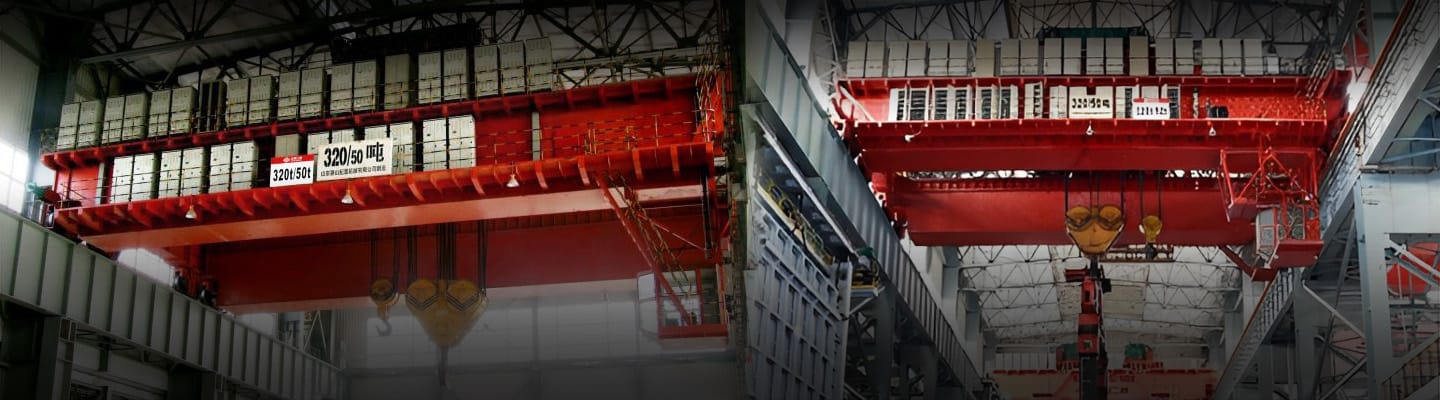
Quenching overhead crane is a specialized overhead lifting equipment designed for metal heat treatment quenching processes. It is used to quickly, smoothly, and accurately lift high-temperature workpieces from the heating furnace or transfer station and deliver them into the quenching medium (such as water, oil, or polymer solution) within a specified time, ensuring the workpieces achieve the required microstructure and mechanical properties.
The core design focus of a quenching overhead crane is not extreme lifting capacity, but rather rapid response, stable operation, precise positioning, and long-term reliable performance in harsh environments characterized by high temperatures, steam, and corrosive conditions.
Quenching Overhead Crane Application Conditions
The quenching overhead crane is a specialized lifting equipment used in the vertical shaft quenching process of metal heat treatment. It is designed to rapidly immerse large workpieces or slender bar-shaped components into the quenching medium for heat treatment.
Quenching overhead cranes are mainly used in processes where the cooling medium is brine, water, or mineral oil. According to the requirements of the quenching process, the red-hot workpiece must be quickly immersed into the quenching tank to ensure uniform metallographic structure along the entire length of the workpiece and to prevent surface oil ignition during oil quenching.
The most distinctive feature of a quenching overhead crane is that the hoisting mechanism is equipped with a rapid lowering function, which requires fast descent, accurate positioning, and reliable braking.
Structural Features of Quenching Overhead Crane

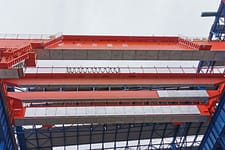
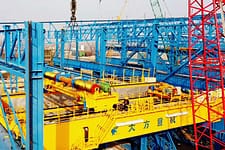
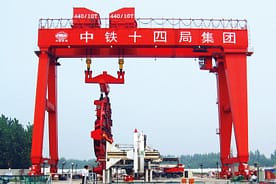
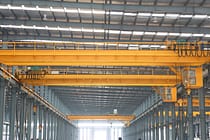
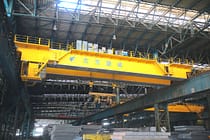
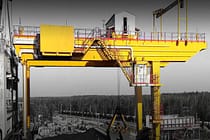
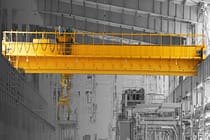
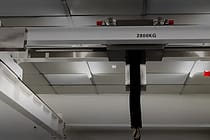
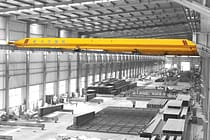
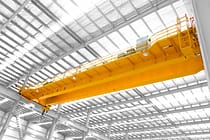
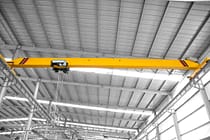
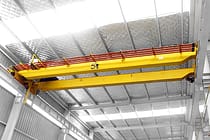
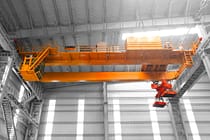
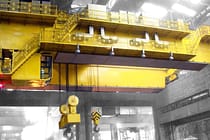
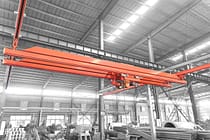
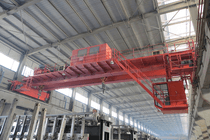
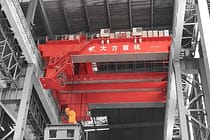
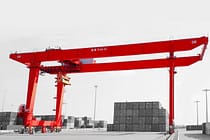
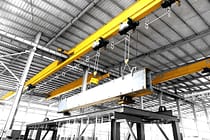
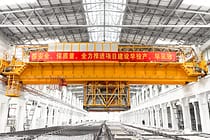
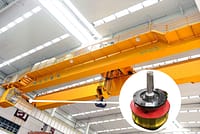
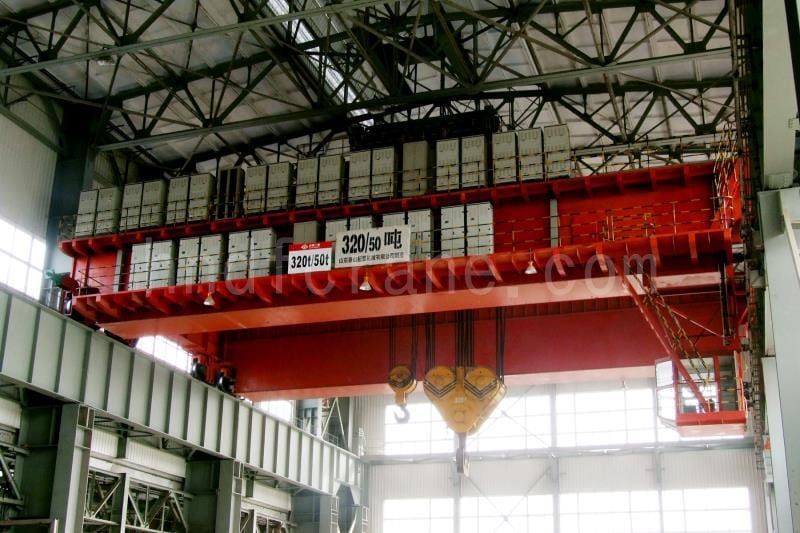
The main structure of a quenching overhead crane consists of a box-type bridge, hoisting trolley, crane traveling mechanism, operator cabin, and electrical control system.
The box-type bridge structure offers advantages such as simple manufacturing process, convenient assembly, strong versatility, suitability for automatic welding, and high torsional rigidity. The bridge mainly includes two main girders, two end girders, walkways, and guardrails.
The main girder is the primary load-bearing component. It adopts a standard box-type structure with rails installed on the top, allowing the hoisting trolley to travel transversely along the girder. A thermal insulation layer is arranged on the lower flange of the main girder, which provides both heat insulation and splash protection.
The main girders are welded integrally with the box-type end girders. Connection joints are arranged in the middle of the end girders and are bolted to allow the bridge structure to be disassembled for transportation.
The walkway is used to install the crane traveling mechanism and electrical equipment, and it also serves as a maintenance platform and access passage. Protective guardrails are installed on the outer side to ensure operational safety.
Quenching Overhead Crane Design Requirements
Environmental Conditions
- The crane shall be capable of operating in environments with corrosive substances such as oil vapors, fumes, and dust.
- The crane operating area shall be equipped with adequate fire protection facilities as required.
Operating Performance
- The hoisting mechanism shall be equipped with a downward travel limit device.
- When the hoisting mechanism performs rapid lowering, it shall not operate simultaneously with other mechanisms.
- To ensure uniform heat treatment of slender workpieces and prevent ignition of the quenching medium, the crane shall be equipped with a rapid lowering function.
- The rapid lowering speed of the hoisting mechanism is not strictly specified and shall be determined based on the principle that the workpiece does not ignite when entering the quenching medium.
- The braking distance of the rapid lowering system shall generally be within 1/65 of the rapid lowering speed, and shall not exceed 500 mm.
主要成分
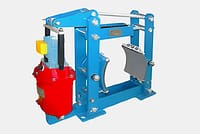
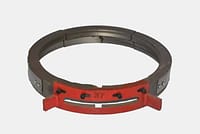
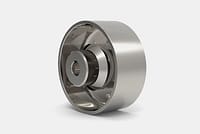
- The brake wheel or brake disc used in the rapid lowering mechanism shall be made of materials with good thermal fatigue resistance and designed with effective heat dissipation structures.
- The balance quality grade of the brake wheel or brake disc used in the rapid lowering mechanism shall be not lower than G6.3.
- The brake of the rapid lowering mechanism shall be equipped with an emergency release device, which can be operated from the operator cabin.
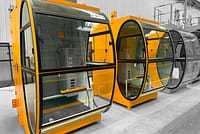
- An insulated operator cabin shall be adopted. The cabin should be equipped with cooling facilities and necessary emergency escape measures. The installation position of the cabin shall provide a clear and unobstructed field of view.
Electrical Equipment and Control
- The hoisting mechanism with rapid lowering capability shall be equipped with an overspeed protection device.
- Speed detection and braking torque control shall ensure that the workpiece can descend rapidly at a stable and uniform speed.
- When ground operation or remote control is required by the user, a mode selection switch shall be provided.
Safety Protection
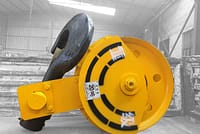
- A protective cover shall be installed at the moving pulley block of the hook to prevent splashing of molten oil or quenching liquid.
- The hook mouth shall be equipped with an anti-unhooking device.
- Steel-core wire ropes shall be used.
- The emergency brake release mechanism shall feature fast response, flexible and reliable operation, and easy handling.
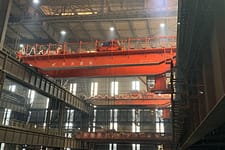
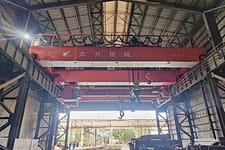
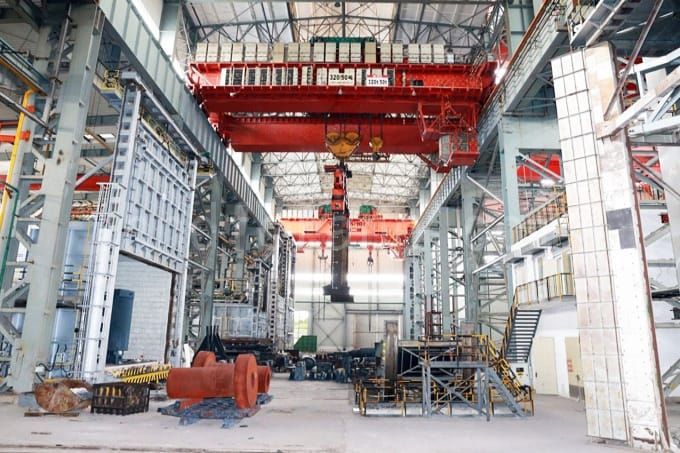
DAFANG CRANE Quenching Overhead Crane Project Case
The heat treatment workshop for small and medium-sized components is arranged in an east–west orientation and consists of four bays, with a total length of 252 m.
- The northernmost bay is a roofed open-air bay with a span of 24 m, used as a raw material storage yard.
- The second bay from the north has an open-air raw material storage area on the west side, two Ir192 radiographic inspection rooms and storage areas in the middle, and a material preparation workshop on the east side, with a span of 24 m.
- The two southern bays include a heat treatment workshop on the west side and a welding workshop on the east side, with a span of 30 m.