






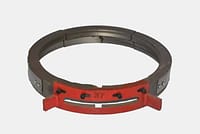
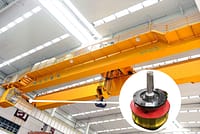
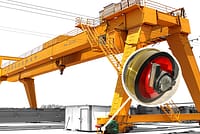
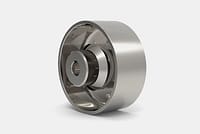
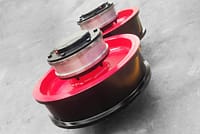



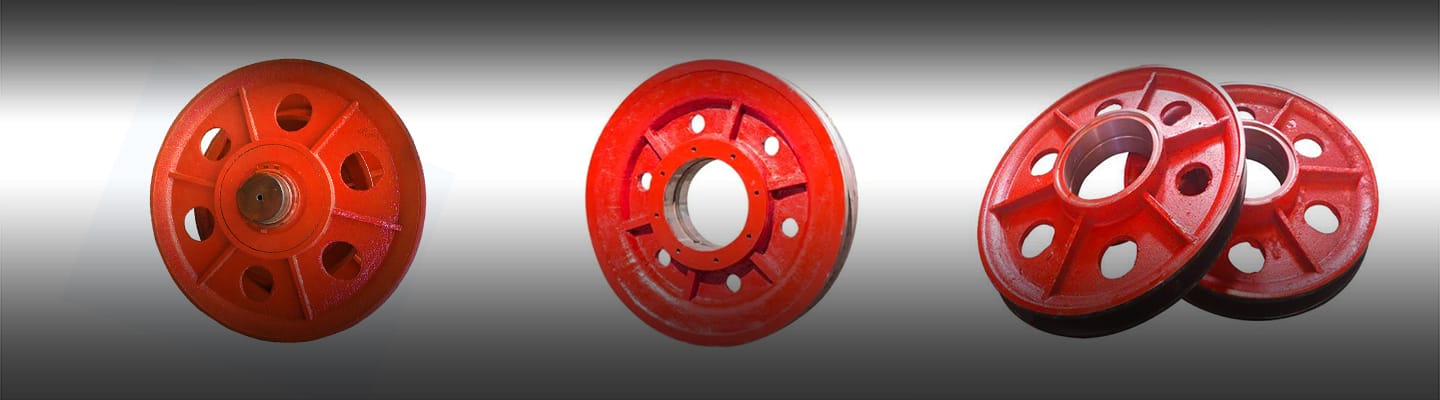


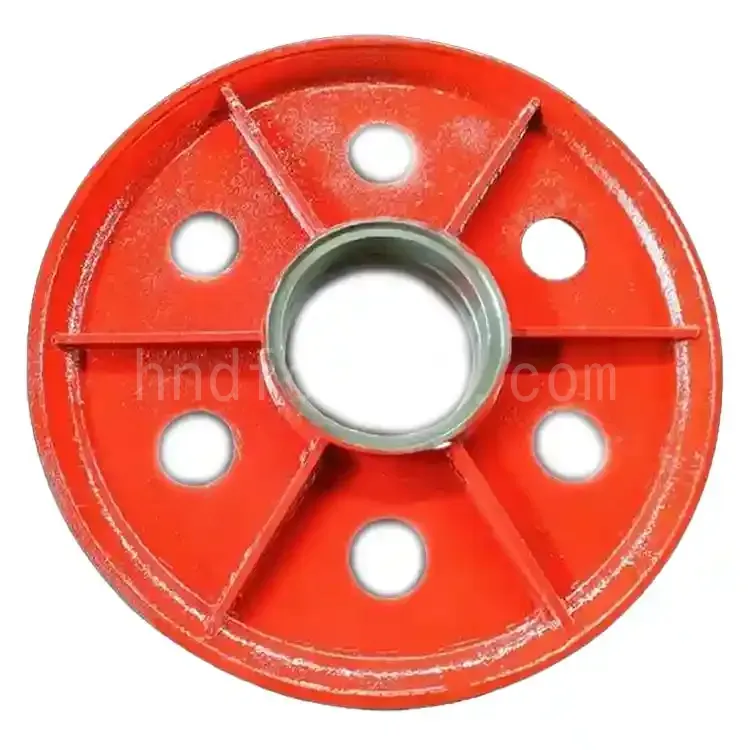
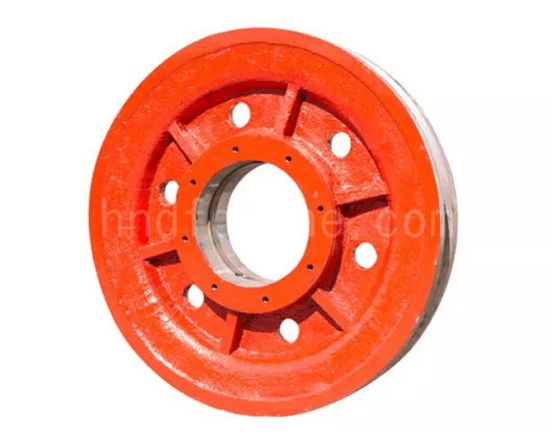
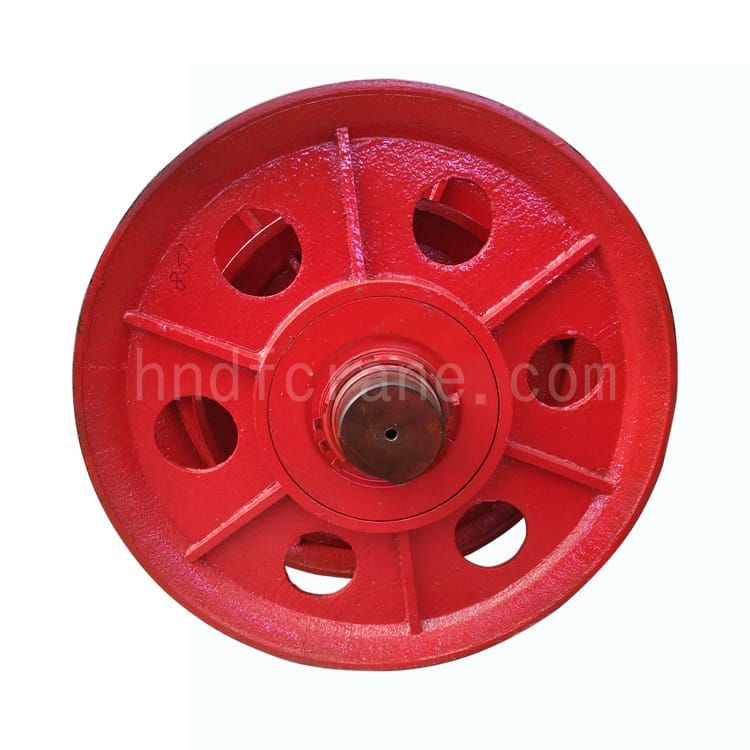
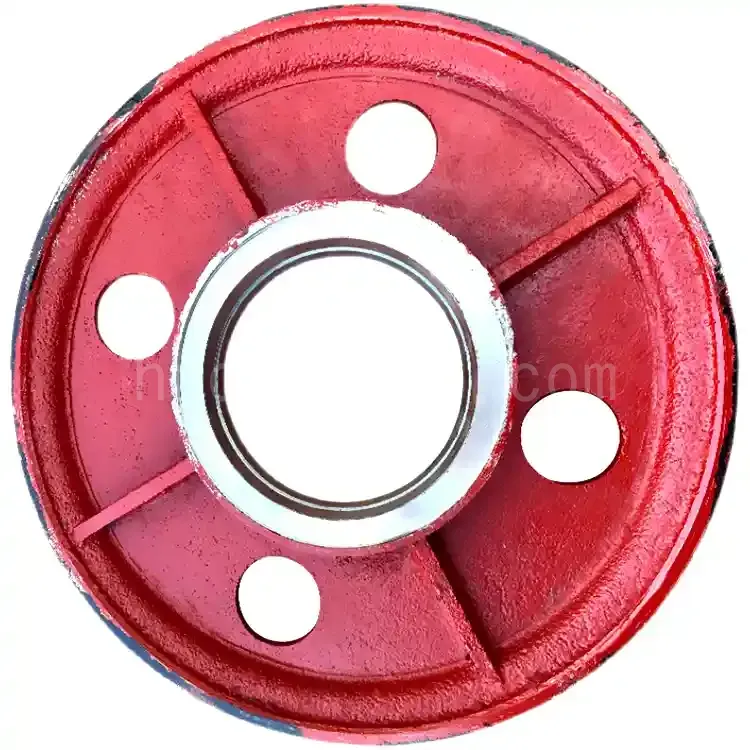
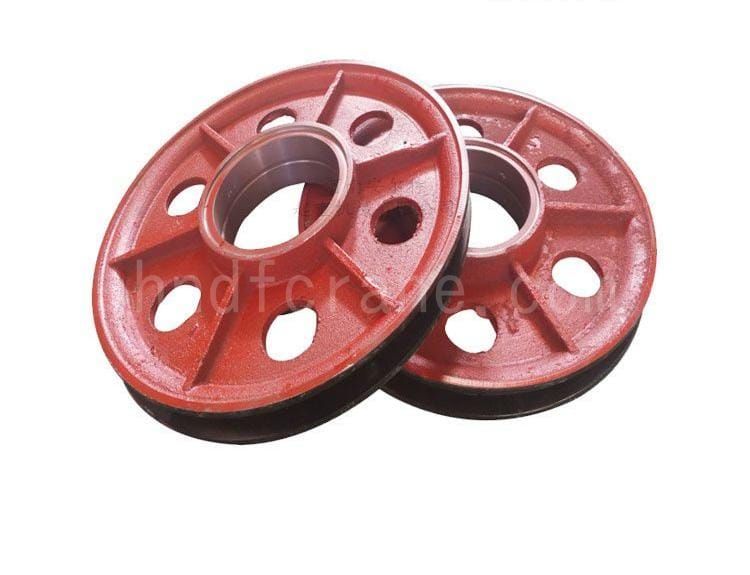
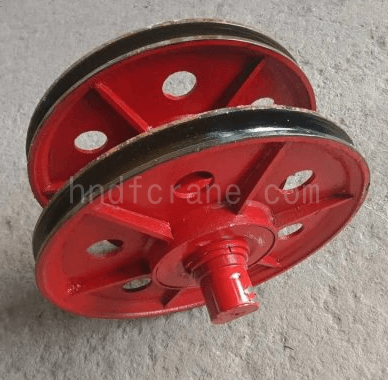
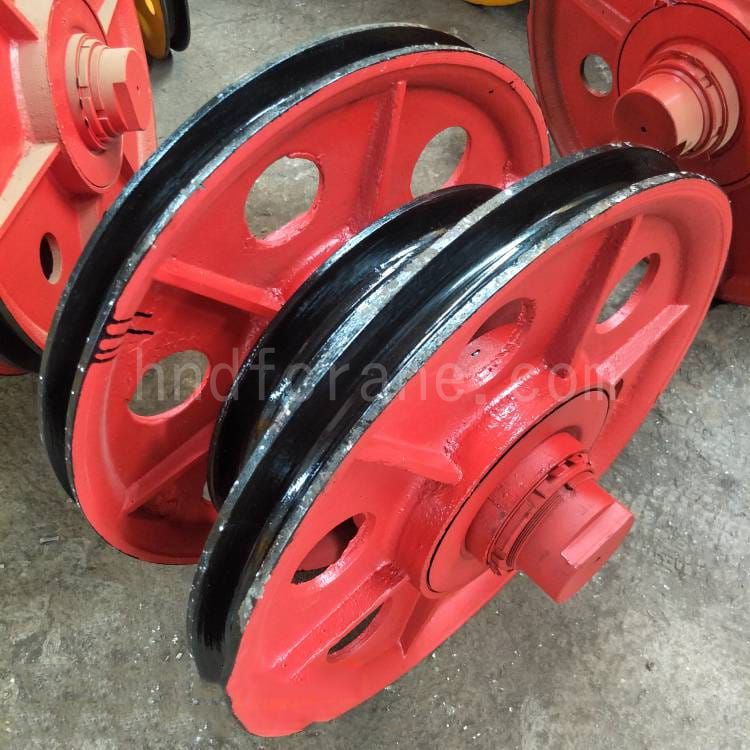
Produktvorstellung von gegossenen Kranrollen
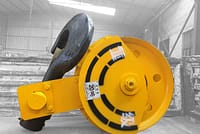
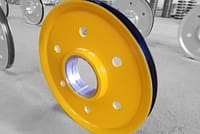
Cast crane sheaves are a production process in which metal is smelted into a molten state that meets specified requirements and then poured into the mold for casting. After cooling, solidification, and cleaning, the pulley’s predetermined shape, size, and performance are achieved. Because the casting pulley blanks are almost fully formed, free machining or small-scale machining is used, reducing costs and production time to some extent. This method offers low production costs and high efficiency. For some pulley products with large size, irregular shape, and complex structure, casting is an ideal production method. Pulley casting is the basic process of the modern device manufacturing industry.
Klassifizierung von gegossenen Kranrollen
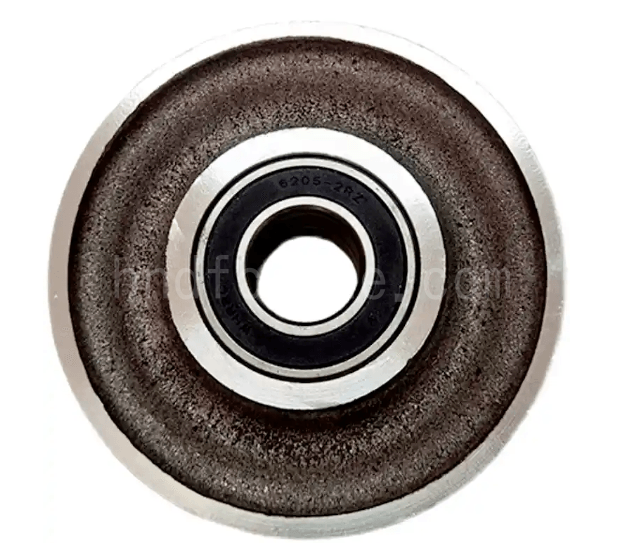
- Kapazität: Bis zu 200 Tonnen
- Hohe Härte: Der Werkstoff ZG25Ⅱ zeichnet sich durch eine hohe Dichte und extrem hohe Härte aus.
- Gute Verschleißfestigkeit: Seine Eigendichte ist etwas höher, seine Verschleißfestigkeit ist hoch und seine Tragfähigkeit ist stärker.
- Gute Zähigkeit und geringes Gewicht: gute mechanische Festigkeit und hohe Schlagfestigkeit.
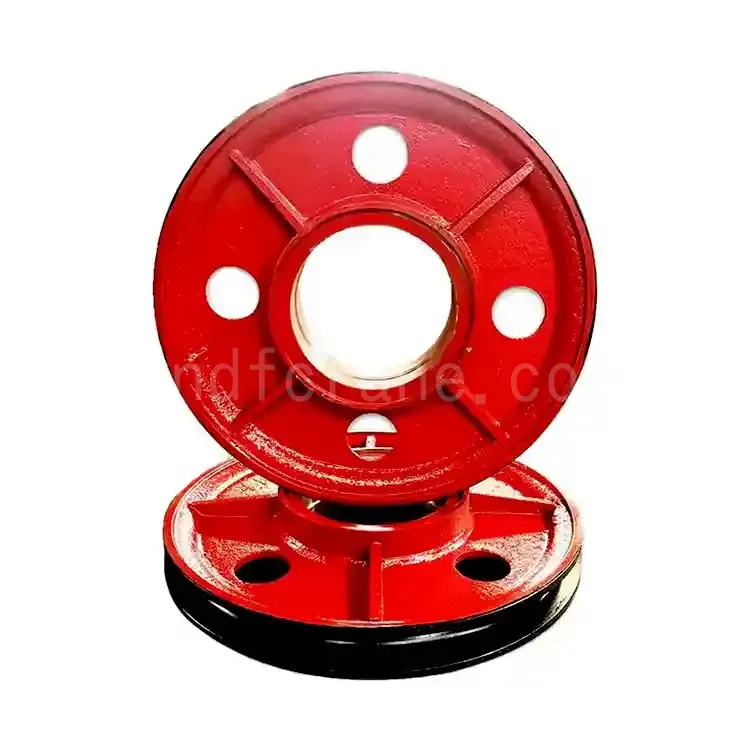
- Kapazität: Bis zu 100 Tonnen
- Der Verschleiß des Drahtseils ist relativ gering: the HT250 material contains graphite and has self-lubricating properties, which effectively reduce friction and provide good shock-absorption performance.
- Kostengünstig: Das Sandgussverfahren ist einfach und die Rohstoffe sind vielfältig, was die Beschaffungskosten erheblich reduziert und gleichzeitig die Standardanforderungen erfüllt.
Seilscheiben aus Stahlguss
Cast SteelCrane Sheaves Introduction
Cast steel crane sheaves have higher strength and can withstand greater tensile pressure, but the wear on the wire rope is greater than that of cast iron sheaves. It is ideal for occasions with high operating conditions. Standard cast steel pulleys generally use lost foam casting, which has a low production cost and high efficiency. For some pulley products with large size, non-standard shape and complex technology, cast steel pulleys are an ideal way to make them. Moreover, the lost foam casting method is used, and the pulley is not limited by the equipment in terms of diameter and other dimensions, which is more flexible. However, due to the influence of factors such as casting technology, the quality directly depends on the quality of the casting blank.
Stahlguss Vorteile von Kranrollen
Verbesserte Zähigkeit und Plastizität
Kranseilscheiben aus Stahlguss weisen Materialeigenschaften auf, die denen von hochwertigem Stahl ähneln. Sie besitzen eine höhere Härte und größere Flexibilität als Gusseisen, was zu einer höheren Plastizität und Schlagfestigkeit führt. Dadurch sind sie äußerst vielseitig einsetzbar und eignen sich für ein breites Spektrum industrieller Anwendungen.
Leichtbauweise für optimale Betriebseffizienz
Aufgrund der geringeren Dichte von Gussstahl im Vergleich zu herkömmlichem Eisen sind Kranrollen aus Gussstahl bei gleichem Volumen deutlich leichter. Bei Hebevorgängen, bei denen sich die bewegliche Rolle mit der Last bewegt, reduziert eine leichtere Rolle den Energieverbrauch und den Arbeitsaufwand, was ihre weite Verbreitung gegenüber Alternativen aus Gusseisen erklärt.
Korrosionsbeständigkeit und verlängerte Lebensdauer
Im Betrieb bildet sich auf Kranseilscheiben aus Stahlguss eine natürliche Schutzschicht, die das Bauteil vor Regen und chemischer Korrosion schützt. Im Gegensatz zu Gusseisen, das bei Feuchtigkeitseinwirkung zu Rost und struktureller Zersetzung neigt, behält Stahlguss seine Festigkeit und bietet dadurch eine deutlich längere Lebensdauer.
Verbesserte Verschleißfestigkeit durch Flammhärtung
Durch die Optimierung des Kohlenstoffgehalts übertrifft die strukturelle Festigkeit dieser Scheiben die von Eisen. Insbesondere durch Flammhärtung erreicht die Oberflächenhärte HRC48–HRC52, wodurch die Verschleißlebensdauer um mehr als 301 TP1T verlängert wird.
Optimierte Spannungsverteilung für Schwerlasthebungen
Featuring a dual-hub design, these sheaves uniformly disperse stress across the structure. This makes them the definitive choice for high-tonnage lifting operations where structural reliability is non-negotiable. Optional configurations with tapered roller bearings or sliding bearings support a wide operating temperature range from -40°C to 200°C. Fully ISO 14001 certified, these cast steel crane sheaves are the ideal choice for extreme environments such as metallurgical blast furnaces and offshore oil drilling platforms.
Cast Steel Crane Sheaves Application
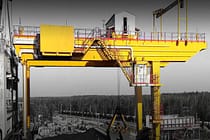
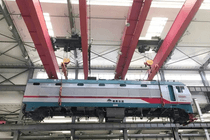
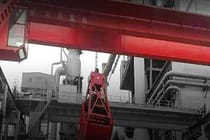
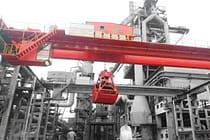
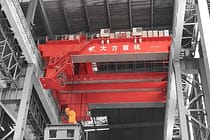
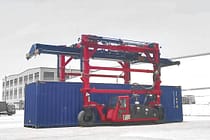
Gegossene Kranscheiben für explosionsgeschützte Brückenkrane
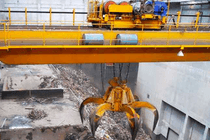
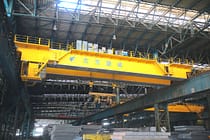
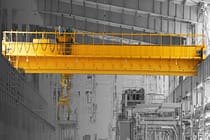
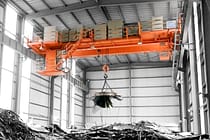
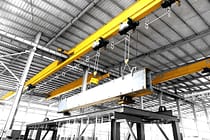
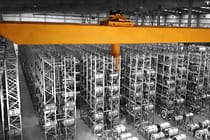
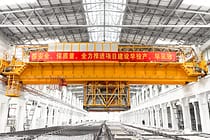
Gegossene Kranscheiben für Gießerei-Brückenkräne
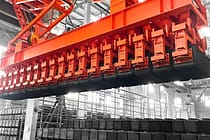
Gegossene Kranscheiben für intelligente Kokstankkrane
Kranrollen aus Gusseisen
Einführung in Kranrollen aus Gusseisen
Cast iron crane sheaves uses gray cast iron (HT15-33) or ductile iron (QT-10). The pulley has good process performance and is easy to cut, especially the wear on the wire rope is small, but because of its low strength and brittleness, poor durability, it can easily cause rim fracture and crushing when used, and it is more economical and ideal for small tonnage or infrequent equipment use. Cast iron crane sheaves use sand-cast iron casting technology; cast iron is an ideal material for making crane pulleys because of its good fluidity during casting and relatively few casting defects.
Cast Iron Crane Sheaves Advantage
- Hohe Tragfähigkeit und Stabilität: High-quality cast iron materials coupled with heat treatment technology ensure reliable carrying capacity.The recommended static safety factor is ≥3 (depending on the application conditions).
- Lange Lebensdauer: Graphit im Gusseisen sorgt für natürliche Schmierung. In Kombination mit Härten, Anlassen und Kugelstrahlen kann dadurch die Reibung und der Oberflächenverschleiß reduziert werden.
- Kostengünstige Fertigung: The casting process can achieve integrated, complex geometries, and reduce unit costs in large-scale production.