
-
Branchen
-
Allgemeine Fertigung
-
Abfallbehandlung
-
Vorgefertigt
-
Leistung
-
Stein
-
Papierherstellung
-
Metallproduktion
-
Brückenbau
-
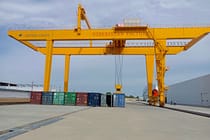
Hafenkräne: Für den Container- und Schüttgutumschlag
-
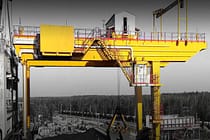
Brückenkräne für die Erdöl- und Gasindustrie: Steigerung der Betriebseffizienz
-
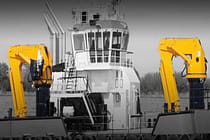
Schiffskräne für effizientes Beladen von Schiffen
-
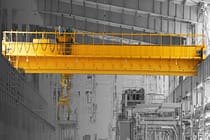
Brückenkräne für die Automobilindustrie: Effiziente Automatisierungslösungen
-
Brückenkranlösungen für den Schienenverkehr: Gleisbau, Schienenfahrzeugwartung und Containerumschlag
-
Brückenkrane für die Lebensmittel- und Getränkeindustrie: Zuverlässige Lösungen für effiziente Handhabung
-
Brückenkräne für die effiziente Herstellung von Zement, Glas, Ziegel und Betonfertigteilen
-
Brückenkräne für die Luftfahrtindustrie: Flugzeugwartung und -montage
-
Brückenkräne für die Luft- und Raumfahrt: Präzises Heben für Raketenstart und -transport
-
-
Produkte
-
Laufkräne
-
Einträgerbrückenkrane
-
Zweiträgerbrückenkrane
-
Europäische Einträger-Brückenkrane
-
Europäische Doppelträger-Brückenkrane
-
Explosionsgeschützte Laufkräne
-
Greifer- und Magnetbrückenkrane
-
Einschienenkrane
-
Gießereikrane
-
Isolierungsbrückenkräne
-
Brückenkräne mit geringer Bauhöhe
-
Schnappen Sie sich Laufkräne
-
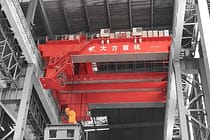
Pfannenbrückenkrane
-
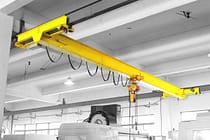
Untergehängte Brückenkrane
-
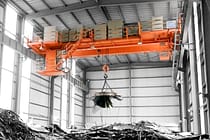
Elektromagnetische Laufkrane
-
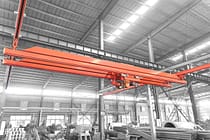
Arbeitsplatzkrane
-
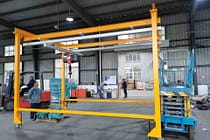
Freistehende Arbeitsplatz-Brückenkräne
-
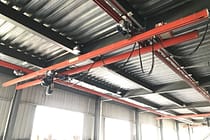
Deckenmontierter Brückenkran
-
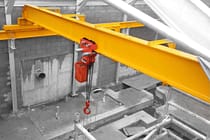
Manuelle Brückenkräne
-
-
Portalkräne
-
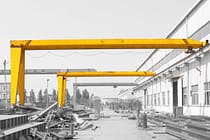
Halbportalkrane
-
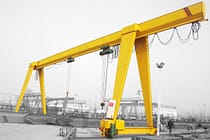
Einträger-Portalkrane
-
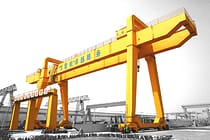
Zweiträger-Portalkrane
-
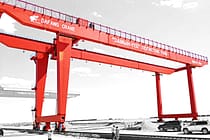
Containerbrücken
-
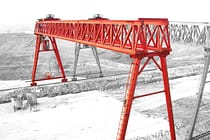
Traversenportalkrane
-
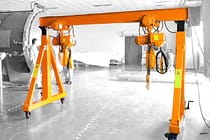
Verstellbare Portalkräne
-
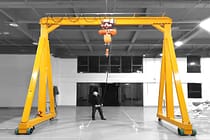
Tragbare Portalkräne
-
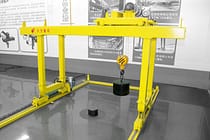
Europäische Portalkräne
-
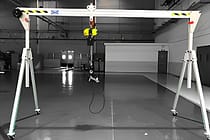
Aluminium-Portalkrane
-
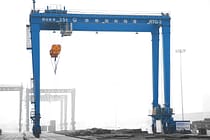
Containerbrücken mit Gummireifen
-
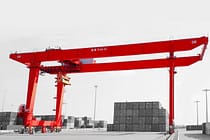
Schienenmontierte Containerbrücken
-
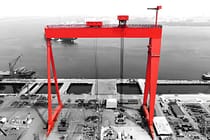
Werft-Portalkran
-
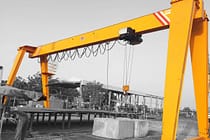
Europäische Einträger-Portalkrane
-
Europäische Doppelträger-Portalkrane
-
- Auslegerkrane
- Spezialkrane
- Elektrische Hebezeuge
- Transferwagen
-
Laufkräne
-
Kranteile
-
Greifschaufeln
-
Elektrischer Greifer aus Edelstahl
-
Mechanischer Mehrschalengreifer mit vier Seilen
-
Mechanischer Zweischalengreifer mit vier Seilen
-
Elektrohydraulische Rechteckgreifer
-
Elektrohydraulische Zweischalengreifer
-
Elektrohydraulische Mehrschalengreifer, hydraulische Kaktusgreifer
-
Elektromotorgreifer
-
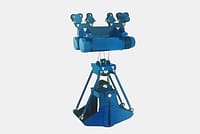
Elektrischer Einschienen-Greiferschaufel mit Einschienenbahnhebezeug
-
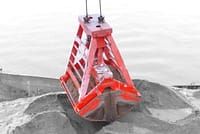
Zweischalengreifer mit Fernbedienung
-
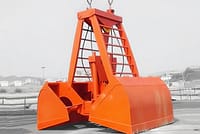
Mechanische Zweiseil-Zweischalengreifer
-
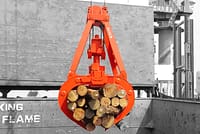
Holzgreifer
-
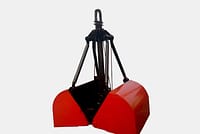
Greifschaufel mit Einfachseil
-
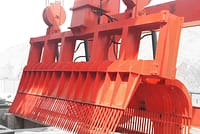
Rechenreinigungsmaschinen
-
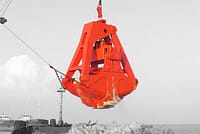
Baggergreifer
-
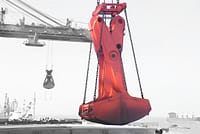
Trimmgreifer
-
- Kranspreizer
-
Kran-Ersatzteile
-
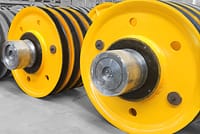
Kranscheiben
-
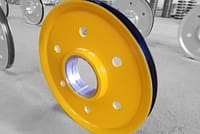
Drahtseilrollen
-
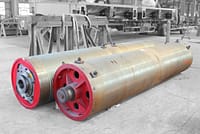
Kranseiltrommel
-
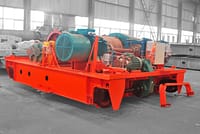
Kranwagen
-
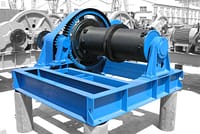
Elektrische Winde
-
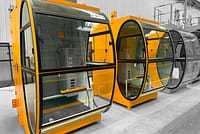
Kranführerkabine
-
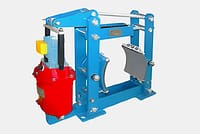
Brückenkranbremsen
-
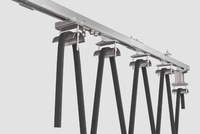
Brückenkrankabel
-
Seilführungen für Brückenkräne
-
Brückenkranleitungen und Stromversorgungsleitungen
-
Brückenkranschienen
-
Schienenklammern für Brückenkräne
-
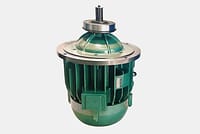
Brückenkranmotoren
-
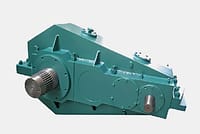
Brückenkran-Reduzierstücke
-
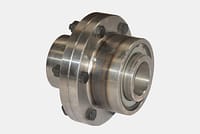
Kupplungen für Brückenkräne
-
- Kranräder
-
Greifschaufeln
- Unternehmen
- Kontakt
-
Branchen
-
Allgemeine Fertigung
-
Abfallbehandlung
-
Vorgefertigt
-
Leistung
-
Stein
-
Papierherstellung
-
Metallproduktion
-
Brückenbau
-
Hafenkräne: Für den Container- und Schüttgutumschlag
-
Brückenkräne für die Erdöl- und Gasindustrie: Steigerung der Betriebseffizienz
-
Schiffskräne für effizientes Beladen von Schiffen
-
Brückenkräne für die Automobilindustrie: Effiziente Automatisierungslösungen
-
Brückenkranlösungen für den Schienenverkehr: Gleisbau, Schienenfahrzeugwartung und Containerumschlag
-
Brückenkrane für die Lebensmittel- und Getränkeindustrie: Zuverlässige Lösungen für effiziente Handhabung
-
Brückenkräne für die effiziente Herstellung von Zement, Glas, Ziegel und Betonfertigteilen
-
Brückenkräne für die Luftfahrtindustrie: Flugzeugwartung und -montage
-
Brückenkräne für die Luft- und Raumfahrt: Präzises Heben für Raketenstart und -transport
-
-
Produkte
-
Laufkräne
-
Einträgerbrückenkrane
-
Zweiträgerbrückenkrane
-
Europäische Einträger-Brückenkrane
-
Europäische Doppelträger-Brückenkrane
-
Explosionsgeschützte Laufkräne
-
Greifer- und Magnetbrückenkrane
-
Einschienenkrane
-
Gießereikrane
-
Isolierungsbrückenkräne
-
Brückenkräne mit geringer Bauhöhe
-
Schnappen Sie sich Laufkräne
-
Pfannenbrückenkrane
-
Untergehängte Brückenkrane
-
Elektromagnetische Laufkrane
-
Arbeitsplatzkrane
-
Freistehende Arbeitsplatz-Brückenkräne
-
Deckenmontierter Brückenkran
-
Manuelle Brückenkräne
-
-
Portalkräne
-
Halbportalkrane
-
Einträger-Portalkrane
-
Zweiträger-Portalkrane
-
Containerbrücken
-
Traversenportalkrane
-
Verstellbare Portalkräne
-
Tragbare Portalkräne
-
Europäische Portalkräne
-
Aluminium-Portalkrane
-
Containerbrücken mit Gummireifen
-
Schienenmontierte Containerbrücken
-
Werft-Portalkran
-
Europäische Einträger-Portalkrane
-
Europäische Doppelträger-Portalkrane
-
- Auslegerkrane
- Spezialkrane
- Elektrische Hebezeuge
- Transferwagen
-
Laufkräne
-
Kranteile
-
Greifschaufeln
-
Elektrischer Greifer aus Edelstahl
-
Mechanischer Mehrschalengreifer mit vier Seilen
-
Mechanischer Zweischalengreifer mit vier Seilen
-
Elektrohydraulische Rechteckgreifer
-
Elektrohydraulische Zweischalengreifer
-
Elektrohydraulische Mehrschalengreifer, hydraulische Kaktusgreifer
-
Elektromotorgreifer
-
Elektrischer Einschienen-Greiferschaufel mit Einschienenbahnhebezeug
-
Zweischalengreifer mit Fernbedienung
-
Mechanische Zweiseil-Zweischalengreifer
-
Holzgreifer
-
Greifschaufel mit Einfachseil
-
Rechenreinigungsmaschinen
-
Baggergreifer
-
Trimmgreifer
-
- Kranspreizer
-
Kran-Ersatzteile
-
Kranscheiben
-
Drahtseilrollen
-
Kranseiltrommel
-
Kranwagen
-
Elektrische Winde
-
Kranführerkabine
-
Brückenkranbremsen
-
Brückenkrankabel
-
Seilführungen für Brückenkräne
-
Brückenkranleitungen und Stromversorgungsleitungen
-
Brückenkranschienen
-
Schienenklammern für Brückenkräne
-
Brückenkranmotoren
-
Brückenkran-Reduzierstücke
-
Kupplungen für Brückenkräne
-
- Kranräder
-
Greifschaufeln
- Unternehmen
- Kontakt



Kundenspezifische, kältebeständige Portalkrane für Umgebungen bis -40 °C: Wichtige Konstruktionsmerkmale und Überlegungen
Inhaltsverzeichnis
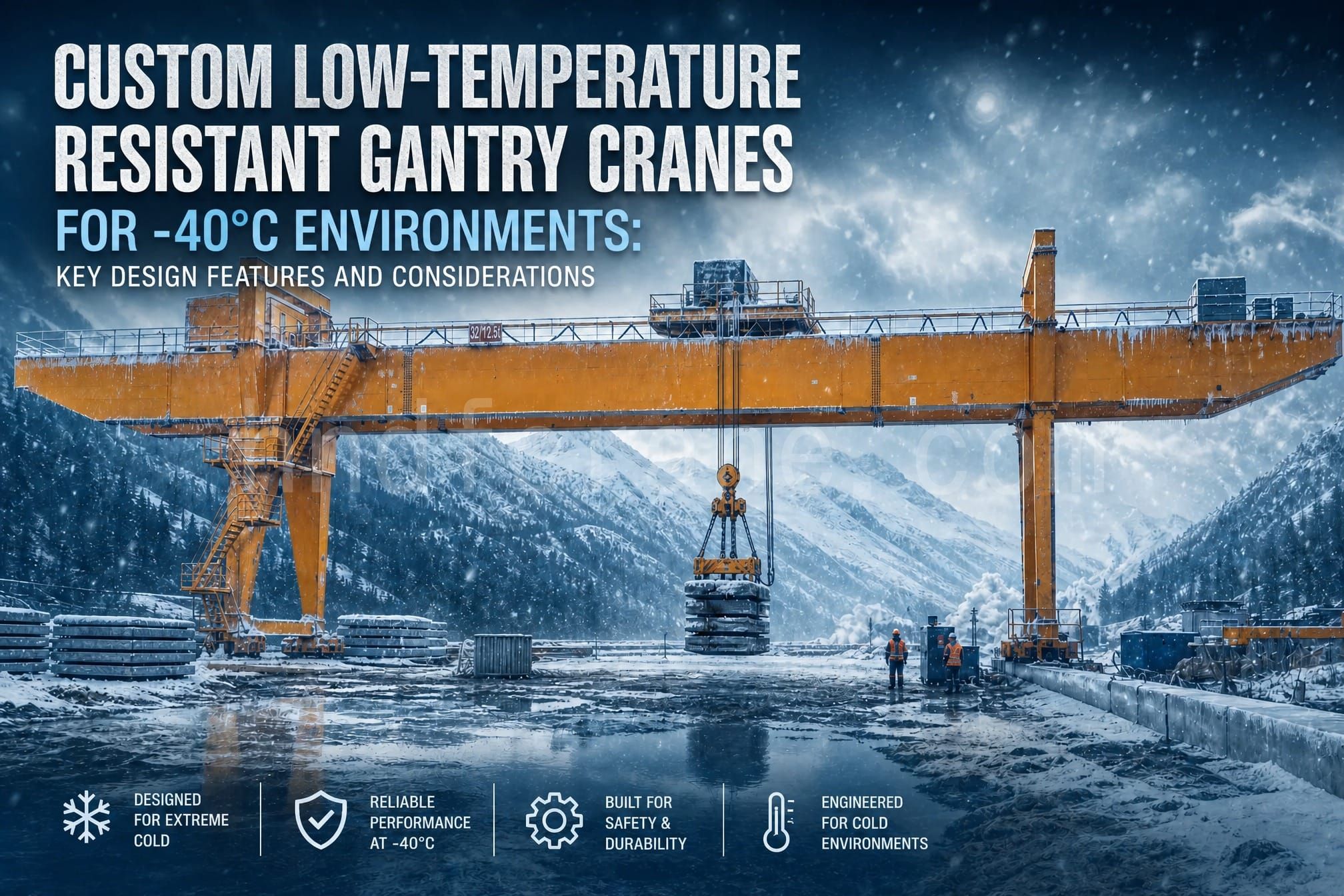
Standard-Portalkrane sind üblicherweise für einen Umgebungstemperaturbereich von -20 °C bis +40 °C ausgelegt. Bei extremen Umgebungsbedingungen wie Temperaturen bis zu -40 °C können bei herkömmlichen Kranen verschiedene Betriebsprobleme auftreten, darunter eine verringerte Stahlfestigkeit, Ausfälle der elektrischen Systeme und ein erhöhtes Risiko von Bauteilschäden. Für Einkaufsleiter und Projektingenieure ist die Auswahl eines speziell für niedrige Temperaturen entwickelten Portalkrans daher unerlässlich, um langfristige Zuverlässigkeit zu gewährleisten, die Betriebssicherheit zu erhöhen und die Wartungskosten zu senken.
Warum Standard-Portalkrane extremen Kältebedingungen nicht gewachsen sind
Standard-Portalkrane sind für normale Industrieumgebungen ausgelegt. Ihre Konstruktionsmaterialien, elektrischen Komponenten, Schmiersysteme und mechanischen Bauteile sind für den Betrieb bei üblichen Betriebstemperaturen optimiert. Sinkt die Umgebungstemperatur jedoch auf -30 °C oder gar -40 °C, bieten diese Standardkonfigurationen möglicherweise keine zuverlässige Leistung mehr.
Eine der größten Herausforderungen ist die abnehmende Schlagzähigkeit von herkömmlichem Baustahl. Mit sinkenden Temperaturen steigt die Anfälligkeit von Stahl für Sprödbrüche. Unter Hebelasten, Beschleunigungs- und Bremskräften oder kontinuierlichen Vibrationen im Betrieb erhöht sich das Risiko eines Strukturversagens. Daher sollten Portalkrane für Umgebungen mit Minustemperaturen aus Tieftemperatur-Baustahl mit hoher Schlagzähigkeit gefertigt werden, um die Zuverlässigkeit kritischer, tragender Bauteile wie Hauptträger und Stützen zu gewährleisten.
Niedrige Temperaturen belasten auch die elektrische Anlage erheblich. Standardkabel können steif werden und an Flexibilität verlieren, wodurch die Wahrscheinlichkeit von Rissen oder Ausfällen bei wiederholter Bewegung steigt. Darüber hinaus kann Kondensation aufgrund von Temperaturschwankungen zwischen Tag und Nacht Schaltschränke, Motoren und Steuerungskomponenten beeinträchtigen und potenziell zu Isolationsschäden, Kurzschlüssen oder ungeplanten Ausfallzeiten führen.
Ein für den Einsatz bei -40 °C ausgelegter Portalkran kann daher nicht einfach als Standardkran in kälteren Umgebungen verwendet werden. Er erfordert eine spezielle Konstruktion, die auf der minimalen Umgebungstemperatur und den tatsächlichen Betriebsbedingungen basiert. Von der Auswahl des geeigneten Stahls für niedrige Temperaturen über den elektrischen Schutz bis hin zum Wärmemanagement muss jedes kritische System optimiert werden, um einen sicheren, stabilen und zuverlässigen Betrieb des Krans während seiner gesamten Lebensdauer in extrem kalten Umgebungen zu gewährleisten.
Spezielle Konfigurationen für Portalkrane, die bei -40°C betrieben werden
Bei Betriebstemperaturen von -40 °C muss ein Portalkran über die üblichen Industriestandards hinausgehen. Die Strukturmaterialien, die elektrische Anlage, die mechanischen Komponenten und die Bedieneinrichtungen des Krans müssen speziell für extreme Kälte ausgelegt sein. Diese Optimierungen beugen Sprödbrüchen, elektrischen Ausfällen und instabilem Betrieb vor und gewährleisten so einen zuverlässigen Betrieb über die gesamte Lebensdauer des Krans.
Materialauswahl: Auswahl von Stahl, der seine Zähigkeit bei -40 °C beibehält
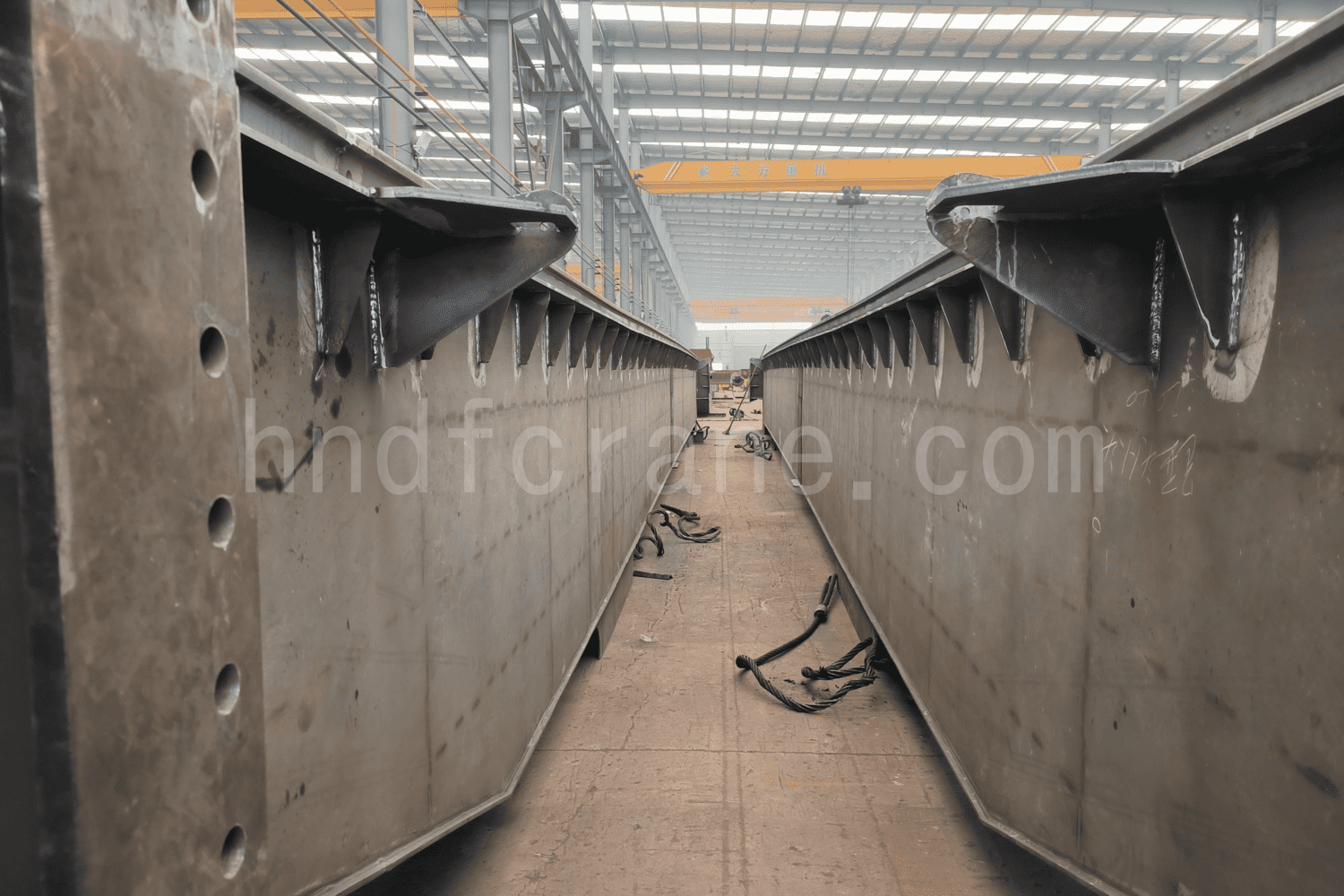
Die Stahlkonstruktion ist das primäre tragende Bauteil eines Portalkrans und einer der wichtigsten Sicherheitsfaktoren bei niedrigen Temperaturen. Mit sinkenden Temperaturen verliert herkömmlicher Baustahl an Schlagzähigkeit und wird zunehmend anfälliger für Sprödbrüche. Daher ist die Wahl der geeigneten Stahlsorte der erste und wichtigste Schritt bei der Konstruktion eines Portalkrans für niedrige Temperaturen.
Der verwendete Stahl sollte entsprechend der minimalen Betriebstemperatur des Krans ausgewählt werden, und seine Schlagzähigkeit sollte den geltenden Werkstoffnormen entsprechen.
Die Q355-Serie findet breite Anwendung im Bau von Brücken- und Portalkrankonstruktionen. Verschiedene Sorten sind für die Charpy-V-Kerbschlagprüfung bei unterschiedlichen Temperaturen zertifiziert:
| Stahlgüte | Charpy-V-Kerbschlagbiegeprüfungstemperatur |
|---|---|
| Q355B | +20°C |
| Q355C | 0 °C |
| Q355D | -20°C |
| Q355E | -40°C |
Für Anwendungen, die einen zuverlässigen Betrieb bei -40 °C erfordern, ist Q355E der bevorzugte Baustahl. Er ist für die Kerbschlagprüfung nach Charpy bei -40 °C qualifiziert und bietet die notwendige Tieftemperaturzähigkeit, um das Risiko von Sprödbrüchen zu minimieren. Dadurch wird sichergestellt, dass tragende Bauteile – wie Hauptträger, Endträger und Stützbeine – ihre strukturelle Integrität und Tragfähigkeit auch unter extremen Kältebedingungen beibehalten.
Im Gegensatz dazu kann die Zähigkeit von Standardwerkstoffen wie Q355B oder Q355C deutlich abnehmen, wenn sie in Umgebungen eingesetzt werden, die weit unterhalb ihres zulässigen Temperaturbereichs liegen. Unter Belastung durch Hebevorgänge, zyklische Beanspruchung oder Restspannungen durch Schweißnähte neigen diese Werkstoffe viel eher zu Rissbildung oder sogar Sprödbruch, was die Sicherheit, Zuverlässigkeit und Lebensdauer von Kränen ernsthaft beeinträchtigen kann.
Niedrigtemperaturbeständige Kabel: Vermeidung von Isolationsrissen und Stromausfällen
Standard-PVC-Kabel sind typischerweise für Temperaturen von -15 °C bis -20 °C geeignet. Sinkt die Umgebungstemperatur auf -30 °C oder sogar -40 °C, härtet die Isolierung aus und verliert ihre Flexibilität. Durch das wiederholte Auf- und Abwickeln von Kabeltrommeln, die kontinuierliche Bewegung von Kabelketten und Vibrationen der Anlagen kann die Isolierung reißen und beschädigt werden. Dies kann zu Kurzschlüssen, Stromverlusten, Stromausfällen oder sogar zum kompletten Ausfall des Krans führen.
Für Portalkrane, die in Umgebungen mit -40 °C betrieben werden, sollten spezielle, flexible Tieftemperaturkabel verwendet werden, wie zum Beispiel:
| Kabeltyp | Hauptmerkmale | Empfohlene Anwendungen |
|---|---|---|
| Flexibles Kabel aus NBR (Nitrilkautschuk) | Ausgezeichnete Beständigkeit gegen niedrige Temperaturen, Öl und Verschleiß. Bleibt auch in kalten Umgebungen flexibel. | Strom- und Steuerkabel für mobile Außengeräte wie Portalkrane und Hafenkrane. |
| PUR (Polyurethan) ummanteltes flexibles Kabel | Ausgezeichnete Kältebeständigkeit, Biegefestigkeit, Abriebfestigkeit, Ölbeständigkeit, Säure- und Laugenbeständigkeit sowie hervorragende Reißfestigkeit und lange Lebensdauer. | Schleppkettensysteme, Kabeltrommelsysteme, Anwendungen mit häufigen Bewegungen oder Schleppvorgängen sowie Kranmagnetkabel. |
Motorheizband: Gewährleistet zuverlässigen Kaltstart
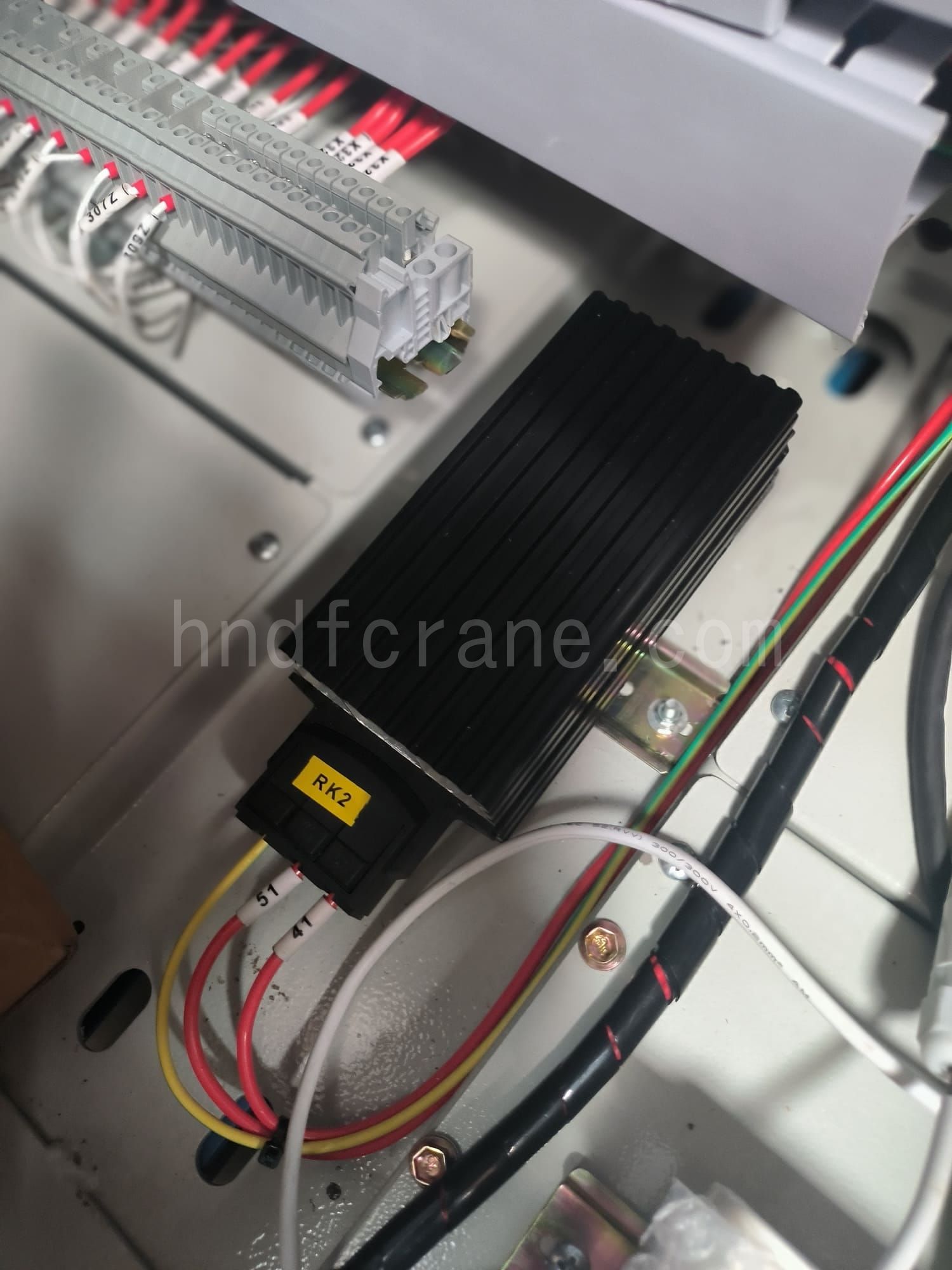
In extrem kalten Umgebungen bis zu -40 °C kann es bei Kranmotoren nach längeren Stillstandszeiten zu einem raschen Temperaturabfall kommen. Niedrige Temperaturen erhöhen nicht nur die Viskosität des Schmierfetts, was zu einem höheren Anlaufwiderstand führt, sondern können auch Kondensation an den Motorwicklungen verursachen. Dies verringert die Isolationsleistung und erhöht das Risiko von Anlaufstörungen und elektrischen Schäden.
Deshalb werden an Kranmotoren Heizbänder angebracht, um während der Stillstandszeiten eine kontinuierliche Wärmezufuhr zu gewährleisten und so den Motor auf einer für einen zuverlässigen Betrieb geeigneten Temperatur zu halten.
Zu den Hauptfunktionen gehören:
- Vermeidung von Anlaufstörungen bei niedrigen Temperaturen: Das Heizband wärmt den Motor vor dem Betrieb vor, wodurch der mechanische Widerstand durch verhärtetes Fett bei niedrigen Temperaturen reduziert und ein reibungsloser Motoranlauf bei -40°C gewährleistet wird.
- Verringerung des Kondensationsrisikos und Schutz der Motorisolierung: Sinkt die Temperatur eines abgeschalteten Motors unter den Taupunkt der Umgebungsluft, kann Luftfeuchtigkeit an den Motorwicklungen kondensieren. Das Heizband trägt dazu bei, die Motortemperatur über dem Taupunkt zu halten, minimiert so die Kondensation und verhindert einen Abfall des Isolationswiderstands.
- Verlängerung der Motorlebensdauer: Durch die Verringerung von Belastungen durch niedrige Temperaturen, feuchtigkeitsbedingten Schäden und anormalen Anlaufbedingungen verbessert das Heizband die Zuverlässigkeit der Motorwicklungen, Lager und zugehörigen Komponenten und reduziert gleichzeitig den Wartungsaufwand.
- Unterstützung des intermittierenden Betriebs: Bei im Winter betriebenen Portalkranen, bei nächtlichen Abschaltungen oder langen Stillstandszeiten sorgen Heizbänder dafür, dass die Motoren beim Neustart der Anlage für einen stabilen Betrieb bereit bleiben.
Schaltschrank mit Klimaanlage: Gewährleistung einer zuverlässigen Steuerungssystemleistung
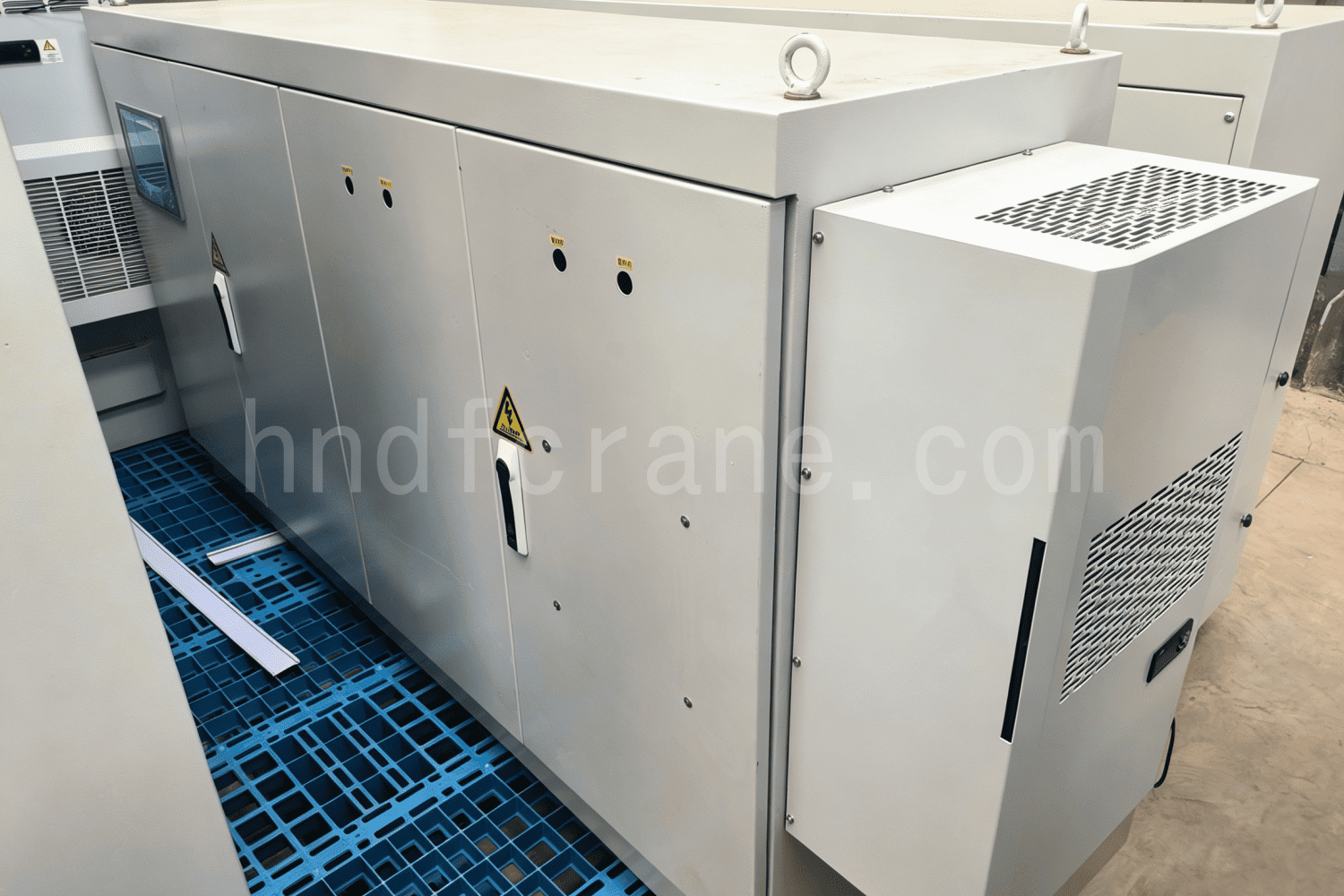
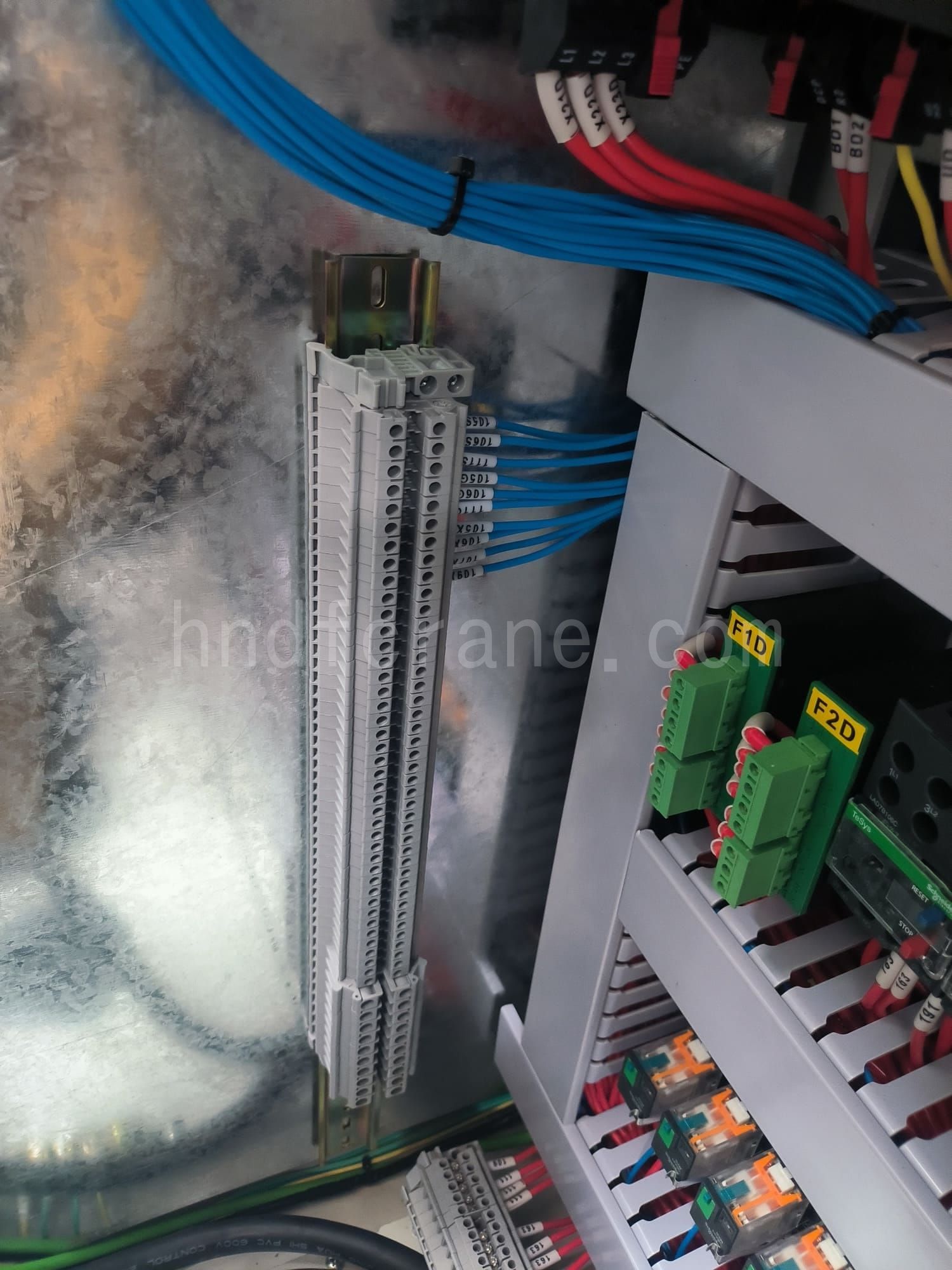
Bei Portalkranen, die in Umgebungen mit -40 °C betrieben werden, sollte der Schaltschrank mit einer Heizung oder Klimaanlage zur Regulierung der Innentemperatur ausgestattet sein. Durch die Aufrechterhaltung einer geeigneten Temperatur im Schaltschrank trägt das System dazu bei, die Auswirkungen niedriger Temperaturen und Temperaturschwankungen auf die elektrischen Bauteile zu minimieren und so einen stabilen Kranbetrieb zu gewährleisten.
- Sicherstellung des zuverlässigen Betriebs elektrischer Komponenten: Elektrische Komponenten wie SPSen, Frequenzumrichter (FU), Schütze, Relais und Leistungsmodule können bei extrem niedrigen Temperaturen ein vermindertes Anlaufverhalten, Fehlfunktionen oder instabilen Betrieb aufweisen. Ein Temperaturregelungssystem trägt dazu bei, die Schaltschranktemperatur in einem geeigneten Bereich zu halten und so den zuverlässigen Betrieb des Steuerungssystems zu gewährleisten.
- Verringerung des Kondensationsrisikos: In extrem kalten Umgebungen können Temperaturunterschiede zwischen Tag und Nacht sowie Temperaturänderungen während des Betriebs und der Abschaltphasen von Geräten zu Kondensation im Schaltschrank führen. Dies kann die Isolationsleistung beeinträchtigen und potenziell Kurzschlüsse oder Korrosion verursachen. Ein abgedichteter Schaltschrank in Kombination mit einem Temperaturregelungssystem trägt dazu bei, das Eindringen kalter und feuchter Luft zu reduzieren und somit das Kondensationsrisiko effektiv zu senken.
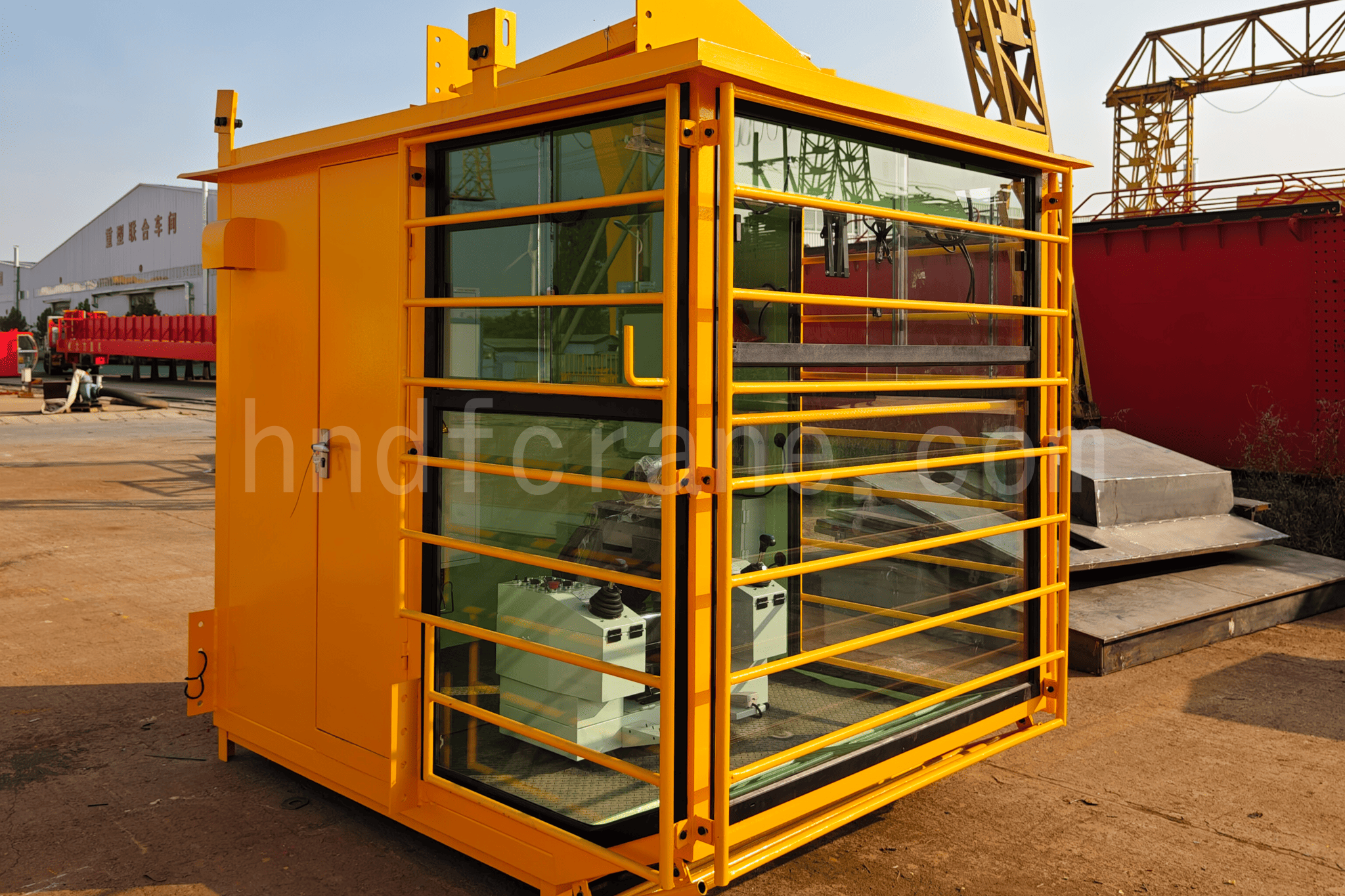
Isolierte Fahrerkabine mit Klimaanlage: Verbesserung des Bedienerkomforts und der Betriebssicherheit
Bei Portalkranen mit Fahrerkabine ist eine spezielle Optimierung der Arbeitsumgebung für niedrige Temperaturen erforderlich. Bei -40 °C bietet eine Standard-Fahrerkabine in der Regel nur eine begrenzte Wärmedämmung, wodurch es schwierig ist, eine angenehme Innentemperatur aufrechtzuerhalten. Dies kann den Komfort des Bedieners, die Arbeitseffizienz und die Genauigkeit der Bedienung beeinträchtigen. Daher sind Portalkrane für niedrige Temperaturen typischerweise mit einer isolierten Fahrerkabine in Kombination mit einer Klimaanlage ausgestattet.
Deshalb werden an Kranmotoren Heizbänder angebracht, um während der Stillstandszeiten eine kontinuierliche Wärmezufuhr zu gewährleisten und so den Motor auf einer für einen zuverlässigen Betrieb geeigneten Temperatur zu halten.
- Isolierte Fahrerkabine: Die vollständig geschlossene Kabinenkonstruktion verhindert das Eindringen kalter Luft. Wände, Decke und Boden der Kabine sind mit Wärmedämmmaterialien gefüllt, während Doppelverglasung oder Sicherheitsglasfenster die Wärmespeicherung und Kältebeständigkeit verbessern.
- Klimaanlage: Die Heizungs- und Kühlanlage hält die Kabinentemperatur über 10 °C und verhindert so durch extreme Kälte bedingte Einschränkungen der Handbeweglichkeit und verminderte Präzision. Sie bietet den Kranführern ein komfortables Arbeitsumfeld bei längeren Außeneinsätzen. Gleichzeitig reguliert die Klimaanlage Temperatur und Luftfeuchtigkeit in der Kabine, reduziert die Bildung von Kondenswasser an den Scheiben und im Innenraum und gewährleistet so klare Sicht und einen sicheren Kranbetrieb.
Wichtige Faktoren bei der Auswahl eines Tieftemperatur-Portalkrans
Bei Portalkranen, die in Umgebungen mit -40 °C oder darunter eingesetzt werden, sollten Beschaffungsentscheidungen nicht nur auf grundlegende Parameter wie Tragfähigkeit und Spannweite beschränkt sein. Es ist unerlässlich zu prüfen, ob der Kran systematisch für Tieftemperaturbedingungen ausgelegt ist. Folgende Faktoren sollten sorgfältig bewertet werden:
- Mindestbetriebstemperaturanforderung: Definieren Sie die tatsächliche niedrigste Betriebstemperatur der Arbeitsumgebung (z. B. -30 °C, -40 °C oder niedriger) und stellen Sie sicher, dass die Stahlkonstruktion, das elektrische System und die mechanischen Komponenten so ausgelegt sind, dass sie die entsprechenden Temperaturanforderungen erfüllen.
- Komplette Lösung für Tieftemperaturanwendungen: Optimale Tieftemperaturleistung lässt sich nicht durch die Aufrüstung einer einzelnen Komponente erreichen. Eine zuverlässige Lösung erfordert die umfassende Berücksichtigung mehrerer Systeme, darunter Stahlwerkstoffe, Kabel, Motoren, elektrische Komponenten und Fahrerkabinen. Teilweise Aufrüstungen können Schwachstellen schaffen und die Gesamtzuverlässigkeit der Anlage beeinträchtigen.
- Schutz wichtiger Komponenten vor niedrigen Temperaturen: Prüfen Sie, ob der Kran mit den erforderlichen Kälteschutzmerkmalen ausgestattet ist, darunter kältebeständiger Stahl, kältebeständige Kabel, kondensationsgeschützte Motoren, temperaturkontrollierte Schaltschränke und isolierte Fahrerkabinen. Diese Konfigurationen tragen zu einem stabilen und zuverlässigen Betrieb in extrem kalten Umgebungen bei.
- Erfahrung des Herstellers mit Tieftemperaturprojekten: Wählen Sie einen Hersteller mit nachgewiesener Erfahrung in Tieftemperatur-Kranprojekten. Ein erfahrener Anbieter kann Ihnen eine maßgeschneiderte Konstruktion anbieten, die auf den lokalen Klimabedingungen, den Anforderungen an die Stromversorgung, den Betriebszyklen und den Betriebsbedingungen basiert, anstatt einfach Standardkonfigurationen für Krane zu verwenden.
DAFANG CRANE: Ihr Partner für maßgeschneiderte Portalkranlösungen für niedrige Temperaturen
Mit jahrzehntelanger Erfahrung in Krankonstruktion, -fertigung und -anpassung ist DAFANG CRANE auf die Entwicklung von Hebelösungen für anspruchsvolle Einsatzumgebungen spezialisiert. Im Laufe der Jahre haben wir umfangreiche Erfahrung in der Lieferung von Kranen für extrem kalte Regionen und kundenspezifische Tieftemperaturanwendungen gesammelt.
Die Tieftemperatur-Portalkrane von DAFANG CRANE sind speziell für raue Kältebedingungen optimiert und verfügen über wichtige kältebeständige Merkmale wie schlagfeste Stahlkonstruktionen bis -40°C, kältebeständige elektrische Systeme und speziell ausgewählte Komponenten, um einen zuverlässigen Betrieb in extremen Umgebungen zu gewährleisten.
DAFANG CRANE Tieftemperatur-Portalkrangehäuse
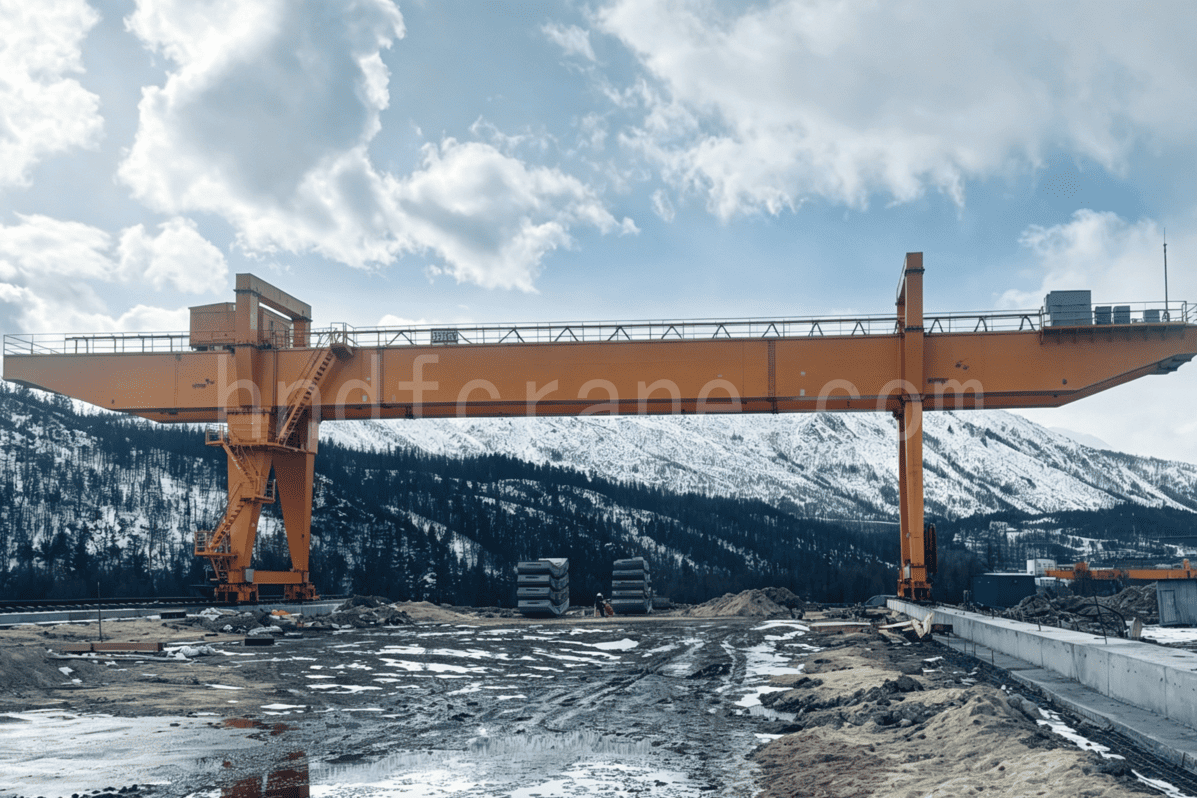
DAFANG CRANE hat für einen Kunden in Russland einen 32/12,5-Tonnen-Doppelträger-Portalkran kundenspezifisch angefertigt, der für einen zuverlässigen Betrieb in einem Temperaturbereich von -40 °C bis +40 °C ausgelegt ist. Um eine stabile Leistung unter extremen Kältebedingungen zu gewährleisten, wurde der Kran mit folgenden Tieftemperaturanpassungen ausgestattet:
- Hauptstrukturmaterial: Alle Stahlplatten werden aus Q355E-Stahl mit niedriger Temperaturbeständigkeit hergestellt und einer Kugelstrahlbehandlung unterzogen, um die Oberflächenqualität zu verbessern und die strukturelle Haltbarkeit in kalten Umgebungen zu erhöhen.
- Motorschutz: Alle Hub- und Fahrmotoren sind mit Heizbändern ausgestattet, um Anlaufstörungen durch extrem niedrige Temperaturen nach längeren Stillstandszeiten zu verhindern.
- Elektrisches System: Der Schaltschrank ist mit einer integrierten Klimaanlage und Heizung ausgestattet, um eine geeignete Innentemperatur aufrechtzuerhalten und einen stabilen Betrieb der elektrischen Komponenten auch bei extremen Kältebedingungen zu gewährleisten.
- Fahrerkabine: Der Kran ist mit einer isolierten Fahrerkabine mit Klimaanlage und Heizung ausgestattet, um ein komfortables Arbeitsumfeld zu gewährleisten. Ein Überwachungssystem ermöglicht die Echtzeit-Überwachung des Arbeitsbedingungen des Bedieners.
- Kabelauswahl: Das Stromversorgungssystem des Krans verwendet kältebeständige Flachkabel mit hervorragender Flexibilität und Biegefestigkeit in kalten Umgebungen. Sie sind so konstruiert, dass sie wiederholten Bewegungen, Biegungen und Wicklungen während des Kranbetriebs standhalten und so das Risiko von Isolationsrissen durch niedrige Temperaturen reduzieren.
Die Tieftemperatur-Portalkrane von DAFANG CRANE sind speziell für extrem kalte Umgebungen konzipiert. Durch die Kombination von kältebeständigem Stahl, optimierten elektrischen Systemen und Schutzmaßnahmen für wichtige Komponenten bieten die Krane eine verbesserte Anpassungsfähigkeit an extreme Kältebedingungen. Dank langjähriger Projekterfahrung hat DAFANG CRANE Portalkranlösungen für Regionen mit niedrigen Temperaturen wie Russland entwickelt, die für Betriebstemperaturen von -40 °C und -45 °C geeignet sind.
Wir bieten ein umfassendes Leistungsspektrum, das auf die jeweiligen Temperatur-, Betriebsbedingungen und Standortanforderungen jedes Projekts abgestimmt ist. Dazu gehören Lösungsentwicklung, Parameteranpassung, Gerätefertigung, Installation vor Ort und Kundendienst. Ob Standard-Portalkrane oder Krane für extreme Temperaturbereiche – DAFANG CRANE bietet professionelle und maßgeschneiderte Lösungen gemäß den Kundenanforderungen.
Suchen Sie einen Portalkran für Umgebungen mit niedrigen Temperaturen? Dann kontaktieren Sie DAFANG CRANE. Unser erfahrenes Ingenieurteam unterstützt Sie bei der Auswahl und Konfiguration des Krans, abgestimmt auf Ihre Projektanforderungen, und trägt so zu einem sicheren, stabilen und effizienten Betrieb auch in extrem kalten Umgebungen bei.

Ich bin Cindy, habe 10 Jahre Berufserfahrung in der Kranbranche und eine Fülle an Fachwissen angesammelt. Ich habe für über 500 Kunden die zufriedenstellendsten Kräne ausgewählt. Wenn Sie irgendwelche Bedürfnisse oder Fragen zu Kränen haben, können Sie sich gerne an mich wenden. Ich werde mein Fachwissen und meine praktische Erfahrung nutzen, um Ihnen bei der Lösung des Problems zu helfen!
Senden Sie Ihre Anfrage
- Email: sales@hndfcrane.com
- WhatsApp: +86 191 3738 6654
- Telegramm: +86 191 3738 6654
- Tel: +86-373-581 8299
- Fax: +86-373-215 7000
- Hinzufügen: Industriegebiet Changnao, Stadt Xinxiang, Provinz Henan, China
 WeChat
- Laufkräne
- Zweiträgerbrückenkrane
- Einträgerbrückenkrane
- Europäische Einträger-Brückenkrane
- Explosionsgeschützte Laufkräne
- Greifer- und Magnetbrückenkrane
- Einschienenkrane
- Gießereikrane
- Arbeitsplatzkrane
- Auslegerkrane
- Wandmontierte Auslegerkrane
- Wandfahrkrane
- Freistehende Schwenkkrane
- Aluminium-Schwenkkrane: Leichtgewicht, leichtgängiger Schwenkarm für einfaches Heben
- Auslegerkrane: Effizientes Heben leichter Lasten für die mechanische Montage über kurze Distanzen
- Manuelle, freistehende Schwenkkrane: Effiziente manuelle Hebelösungen für beengte Platzverhältnisse
- Elektrische Freistehende Schwenkkrane: Vollelektrische Lösung für schnelles Heben mit hoher Tragfähigkeit
- Gelenkschwenkkrane: Präzises Heben mit doppelter Armflexibilität
- Portalkräne
- Zweiträger-Portalkrane
- Halbportalkrane
- Einträger-Portalkrane
- Traversenportalkrane
- Containerbrücken
- Verstellbare Portalkräne
- Tragbare Portalkräne
- Europäische Portalkräne
- Branchen
- Allgemeine Fertigung
- Abfallbehandlung
- Vorgefertigt
- Leistung
- Stein
- Papierherstellung
- Metallproduktion
- Brückenbau
- Hafenkräne: Für den Container- und Schüttgutumschlag
- Brückenkräne für die Erdöl- und Gasindustrie: Steigerung der Betriebseffizienz
- Schiffskräne für effizientes Beladen von Schiffen
- Brückenkräne für die Automobilindustrie: Effiziente Automatisierungslösungen
- Elektrische Hebezeuge
- Elektroseilzüge
- Elektrokettenzüge
- Elektrische Hebezeuge vom europäischen Typ
- Europäische Elektrokettenzüge: Reibungsloser Betrieb, geringe Geräuschentwicklung und Energieeffizienz
- Manuelle Hebelzüge: Ideal für Zug- und Hebearbeiten
- Handkettenzüge: Manuelles Heben für Bereiche ohne Strom
- Elektrische Hebezeuge mit geringer Bauhöhe: Kompaktes Design für maximale Platzeffizienz
- Druckluftkettenzüge: Sanftes Handling für den industriellen Einsatz
- Explosionsgeschützte Handkettenzüge: Funkenbeständige Konstruktion aus Kupferlegierung für explosionsgefährdete Bereiche
- Explosionsgeschützte elektrische Kettenzüge für Hebearbeiten in explosionsgefährdeten Bereichen
- Um
- Fälle
- Nachricht
- Häufig gestellte Fragen
- Herunterladen
- Blogs
- Online-Tools zur Berechnung der Kranradlast
- VR-Panorama
- Kontaktiere uns
- Email: sales@hndfcrane.com
- WhatsApp: +86 191 3738 6654
- Telegramm: +86 191 3738 6654
- Tel: +86-373-581 8299
-