



Overhead Crane Operation: Basic Methods and Emergency Handling

2026 年 9 月 11 日

Overhead crane operation affects both lifting efficiency and site safety. This guide summarizes key operating points for startup, the hoisting mechanism, hook alignment, smooth lifting, brake failure response, and emergency situations such as power failure, control failure, fire, and emergency signals.

Overhead Crane Operation Basic Methods and Emergency Handling

启动前的准备工作

启动起重机前,请先连接主电源。主电源箱通常位于地面。合上电源开关后,驾驶室内的控制箱内的电源指示灯应亮起,表示起重机已通电。

通电后,关闭所有安全联锁装置,包括操作室门和通道门。关闭紧急开关,并确保所有控制器手柄均处于零位。然后,在操作前,闭合控制箱上的刀闸开关并连接主接触器。

Basic Operation of the Hoisting Mechanism

The hoisting mechanism is the core mechanism of an overhead crane. Its condition directly affects safe crane operation. Most overhead cranes use a cam controller or master controller. The middle position is zero, or stop. Four to five speed positions are arranged on each side. When the hoisting controller handle leaves zero, the hoisting mechanism starts. Moving the handle left raises the lifting device; moving it right lowers the lifting device.

In the following tables, Gn represents the rated load. The operator should choose the correct speed position according to the load and avoid sudden starting, sudden braking, and improper gear changes.

起重作业

Load conditionLoad rangeOperating method
Light-load liftingQ ≤ 0.4GnMove the handle step by step from zero in the hoisting direction until the fifth position. Stay at each position for more than 1 second. From standstill to rated speed, the process normally takes more than 5 seconds. When the lifting hook reaches the required height, return the handle to zero step by step so the motor slows down before braking.
Medium-load liftingQ ≈ 0.4Gn-0.7GnStart slowly and accelerate gradually. Stay at the first hoisting position for about 2 seconds, then continue step by step, staying at each position for about 1 second until the fifth position. Then slow down gradually before braking.
Heavy-load liftingQ ≥ 0.7GnIf the motor cannot start in the first hoisting position because the load torque is too high, quickly move the handle to the second position and lift the load gradually. After the load is lifted, accelerate step by step to the fifth position. If the motor still cannot start in the second position, the load may exceed the rated lifting capacity and lifting should stop immediately.

When a heavy load reaches the required height, return the handle to zero step by step. Stay slightly longer at the second position to reduce impact, but do not stay at the first position. Return quickly to zero, otherwise the load may slide down.

下降作业

Lowering is the opposite of lifting. During lifting, speed increases step by step. During lowering, the first, second, third, fourth, and fifth lowering positions become slower step by step.

Load conditionLoad rangeOperating method
Light-load loweringQ ≤ 0.4GnMove the handle to the first lowering position. The suspended load will descend at about 1.5 times the rated hoisting speed. This position can improve efficiency during long-distance lowering.
Medium-load loweringQ ≈ 0.4Gn-0.7GnThe third lowering position is more suitable. Do not use the first lowering position for high-speed descent, as this may cause an accident.
Heavy-load loweringQ ≥ 0.7Gn将手柄移至第五档下降位置,并以最慢的速度下降负载。当负载到达所需停止位置时,立即将手柄从第五档返回零位,切勿停顿,以免速度加快和制动冲击过大。

During heavy-load lowering, do not place the handle in the first lowering position. The load may descend at up to nearly twice the rated hoisting speed, which may damage the motor and cause a serious load slipping accident. For long-distance heavy-load lowering, do not use reverse-current braking. In other words, do not place the handle in the first hoisting position. In that condition, the motor starting torque is lower than the load torque, and the load may drive the motor in reverse. The rotor current will be very high and may burn the motor.

Safety Points During Lifting and Traveling

Before lifting any object, align the hook with the center of gravity of the load, or correctly estimate the load weight and center of gravity before positioning the hook. For left-right alignment, observe the wire rope deviation and move the crane bridge left or right. For front-back alignment, lift the load slowly first, then observe the tightness of the front and rear slings and move the trolley until both sides are evenly tensioned.

After the wire rope is tightened, check the load, lifting attachment, and surrounding area before lifting. Start at low speed. After the load clears nearby obstacles, move the handle step by step to a higher speed position. Do not push the controller quickly or start suddenly, as sudden movement may cause the load to hit people or equipment, or may break the wire rope.

In general, the load should be lifted high enough to clear the highest ground obstacle in the travel area by about half a meter. Then move the trolley to the lifting route and travel along that route. Do not move a suspended load over people or equipment. If the load must pass above a person’s position, give a signal and wait until the person moves away.

During work, limit switches must not be used as stop buttons to cut power. It is also not allowed to pull down the knife switch and cut power while the motor is running under load. When the load reaches the required location, align it with the planned landing point before lowering. Lower it gently near the ground. After the load is placed down, do not immediately loosen the rope or remove the hook. Confirm that the load is stable and wait for the ground signal before releasing the rope and hook.

Brake Failure and Emergency Handling

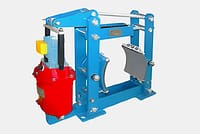
During actual overhead crane operation, brake failure may occur. Brake failure means that after the controller handle returns to zero, the hook or crane body continues moving. If the hoisting brake suddenly fails, the operator should stay calm, judge the situation correctly, and take emergency action.

For mechanical handling, first jog the crane or operate it in the opposite direction once so that the load rises to a certain height. If the load can rise, do not cut off power. Then return the handle to zero. If the load starts sliding again, the mechanical fault has not been eliminated. Send an emergency signal immediately and look for a place where the load can be lowered. If the current position is suitable, place the controller handle in the slowest lowering position and lower the load. Never allow the load to fall freely.

If the load cannot be lowered directly at the current position, quickly move the controller handle step by step to the slowest hoisting position. Never move it to the fastest hoisting position. A large torque change may trip the overcurrent relay, cut off power, and cause the load to fall freely. According to the actual situation, repeat lifting and lowering operations as needed, and use the crane bridge and trolley to move the load to a safe lowering position.

If the load still slides down after jogging or reverse operation, the fault may be electrical. In this case, immediately pull down the emergency switch and the knife switch in the protection box to cut off power. Since the brake is normally closed, cutting off power will close the brake and stop the load. After that, identify and repair the fault.

Other Emergency Situations

SituationHandling method
Sudden power failure during liftingReturn the controller handle to zero, pull down the knife switch in the control box, and ask about the cause. If the power failure is short, wait in the operator cabin. If it lasts a long time, open the brake release handle or pry the brake open to lower the load.
Control mechanism failureImmediately pull down the emergency switch, then pull down the knife switch to cut off power and wait for inspection.
Fire during operationImmediately pull down the emergency switch, then cut off power. Use a dry powder or carbon dioxide fire extinguisher. If the smoke or fire is too large to extinguish, evacuate and call emergency services.
Emergency signal from any personEven if the signal is not standard, stop work immediately. Return the handle to zero or pull the emergency switch, then pull the knife switch to cut off power.
辛迪
辛蒂

我是Cindy,在起重机行业有10年的工作经验,积累了丰富的专业知识,为500+客户挑选了满意的起重机,如果您对起重机有任何需求或疑问,欢迎随时联系我,我会用我的专业知识和实践经验帮您解决问题!

标签: Overhead crane operation

发送您的询问

微信 微信
单击或拖动文件到此区域以上传。 您最多可以上传 5 个文件。