
-
Branchen
-
Allgemeine Fertigung
-
Abfallbehandlung
-
Vorgefertigt
-
Leistung
-
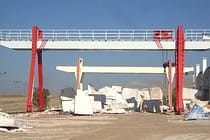
Stein
-
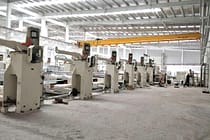
Papierherstellung
-
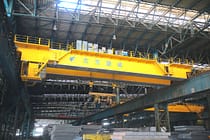
Metallproduktion
-
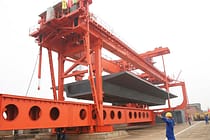
Brückenbau
-
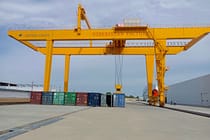
Hafenkräne: Für den Container- und Schüttgutumschlag
-
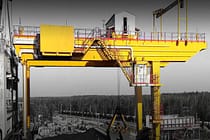
Brückenkräne für die Erdöl- und Gasindustrie: Steigerung der Betriebseffizienz
-
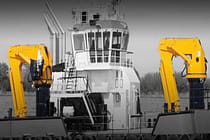
Schiffskräne für effizientes Beladen von Schiffen
-
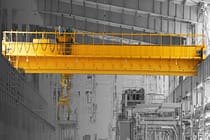
Brückenkräne für die Automobilindustrie: Effiziente Automatisierungslösungen
-
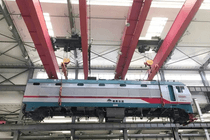
Brückenkranlösungen für den Schienenverkehr: Gleisbau, Schienenfahrzeugwartung und Containerumschlag
-
Brückenkrane für die Lebensmittel- und Getränkeindustrie: Zuverlässige Lösungen für effiziente Handhabung
-
Brückenkräne für die effiziente Herstellung von Zement, Glas, Ziegel und Betonfertigteilen
-
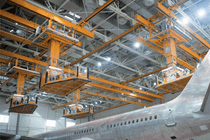
Brückenkräne für die Luftfahrtindustrie: Flugzeugwartung und -montage
-
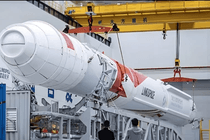
Brückenkräne für die Luft- und Raumfahrt: Präzises Heben für Raketenstart und -transport
-
-
Produkte
-
Laufkräne
-
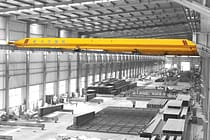
Einträgerbrückenkrane
-
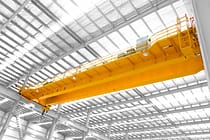
Zweiträgerbrückenkrane
-
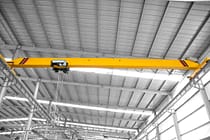
Europäische Einträger-Brückenkrane
-
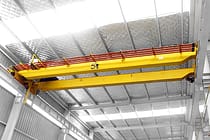
Europäische Doppelträger-Brückenkrane
-
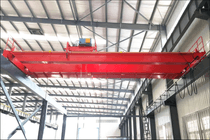
Explosionsgeschützte Laufkräne
-
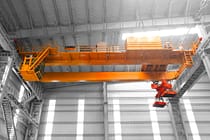
Greifer- und Magnetbrückenkrane
-
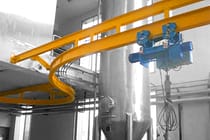
Einschienenkrane
-
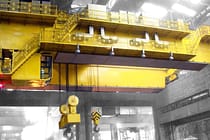
Gießereikrane
-
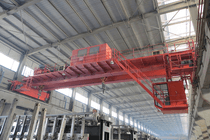
Isolierungsbrückenkräne
-
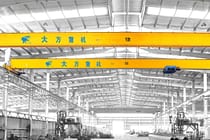
Brückenkräne mit geringer Bauhöhe
-
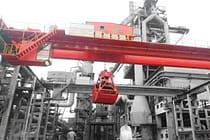
Schnappen Sie sich Laufkräne
-
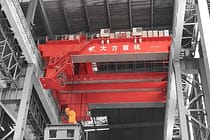
Pfannenbrückenkrane
-
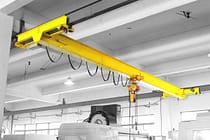
Untergehängte Brückenkrane
-
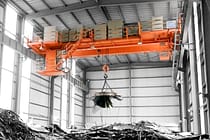
Elektromagnetische Laufkrane
-
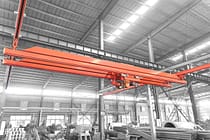
Arbeitsplatzkrane
-
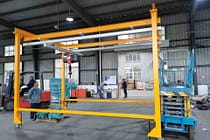
Freistehende Arbeitsplatz-Brückenkräne
-
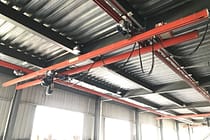
Deckenmontierter Brückenkran
-
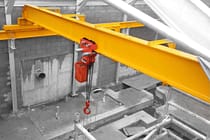
Manuelle Brückenkräne
-
-
Portalkräne
-
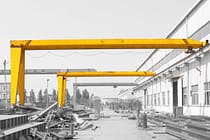
Halbportalkrane
-
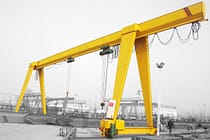
Einträger-Portalkrane
-
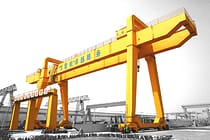
Zweiträger-Portalkrane
-
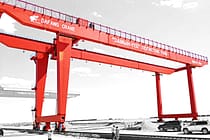
Containerbrücken
-
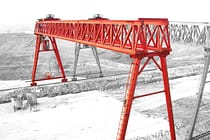
Traversenportalkrane
-
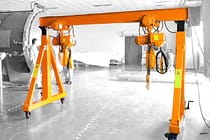
Verstellbare Portalkräne
-
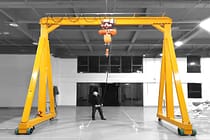
Tragbare Portalkräne
-
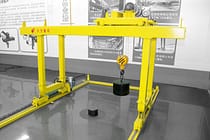
Europäische Portalkräne
-
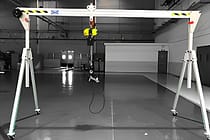
Aluminium-Portalkrane
-
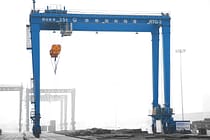
Containerbrücken mit Gummireifen
-
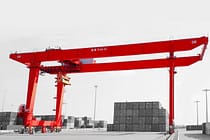
Schienenmontierte Containerbrücken
-
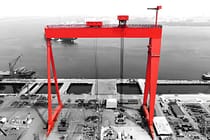
Werft-Portalkran
-
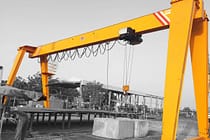
Europäische Einträger-Portalkrane
-
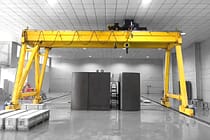
Europäische Doppelträger-Portalkrane
-
- Auslegerkrane
- Spezialkrane
- Elektrische Hebezeuge
- Transferwagen
-
Laufkräne
-
Kranteile
-
Greifschaufeln
-
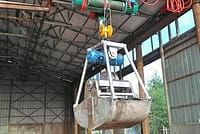
Elektrischer Greifer aus Edelstahl
-
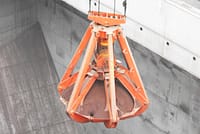
Mechanischer Mehrschalengreifer mit vier Seilen
-
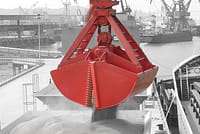
Mechanischer Zweischalengreifer mit vier Seilen
-
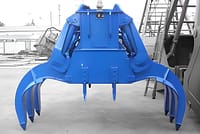
Elektrohydraulische Rechteckgreifer
-
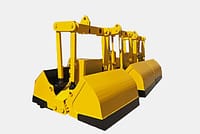
Elektrohydraulische Zweischalengreifer
-
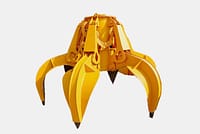
Elektrohydraulische Mehrschalengreifer, hydraulische Kaktusgreifer
-
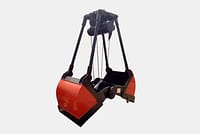
Elektromotorgreifer
-
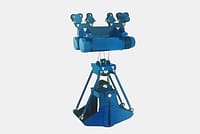
Elektrischer Einschienen-Greiferschaufel mit Einschienenbahnhebezeug
-
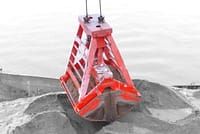
Zweischalengreifer mit Fernbedienung
-
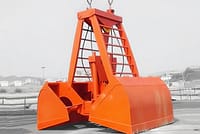
Mechanische Zweiseil-Zweischalengreifer
-
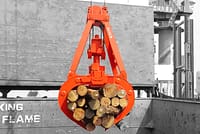
Holzgreifer
-
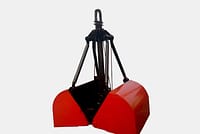
Greifschaufel mit Einfachseil
-
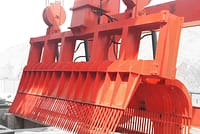
Rechenreinigungsmaschinen
-
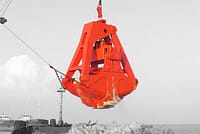
Baggergreifer
-
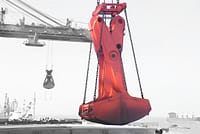
Trimmgreifer
-
- Kranspreizer
-
Kran-Ersatzteile
-
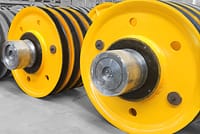
Kranscheiben
-
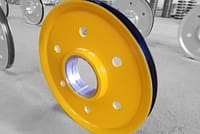
Drahtseilrollen
-
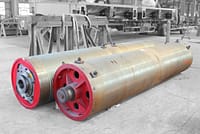
Kranseiltrommel
-
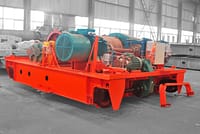
Kranwagen
-
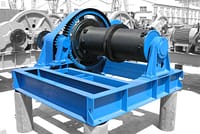
Elektrische Winde
-
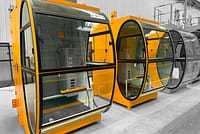
Kranführerkabine
-
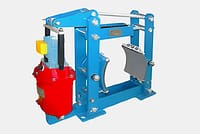
Brückenkranbremsen
-
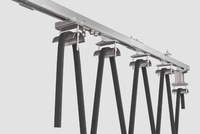
Brückenkrankabel
-
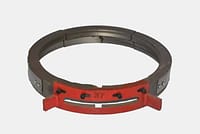
Seilführungen für Brückenkräne
-
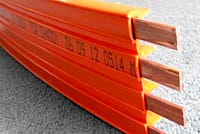
Brückenkranleitungen und Stromversorgungsleitungen
-
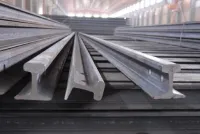
Brückenkranschienen
-
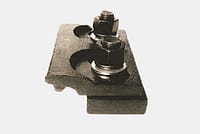
Schienenklammern für Brückenkräne
-
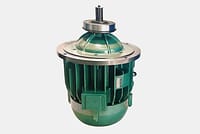
Brückenkranmotoren
-
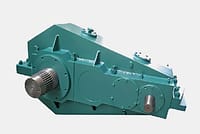
Brückenkran-Reduzierstücke
-
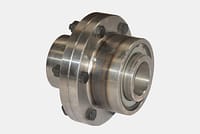
Kupplungen für Brückenkräne
-
- Kranräder
-
Greifschaufeln
- Unternehmen
- Kontakt
-
Branchen
-
Allgemeine Fertigung
-
Abfallbehandlung
-
Vorgefertigt
-
Leistung
-
Stein
-
Papierherstellung
-
Metallproduktion
-
Brückenbau
-
Hafenkräne: Für den Container- und Schüttgutumschlag
-
Brückenkräne für die Erdöl- und Gasindustrie: Steigerung der Betriebseffizienz
-
Schiffskräne für effizientes Beladen von Schiffen
-
Brückenkräne für die Automobilindustrie: Effiziente Automatisierungslösungen
-
Brückenkranlösungen für den Schienenverkehr: Gleisbau, Schienenfahrzeugwartung und Containerumschlag
-
Brückenkrane für die Lebensmittel- und Getränkeindustrie: Zuverlässige Lösungen für effiziente Handhabung
-
Brückenkräne für die effiziente Herstellung von Zement, Glas, Ziegel und Betonfertigteilen
-
Brückenkräne für die Luftfahrtindustrie: Flugzeugwartung und -montage
-
Brückenkräne für die Luft- und Raumfahrt: Präzises Heben für Raketenstart und -transport
-
-
Produkte
-
Laufkräne
-
Einträgerbrückenkrane
-
Zweiträgerbrückenkrane
-
Europäische Einträger-Brückenkrane
-
Europäische Doppelträger-Brückenkrane
-
Explosionsgeschützte Laufkräne
-
Greifer- und Magnetbrückenkrane
-
Einschienenkrane
-
Gießereikrane
-
Isolierungsbrückenkräne
-
Brückenkräne mit geringer Bauhöhe
-
Schnappen Sie sich Laufkräne
-
Pfannenbrückenkrane
-
Untergehängte Brückenkrane
-
Elektromagnetische Laufkrane
-
Arbeitsplatzkrane
-
Freistehende Arbeitsplatz-Brückenkräne
-
Deckenmontierter Brückenkran
-
Manuelle Brückenkräne
-
-
Portalkräne
-
Halbportalkrane
-
Einträger-Portalkrane
-
Zweiträger-Portalkrane
-
Containerbrücken
-
Traversenportalkrane
-
Verstellbare Portalkräne
-
Tragbare Portalkräne
-
Europäische Portalkräne
-
Aluminium-Portalkrane
-
Containerbrücken mit Gummireifen
-
Schienenmontierte Containerbrücken
-
Werft-Portalkran
-
Europäische Einträger-Portalkrane
-
Europäische Doppelträger-Portalkrane
-
- Auslegerkrane
- Spezialkrane
- Elektrische Hebezeuge
- Transferwagen
-
Laufkräne
-
Kranteile
-
Greifschaufeln
-
Elektrischer Greifer aus Edelstahl
-
Mechanischer Mehrschalengreifer mit vier Seilen
-
Mechanischer Zweischalengreifer mit vier Seilen
-
Elektrohydraulische Rechteckgreifer
-
Elektrohydraulische Zweischalengreifer
-
Elektrohydraulische Mehrschalengreifer, hydraulische Kaktusgreifer
-
Elektromotorgreifer
-
Elektrischer Einschienen-Greiferschaufel mit Einschienenbahnhebezeug
-
Zweischalengreifer mit Fernbedienung
-
Mechanische Zweiseil-Zweischalengreifer
-
Holzgreifer
-
Greifschaufel mit Einfachseil
-
Rechenreinigungsmaschinen
-
Baggergreifer
-
Trimmgreifer
-
- Kranspreizer
-
Kran-Ersatzteile
-
Kranscheiben
-
Drahtseilrollen
-
Kranseiltrommel
-
Kranwagen
-
Elektrische Winde
-
Kranführerkabine
-
Brückenkranbremsen
-
Brückenkrankabel
-
Seilführungen für Brückenkräne
-
Brückenkranleitungen und Stromversorgungsleitungen
-
Brückenkranschienen
-
Schienenklammern für Brückenkräne
-
Brückenkranmotoren
-
Brückenkran-Reduzierstücke
-
Kupplungen für Brückenkräne
-
- Kranräder
-
Greifschaufeln
- Unternehmen
- Kontakt



Overhead Crane Couplings: Common Types and Safety Requirements
Inhaltsverzeichnis
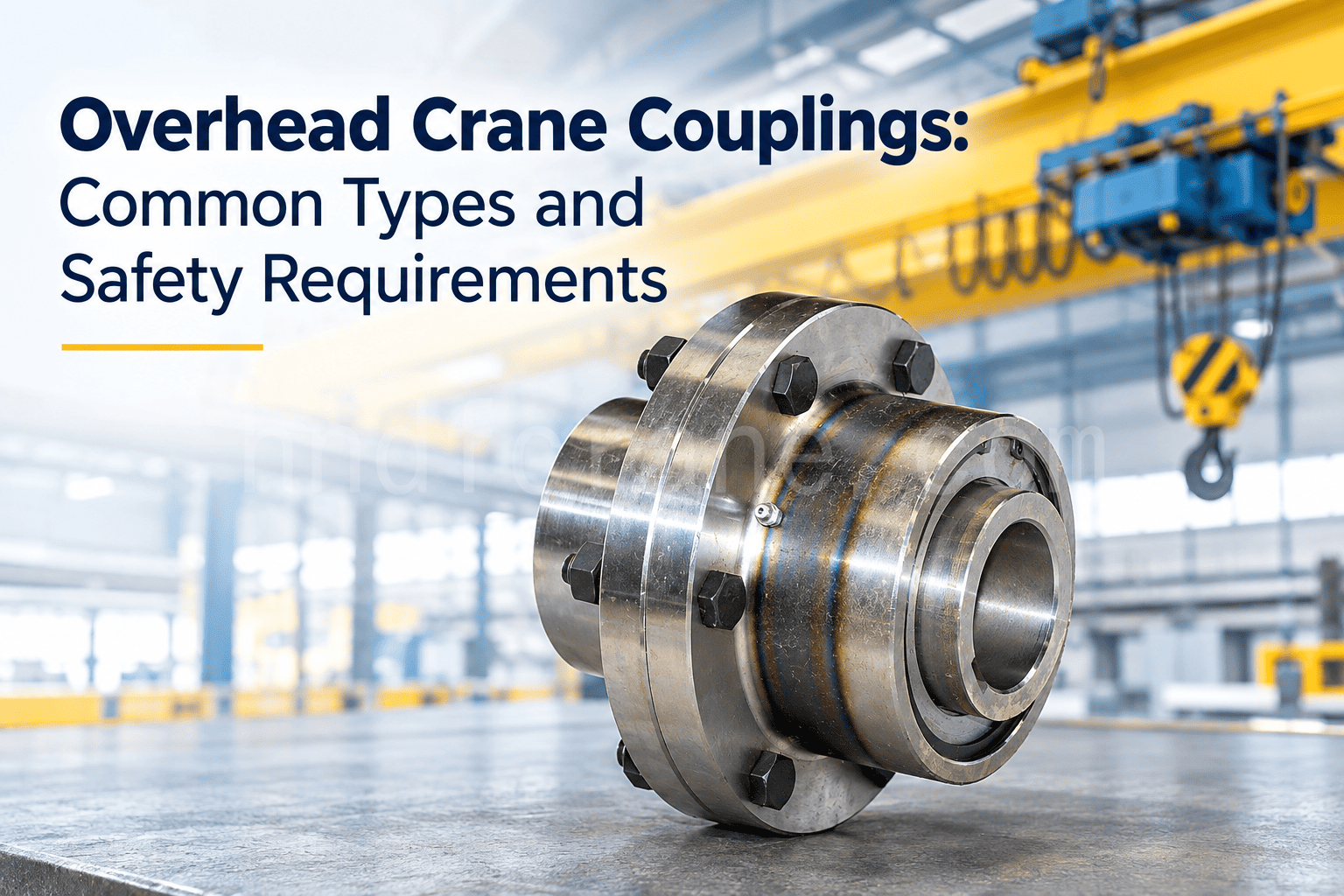
Overhead crane couplings are mechanical components used to connect shafts. In cranes, they transmit torque from the motor through the gearbox and coupling to the low-speed shaft, enabling lifting and lowering of loads, trolley travel, and crane travel. Common types include gear couplings, plum-blossom elastic couplings, and universal couplings, with the gear coupling being the most widely used on cranes.
Overhead Crane Coupling Types and Structure
The couplings of each crane mechanism usually use gear couplings, and some use plum-blossom elastic couplings or universal couplings. These couplings all have reliable operation, strong transmission capacity, and a large allowable displacement. The connection between a coupling and a cylindrical shaft uses a keyed interference fit.
Overhead Crane Gear Coupling
The gear coupling has the advantages of small size, long service life, a large allowable offset between the two connected shafts, low installation accuracy requirements, and reliable operation. Its disadvantages are heavy weight and complex manufacturing.
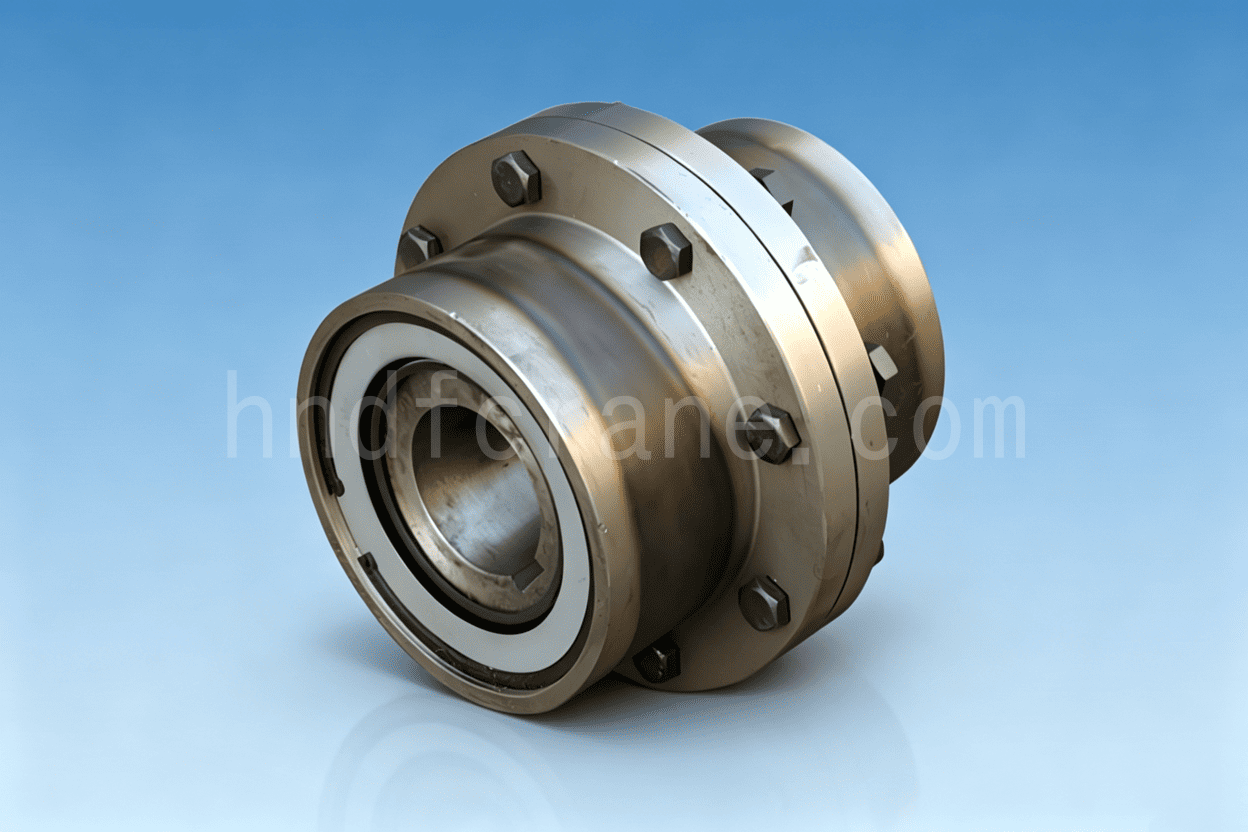
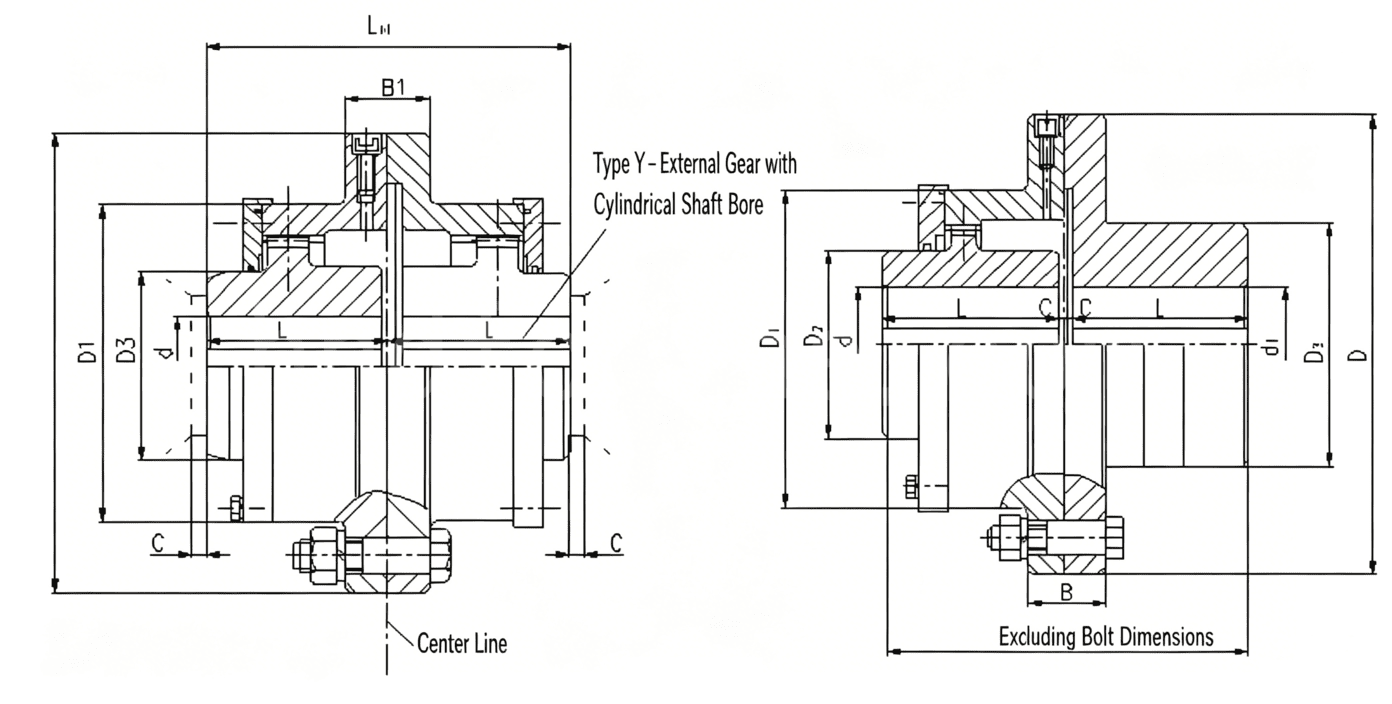
The gear coupling transmits torque through internal and external teeth, and compensates for displacement through the tooth clearance. The allowable angular displacement of ordinary teeth is generally 0°30′, and that of crowned teeth is generally 1°30′.
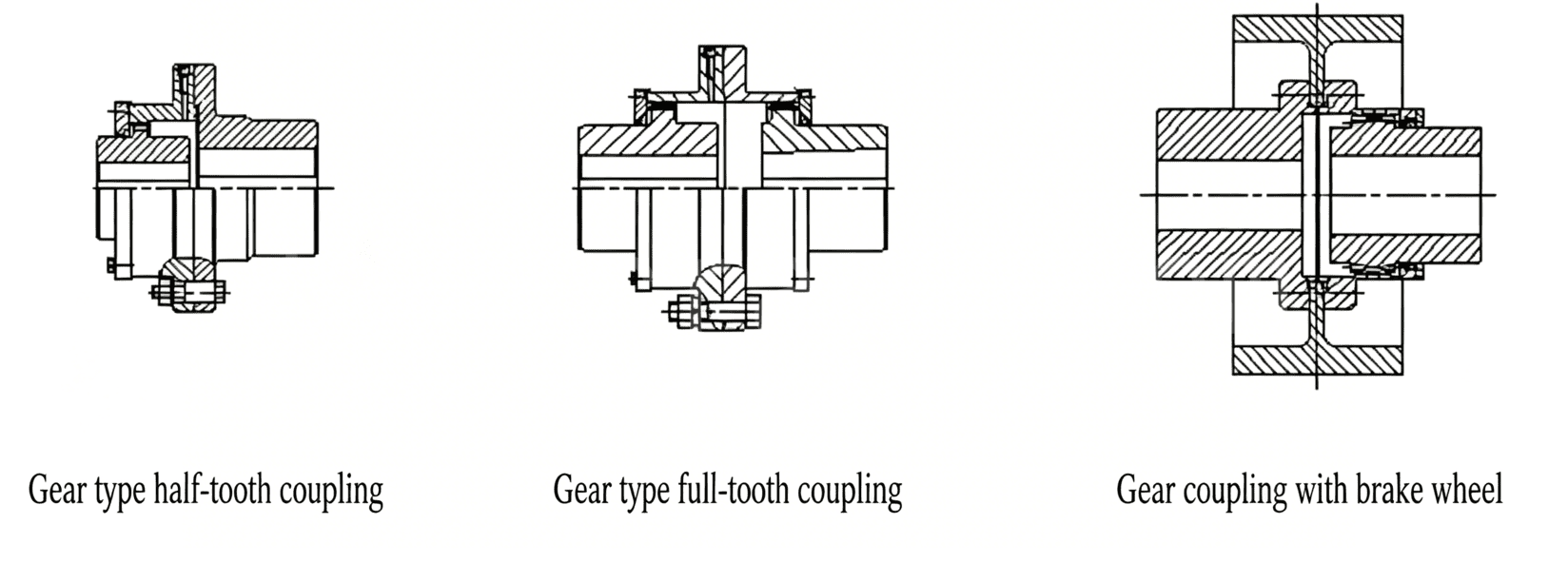
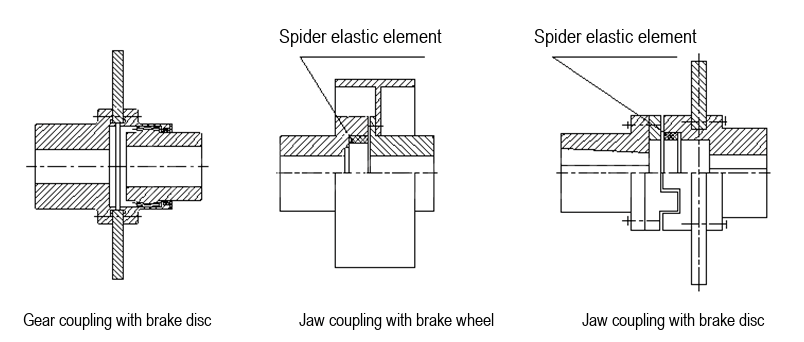
According to the application, gear couplings are divided into the CL type and the CLZ type, as shown in the figure.
Overhead Crane Elastomeric Couplings
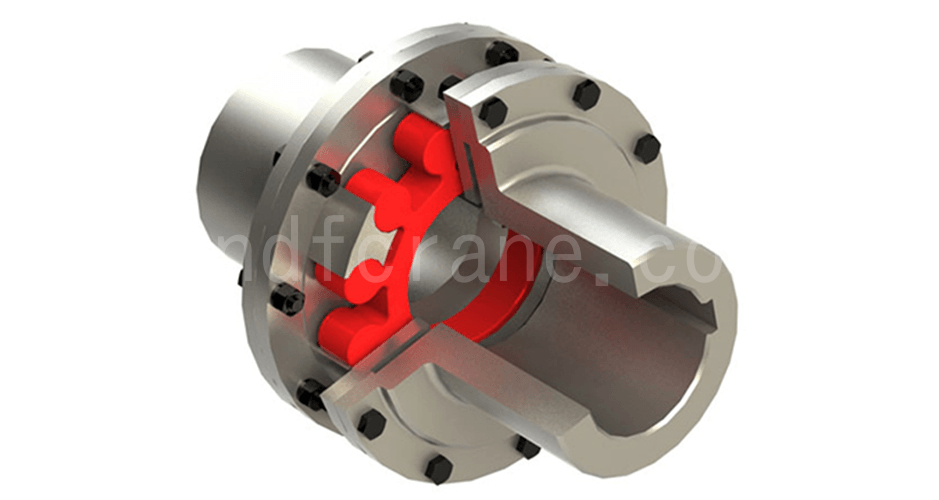
In a crane elastomeric coupling, a plum-blossom-shaped elastic element is inserted between the protruding teeth of the two half couplings to provide cushioning and compensate for displacement. The allowable angular displacement is 0.35°–1° (depending on the model).
Generally, the plum-blossom elastic element is replaced every 3–6 months. If there is no abnormal noise during operation and the elastic element has no wear or rupture that affects use, it can continue to be used.
Overhead Crane Universal Coupling
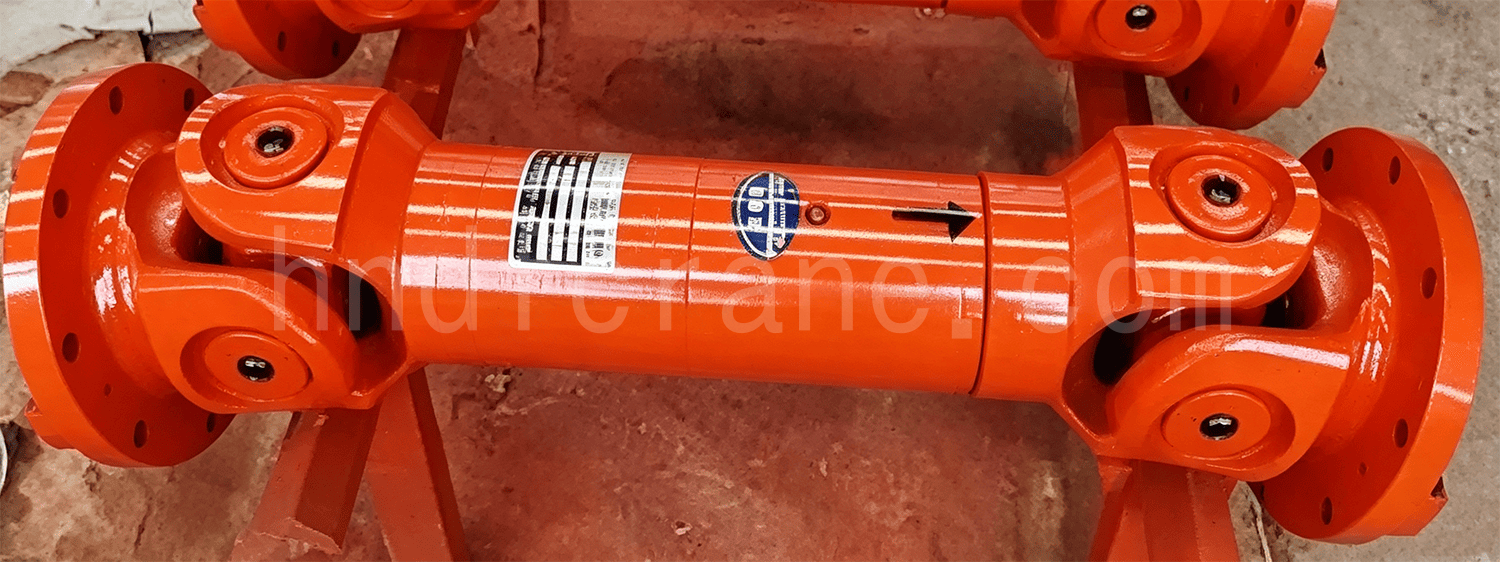
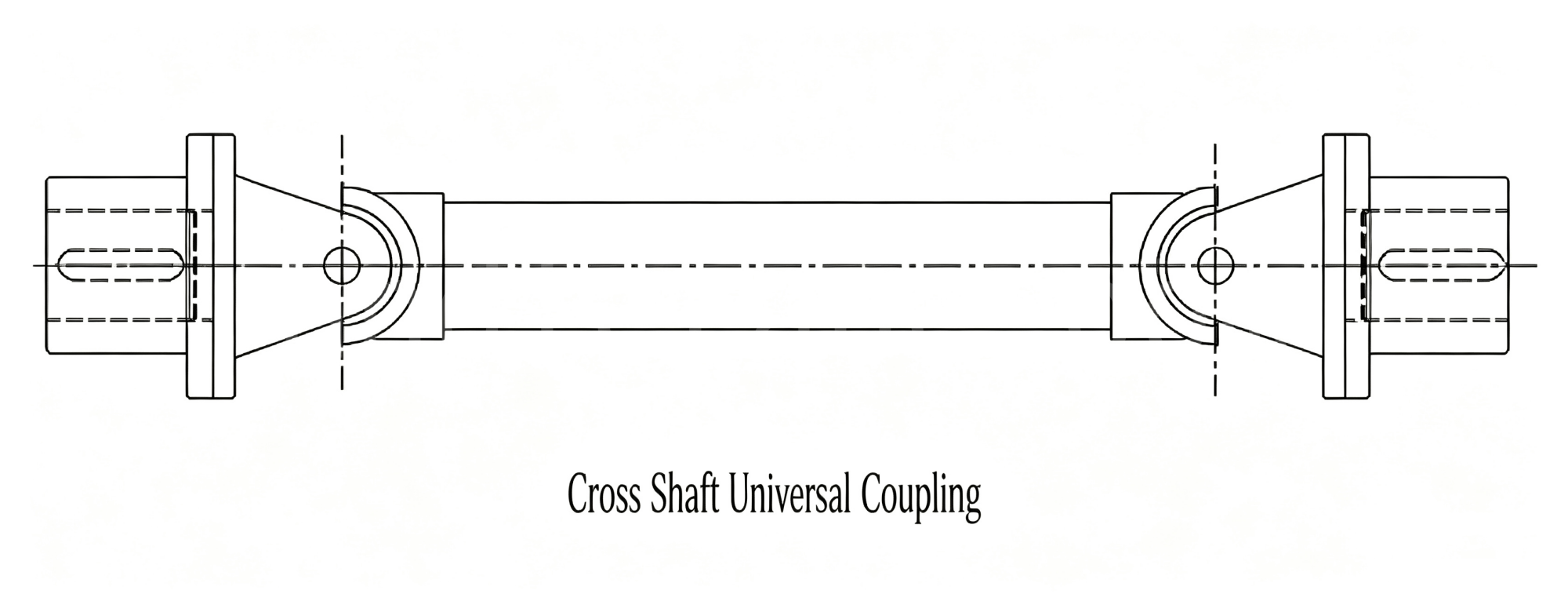
If required, or when the angular displacement is large, a universal coupling can be used. The maximum allowable angular displacement of a cross-shaft universal coupling can reach more than 10°. The coupling bearings are lubricated with lithium-based grease. The bolts are tightened to a specified preload torque, and their tightness should be checked frequently.
Overhead Crane Coupling Safety Requirements
- A gear coupling should be scrapped if any of the following conditions occurs:
- Cracks;
- Broken teeth;
- Tooth thickness wear: for the hoisting mechanism, wear reaches 15% of the original tooth thickness; for other mechanisms, wear reaches 20% of the original tooth thickness.
- The coupling connecting bolts are precision close-fitting bolts that bear shear force, so they must not be replaced with ordinary bolts.
- When the connecting bolt holes are severely worn, the mechanism will jump when started, and the bolts may even be sheared off.
- The concave corner of the shaft-hole keyway is a stress concentration area and should be carefully inspected for cracks.
- The wear and crack inspection of coupling gears is the same as for general gears.
- For a universal coupling, mainly check for abnormal noise, vibration, heating, oil leakage, and loose connecting bolts during operation. If anything abnormal is found, stop operation immediately and find the cause to eliminate the abnormal condition.

Ich bin Cindy, habe 10 Jahre Berufserfahrung in der Kranbranche und eine Fülle an Fachwissen angesammelt. Ich habe für über 500 Kunden die zufriedenstellendsten Kräne ausgewählt. Wenn Sie irgendwelche Bedürfnisse oder Fragen zu Kränen haben, können Sie sich gerne an mich wenden. Ich werde mein Fachwissen und meine praktische Erfahrung nutzen, um Ihnen bei der Lösung des Problems zu helfen!
Senden Sie Ihre Anfrage
- Email: sales@hndfcrane.com
- WhatsApp: +86 191 3738 6654
- Telegramm: +86 191 3738 6654
- Tel: +86-373-581 8299
- Fax: +86-373-215 7000
- Hinzufügen: Industriegebiet Changnao, Stadt Xinxiang, Provinz Henan, China
 WeChat
- Laufkräne
- Zweiträgerbrückenkrane
- Einträgerbrückenkrane
- Europäische Einträger-Brückenkrane
- Explosionsgeschützte Laufkräne
- Greifer- und Magnetbrückenkrane
- Einschienenkrane
- Gießereikrane
- Arbeitsplatzkrane
- Auslegerkrane
- Wandmontierte Auslegerkrane
- Wandfahrkrane
- Freistehende Schwenkkrane
- Aluminium-Schwenkkrane: Leichtgewicht, leichtgängiger Schwenkarm für einfaches Heben
- Auslegerkrane: Effizientes Heben leichter Lasten für die mechanische Montage über kurze Distanzen
- Manuelle, freistehende Schwenkkrane: Effiziente manuelle Hebelösungen für beengte Platzverhältnisse
- Elektrische Freistehende Schwenkkrane: Vollelektrische Lösung für schnelles Heben mit hoher Tragfähigkeit
- Gelenkschwenkkrane: Präzises Heben mit doppelter Armflexibilität
- Portalkräne
- Zweiträger-Portalkrane
- Halbportalkrane
- Einträger-Portalkrane
- Traversenportalkrane
- Containerbrücken
- Verstellbare Portalkräne
- Tragbare Portalkräne
- Europäische Portalkräne
- Branchen
- Allgemeine Fertigung
- Abfallbehandlung
- Vorgefertigt
- Leistung
- Stein
- Papierherstellung
- Metallproduktion
- Brückenbau
- Hafenkräne: Für den Container- und Schüttgutumschlag
- Brückenkräne für die Erdöl- und Gasindustrie: Steigerung der Betriebseffizienz
- Schiffskräne für effizientes Beladen von Schiffen
- Brückenkräne für die Automobilindustrie: Effiziente Automatisierungslösungen
- Elektrische Hebezeuge
- Elektroseilzüge
- Elektrokettenzüge
- Elektrische Hebezeuge vom europäischen Typ
- Europäische Elektrokettenzüge: Reibungsloser Betrieb, geringe Geräuschentwicklung und Energieeffizienz
- Manuelle Hebelzüge: Ideal für Zug- und Hebearbeiten
- Handkettenzüge: Manuelles Heben für Bereiche ohne Strom
- Elektrische Hebezeuge mit geringer Bauhöhe: Kompaktes Design für maximale Platzeffizienz
- Druckluftkettenzüge: Sanftes Handling für den industriellen Einsatz
- Explosionsgeschützte Handkettenzüge: Funkenbeständige Konstruktion aus Kupferlegierung für explosionsgefährdete Bereiche
- Explosionsgeschützte elektrische Kettenzüge für Hebearbeiten in explosionsgefährdeten Bereichen
- Um
- Fälle
- Nachricht
- Häufig gestellte Fragen
- Herunterladen
- Blogs
- Online-Tools zur Berechnung der Kranradlast
- VR-Panorama
- Kontaktiere uns
- Email: sales@hndfcrane.com
- WhatsApp: +86 191 3738 6654
- Telegramm: +86 191 3738 6654
- Tel: +86-373-581 8299
-