







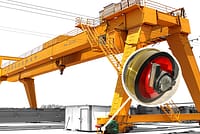
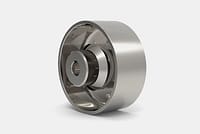
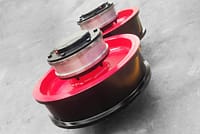



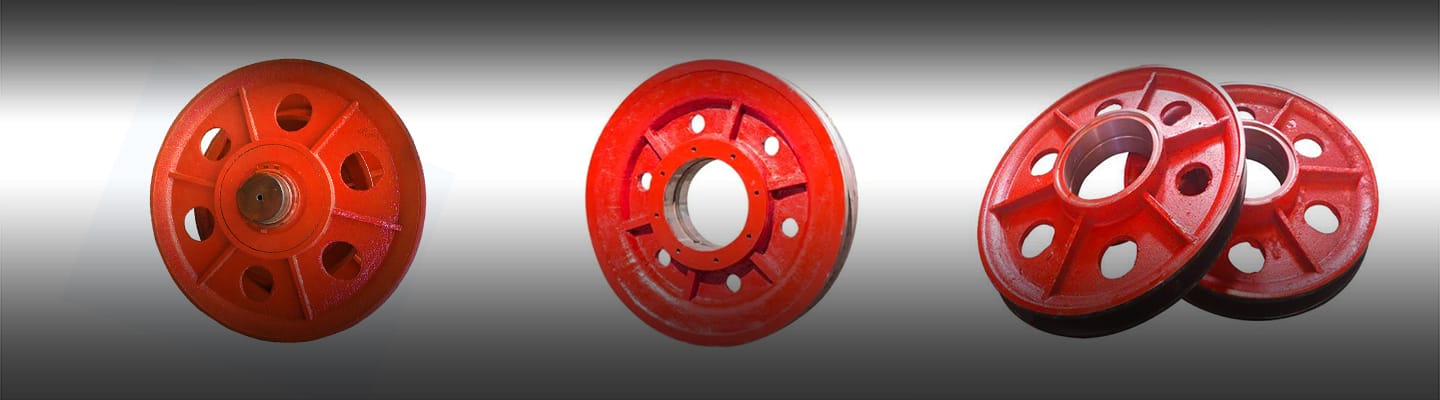


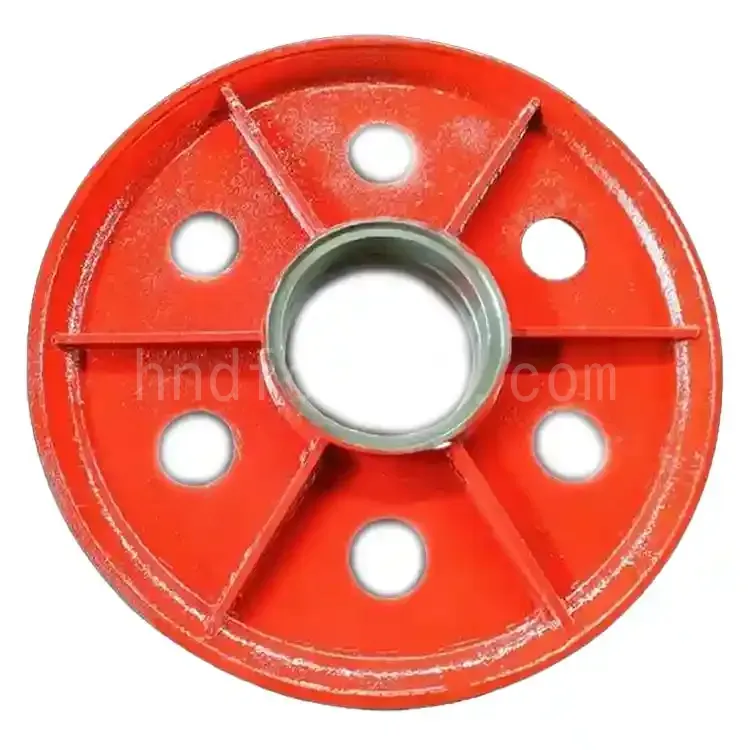
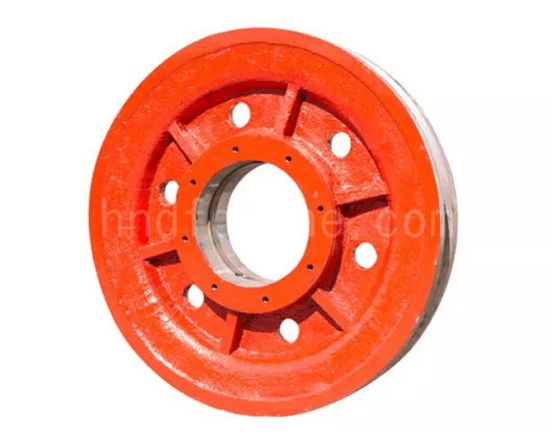
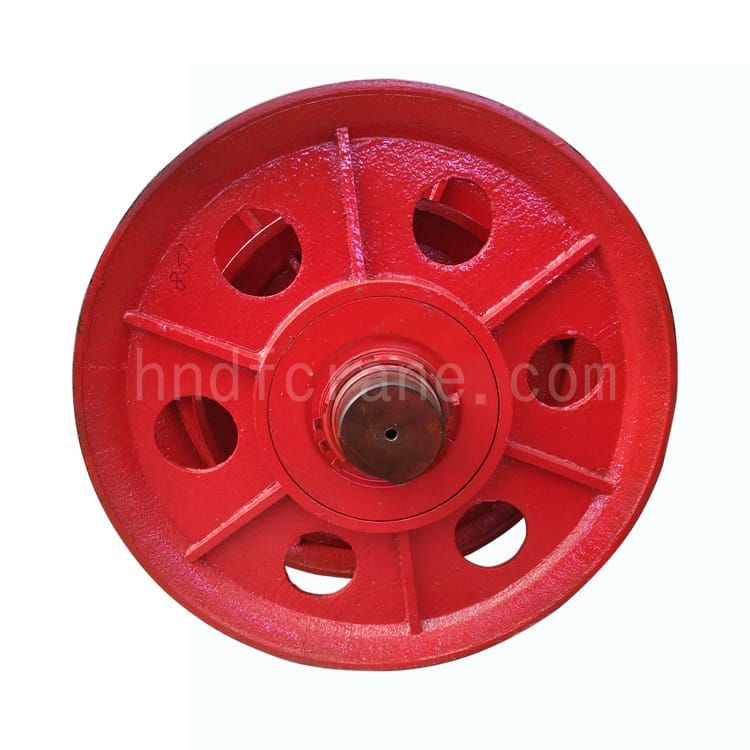
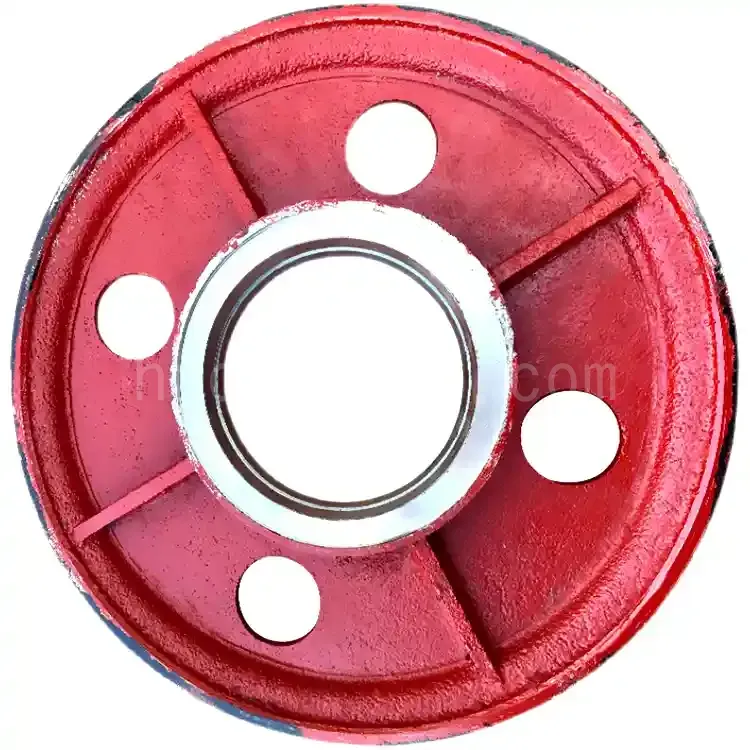
Cast Crane Sheaves Product Introduction
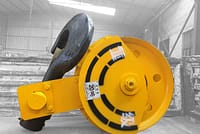
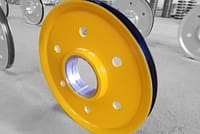
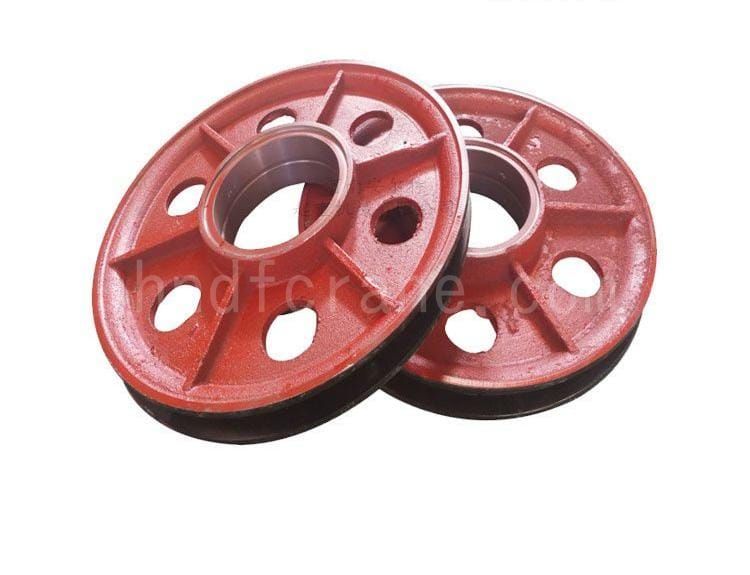
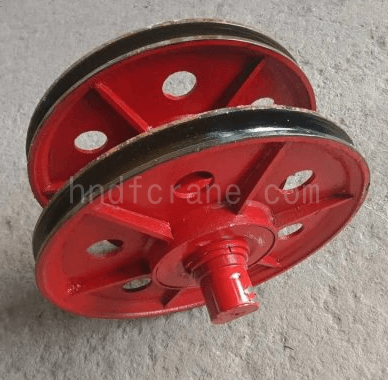
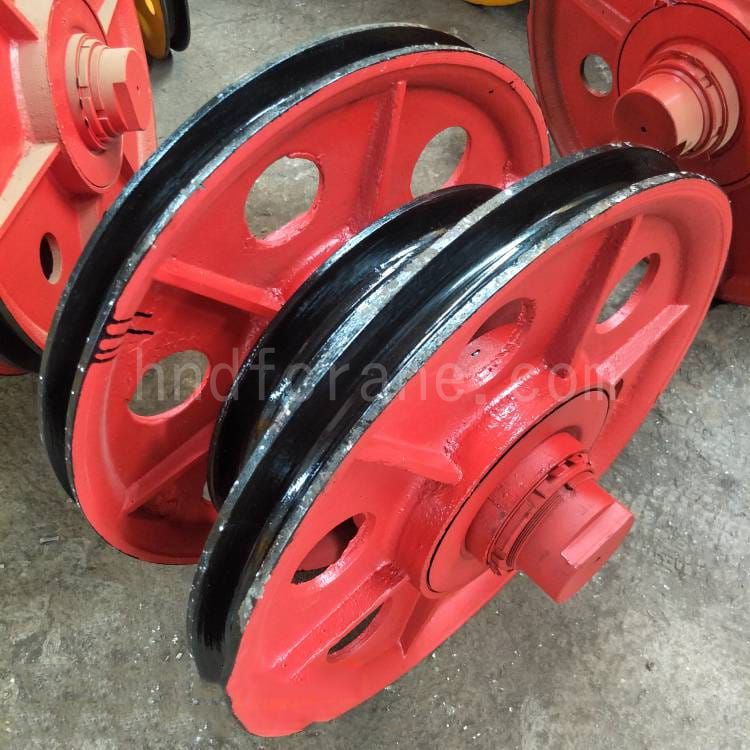
Cast crane sheaves are a production process in which metal is smelted into a molten state that meets specified requirements and then poured into the mold for casting. After cooling, solidification, and cleaning, the pulley’s predetermined shape, size, and performance are achieved. Because the casting pulley blanks are almost fully formed, free machining or small-scale machining is used, reducing costs and production time to some extent. This method offers low production costs and high efficiency. For some pulley products with large size, irregular shape, and complex structure, casting is an ideal production method. Pulley casting is the basic process of the modern device manufacturing industry.
Cast Crane Sheaves Classification
- Capacity: Up to 200t
- High hardness: ZG25Ⅱ material has high density and extremely high hardness.
- Good wear resistance: its own density is a bit higher, its wear resistance is high, and its carrying capacity is stronger.
- Good toughness and light weight: good mechanical toughness and strong impact resistance.
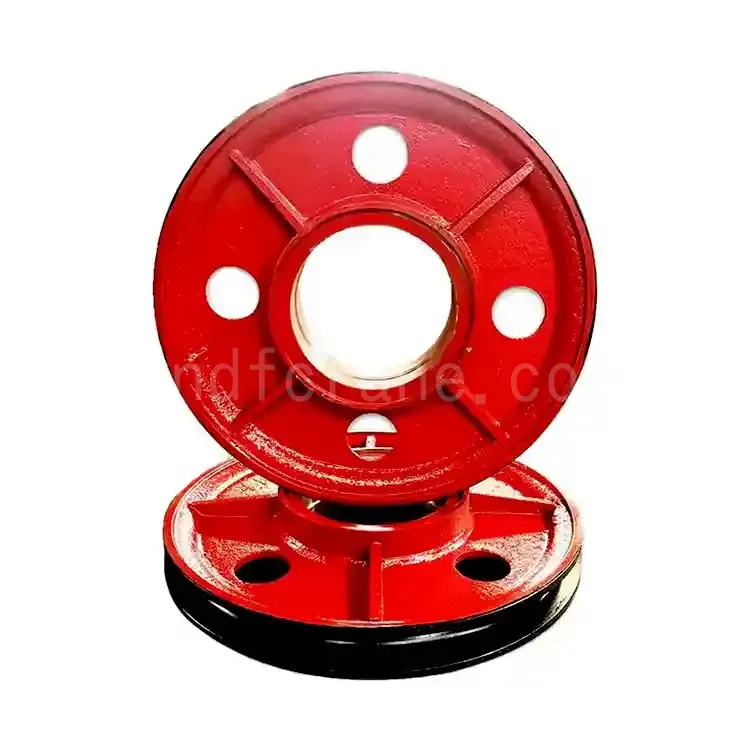
- Capacity: Up to 100t
- Wire rope wear is relatively small: the HT250 material contains graphite and has self-lubricating properties, which effectively reduce friction and provide good shock-absorption performance.
- Cost-effective: the sand casting process is simple and the raw materials are extensive, which significantly reduces the procurement cost while meeting the standard requirements.
Cast SteelCrane Sheaves
Cast SteelCrane Sheaves Introduction
Cast steel crane sheaves have higher strength and can withstand greater tensile pressure, but the wear on the wire rope is greater than that of cast iron sheaves. It is ideal for occasions with high operating conditions. Standard cast steel pulleys generally use lost foam casting, which has a low production cost and high efficiency. For some pulley products with large size, non-standard shape and complex technology, cast steel pulleys are an ideal way to make them. Moreover, the lost foam casting method is used, and the pulley is not limited by the equipment in terms of diameter and other dimensions, which is more flexible. However, due to the influence of factors such as casting technology, the quality directly depends on the quality of the casting blank.
Cast Steel Crane Sheaves Advantages
Enhanced Toughness and Plasticity
Cast steel crane sheaves are engineered with material properties similar to high-grade steel. They possess higher hardness and superior flexibility compared to cast iron, resulting in greater plasticity and impact resistance. This makes them highly versatile for a broader range of industrial applications.
Lightweight Design for Operational Efficiency
Due to the lower density of cast steel compared to traditional iron, cast steel crane sheaves are significantly lighter for the same volume. In lifting operations, where the movable pulley travels with the load, a lighter sheave reduces energy consumption and manual labor intensity, explaining its widespread adoption over cast iron alternatives.
Corrosion Resistance and Extended Service Life
During operation, cast steel crane sheaves develop a natural protective surface layer that shields the component from rain and chemical erosion. Unlike cast iron, which is prone to rust and structural degradation when exposed to moisture, cast steel maintains its integrity, offering a substantially longer service life.
Advanced Wear Resistance through Flame Hardening
By optimizing carbon content, the structural strength of these sheaves surpasses iron. Specifically, with flame quenching, the surface hardness reaches HRC48–HRC52, extending the wear life by more than 30%.
Optimized Stress Distribution for Heavy-Duty Lifting
Featuring a dual-hub design, these sheaves uniformly disperse stress across the structure. This makes them the definitive choice for high-tonnage lifting operations where structural reliability is non-negotiable. Optional configurations with tapered roller bearings or sliding bearings support a wide operating temperature range from -40°C to 200°C. Fully ISO 14001 certified, these cast steel crane sheaves are the ideal choice for extreme environments such as metallurgical blast furnaces and offshore oil drilling platforms.
Cast Steel Crane Sheaves Application
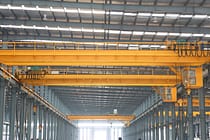
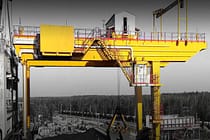
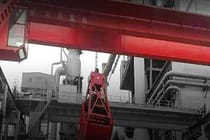
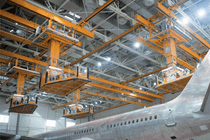
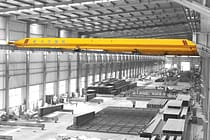
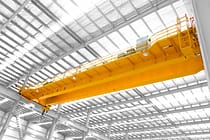
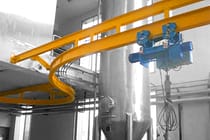
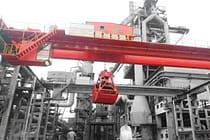
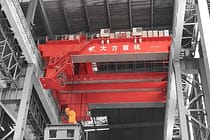
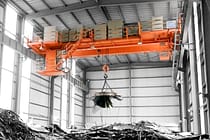
Cast Crane Sheaves for Explosion Proof Overhead Cranes
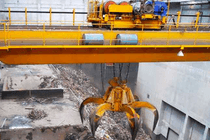
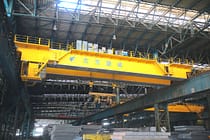
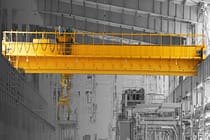
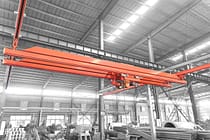
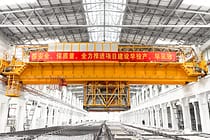
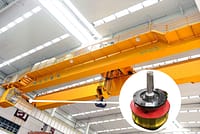
Cast Crane Sheaves for Foundry Overhead Cranes
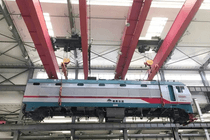
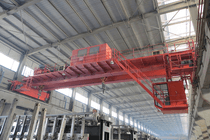
Cast Crane Sheaves for Intelligent Coke Tank Crane
Cast Iron Crane Sheaves
Cast Iron Crane Sheaves Introduction
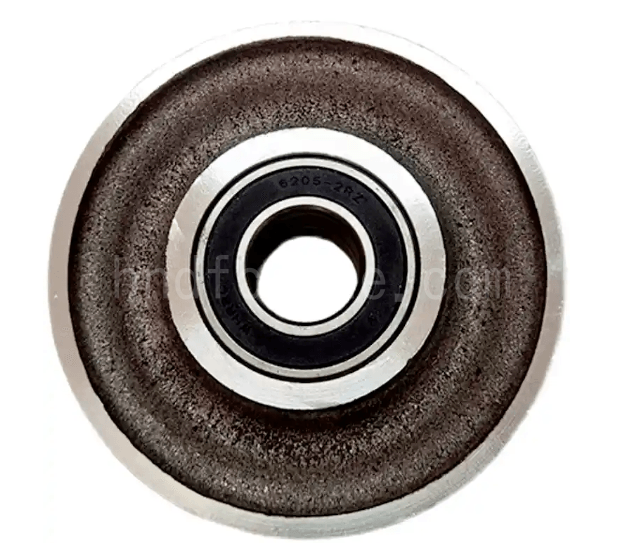
Cast iron crane sheaves uses gray cast iron (HT15-33) or ductile iron (QT-10). The pulley has good process performance and is easy to cut, especially the wear on the wire rope is small, but because of its low strength and brittleness, poor durability, it can easily cause rim fracture and crushing when used, and it is more economical and ideal for small tonnage or infrequent equipment use. Cast iron crane sheaves use sand-cast iron casting technology; cast iron is an ideal material for making crane pulleys because of its good fluidity during casting and relatively few casting defects.
Cast Iron Crane Sheaves Advantage
- High carrying capacity and stability: High-quality cast iron materials coupled with heat treatment technology ensure reliable carrying capacity.The recommended static safety factor is ≥3 (depending on the application conditions).
- Long service life: Graphite in cast iron provides natural lubrication, combined with quenching, tempering and shot peening treatment, which can reduce friction and surface wear.
- Cost-effective manufacturing: The casting process can achieve integrated, complex geometries, and reduce unit costs in large-scale production.