-
Industries
-
General Manufacturing
-
Waste Handling
-
Precast
-
Power
-
Stone
-
Papermaking
-
Metal Production
-
Bridge Construction
-
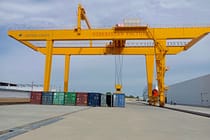
Port Cranes: For Container and Bulk Material Handling
-
Overhead Cranes for Petroleum and Gas Industry: Enhance Operational Efficiency
-
Marine Cranes for Efficient Cargo Loading on Ships
-
Overhead Cranes for the Automotive Industry: Efficient Automation Solutions
-
Overhead Crane Solutions for Railways: Track Laying, Rolling Stock Maintenance, and Container Handling
-
Overhead Cranes for Food and Beverages: Reliable Solutions for Efficient Handling
-
Overhead Cranes for Efficient Cement, Glass, Brick and Precast Concrete Manufacturing
-
Overhead Cranes for Aviation Industry: Aircraft Maintenance and Assembly
-
Aerospace Overhead Cranes: Precision Lifting for Rocket Launch and Transport
-
-
Products
-
Overhead Cranes
-
Single Girder Overhead Cranes
-
Double Girder Overhead Cranes
-
European Type Single Girder Overhead Cranes
-
European Type Double Girder Overhead Cranes
-
Explosion Proof Overhead Cranes
-
Grab And Magnetic Overhead Cranes
-
Monorail Cranes
-
Foundry Overhead Cranes
-
Insulation Overhead Cranes
-
Low Headroom Overhead Cranes
-
Grab Overhead Cranes
-
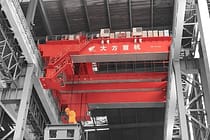
Ladle Overhead Cranes
-
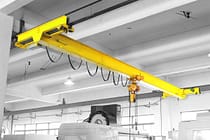
Underhung Overhead Cranes
-
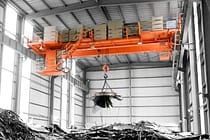
Electromagnetic Overhead Cranes
-
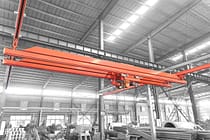
Workstation Cranes: Lightweight Design, Easy Installation, and Effortless Operation
-
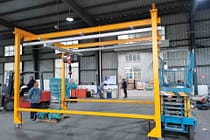
Free Standing Workstation Bridge Cranes
-
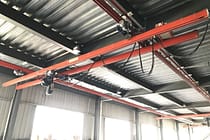
Ceiling Mounted Bridge Crane
-
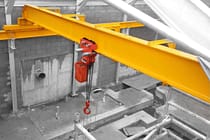
Manual Overhead Cranes
-
-
Gantry Cranes
-
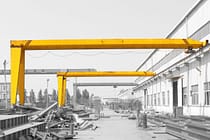
Semi Gantry Cranes
-
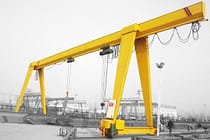
Single Girder Gantry Cranes
-
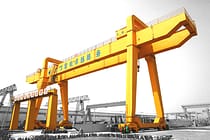
Double Girder Gantry Cranes
-
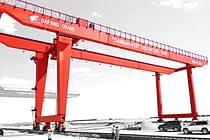
Container Gantry Cranes
-
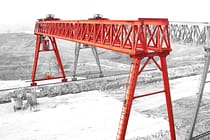
Truss Gantry Cranes
-
Adjustable Gantry Cranes
-
Portable Gantry Cranes
-
European Gantry Cranes
-
Aluminum Gantry Cranes
-
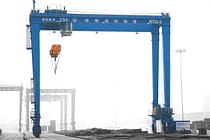
Rubber Tyred Container Gantry Cranes
-
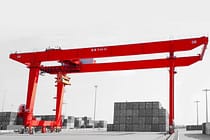
Rail Mounted Container Gantry Cranes
-
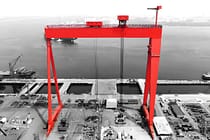
Shipyard Gantry Crane
-
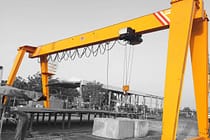
European Single Girder Gantry Cranes
-
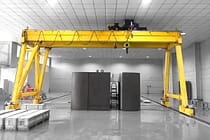
European Double Girder Gantry Cranes
-
- Jib Cranes
- Special Cranes
- Electric Hoists
- Transfer Carts
-
Overhead Cranes
-
Crane Parts
-
Grab Buckets
-
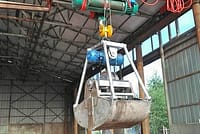
Electric Stainless Steel Grab Bucket
-
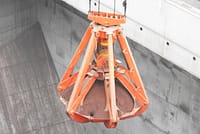
Mechanical Four Rope Orange Peel Grabs
-
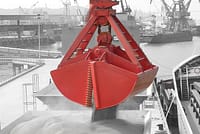
Mechanical Four Rope Clamshell Grabs Bucket
-
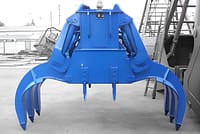
Electro Hydraulic Rectangular Grabs
-
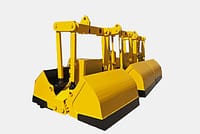
Electro hydraulic Clamshell Grabs
-
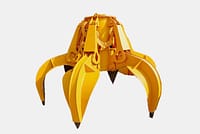
Electro Hydraulic Orange Peel Grabs,Hydraulic Cactus Grab
-
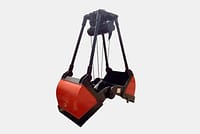
Electric Motor Grab
-
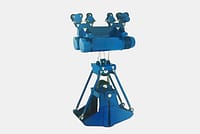
Electric Monorail Grab Bucket with Monorail Hoist
-
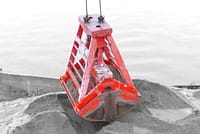
Remote Control Clamshell Grabs
-
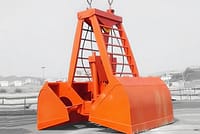
Mechanical Two Rope Clamshell Grabs
-
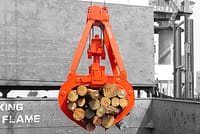
Timber Grabs
-
Single Rope Grab Bucket
-
Trash Rack Cleaning Machines
-
Dredging Grabs
-
Trimming Grabs
-
- Crane Spreader
-
Crane Spare Parts
-
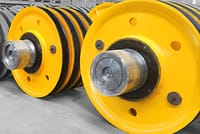
Crane Sheaves
-
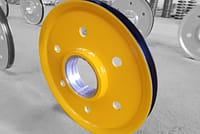
Wire Rope Sheaves
-
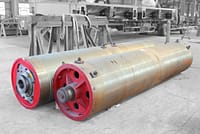
Crane Rope Drum
-
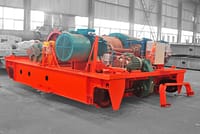
Crane Trolley
-
Electric Winch
-
Crane Operator Cabin
-
Overhead Crane Brakes
-
Overhead Crane Cables
-
Overhead Crane Rope Guides
-
Overhead Crane Conductors and Power Supply Lines
-
Overhead Crane Rails
-
Overhead Crane Rail Clips
-
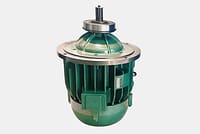
Overhead Crane Motors
-
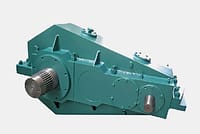
Overhead Crane Reducers
-
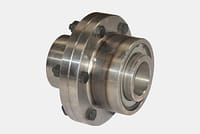
Couplings for Overhead Crane
-
- Crane Wheels
-
Grab Buckets
- Company
- Contact

-
Industries
-
General Manufacturing
-
Waste Handling
-
Precast
-
Power
-
Stone
-
Papermaking
-
Metal Production
-
Bridge Construction
-
Port Cranes: For Container and Bulk Material Handling
-
Overhead Cranes for Petroleum and Gas Industry: Enhance Operational Efficiency
-
Marine Cranes for Efficient Cargo Loading on Ships
-
Overhead Cranes for the Automotive Industry: Efficient Automation Solutions
-
Overhead Crane Solutions for Railways: Track Laying, Rolling Stock Maintenance, and Container Handling
-
Overhead Cranes for Food and Beverages: Reliable Solutions for Efficient Handling
-
Overhead Cranes for Efficient Cement, Glass, Brick and Precast Concrete Manufacturing
-
Overhead Cranes for Aviation Industry: Aircraft Maintenance and Assembly
-
Aerospace Overhead Cranes: Precision Lifting for Rocket Launch and Transport
-
-
Products
-
Overhead Cranes
-
Single Girder Overhead Cranes
-
Double Girder Overhead Cranes
-
European Type Single Girder Overhead Cranes
-
European Type Double Girder Overhead Cranes
-
Explosion Proof Overhead Cranes
-
Grab And Magnetic Overhead Cranes
-
Monorail Cranes
-
Foundry Overhead Cranes
-
Insulation Overhead Cranes
-
Low Headroom Overhead Cranes
-
Grab Overhead Cranes
-
Ladle Overhead Cranes
-
Underhung Overhead Cranes
-
Electromagnetic Overhead Cranes
-
Workstation Cranes: Lightweight Design, Easy Installation, and Effortless Operation
-
Free Standing Workstation Bridge Cranes
-
Ceiling Mounted Bridge Crane
-
Manual Overhead Cranes
-
-
Gantry Cranes
-
Semi Gantry Cranes
-
Single Girder Gantry Cranes
-
Double Girder Gantry Cranes
-
Container Gantry Cranes
-
Truss Gantry Cranes
-
Adjustable Gantry Cranes
-
Portable Gantry Cranes
-
European Gantry Cranes
-
Aluminum Gantry Cranes
-
Rubber Tyred Container Gantry Cranes
-
Rail Mounted Container Gantry Cranes
-
Shipyard Gantry Crane
-
European Single Girder Gantry Cranes
-
European Double Girder Gantry Cranes
-
- Jib Cranes
- Special Cranes
- Electric Hoists
- Transfer Carts
-
Overhead Cranes
-
Crane Parts
-
Grab Buckets
-
Electric Stainless Steel Grab Bucket
-
Mechanical Four Rope Orange Peel Grabs
-
Mechanical Four Rope Clamshell Grabs Bucket
-
Electro Hydraulic Rectangular Grabs
-
Electro hydraulic Clamshell Grabs
-
Electro Hydraulic Orange Peel Grabs,Hydraulic Cactus Grab
-
Electric Motor Grab
-
Electric Monorail Grab Bucket with Monorail Hoist
-
Remote Control Clamshell Grabs
-
Mechanical Two Rope Clamshell Grabs
-
Timber Grabs
-
Single Rope Grab Bucket
-
Trash Rack Cleaning Machines
-
Dredging Grabs
-
Trimming Grabs
-
- Crane Spreader
-
Crane Spare Parts
-
Crane Sheaves
-
Wire Rope Sheaves
-
Crane Rope Drum
-
Crane Trolley
-
Electric Winch
-
Crane Operator Cabin
-
Overhead Crane Brakes
-
Overhead Crane Cables
-
Overhead Crane Rope Guides
-
Overhead Crane Conductors and Power Supply Lines
-
Overhead Crane Rails
-
Overhead Crane Rail Clips
-
Overhead Crane Motors
-
Overhead Crane Reducers
-
Couplings for Overhead Crane
-
- Crane Wheels
-
Grab Buckets
- Company
- Contact



Waste Handling Crane Control: Coordinating Bridge Travel, Trolley Travel, and Hoisting
Table of Contents
Waste handling crane control coordinates waste grabbing, transfer, mixing, distribution, and feeding in waste-to-energy plants. Bridge travel, trolley travel, hoisting, and grab opening and closing bring together electrical drives, automation logic, safety interlocks, and process requirements. The aim is accurate positioning, smooth movement, and reliable operation matched to the incineration process.

1. Waste Handling Crane Control Architecture
A programmable logic controller (PLC) forms the center of the control system. It connects the drives, operator interfaces, detection and feedback devices, and safety interlocks to coordinate crane movements.
The basic control sequence is:
Operator command → PLC logic processing → Drive execution → Sensor feedback → PLC correction
2. Main Components and Control Principles
The travel and hoisting/closing mechanisms follow similar control principles. Their drive arrangements and parameters differ because horizontal travel and vertical lifting involve different load characteristics and process requirements.
PLC and Drive System
The PLC receives operator commands and position and safety signals. It processes them according to programmed process logic and safety rules, then sends commands to the drives.
AC variable-voltage, variable-frequency (VVVF) drives adjust motor supply voltage and frequency for smooth speed regulation, starting, and stopping. These drives replace earlier resistance-based or DC speed-control arrangements in many applications.
- Bridge and trolley drives: The arrangement described here uses 2–4 variable-frequency motors for bridge and trolley travel. The PLC coordinates the drives for synchronized movement and different speed settings, including low-speed positioning and high-speed transfer.
- Hoisting and grab-closing drives: The described arrangement uses two variable-frequency motors to control hoisting and grab opening and closing separately. Some designs use a coaxial coupled arrangement. Coordinated logic includes closing the grab before hoisting and reaching the required height before traveling. The applicable arrangement depends on the grab and crane configuration.
Operator Commands: Manual, Semiautomatic, and Automatic Modes
| Operating mode | Control method | Typical applications |
|---|---|---|
| Manual | The operator uses a joystick or master controller to command travel, hoisting, and grab closing. With proportional control, joystick displacement determines movement speed. | Handling compacted waste, cleaning the pit floor, and equipment commissioning. |
| Semiautomatic/automatic | The PLC executes a preset process sequence, with the operator initiating or monitoring operation. | Routine distribution, mixing, and fixed-point feeding along a preset route. |
Bridge and Trolley Control: Positioning and Speed Coordination
The positioning task extends across a waste bunker tens of meters long and wide. The control approach combines position feedback with optimized speed profiles. Millimeter-level positioning is a stated objective for the configuration described here, rather than a universal accuracy specification.
Position detection and feedback
Absolute or incremental encoders measure displacement and return position signals to the PLC. The controller compares the commanded and actual positions to close the position-control loop. Some higher-end cranes use laser positioning or vision navigation to improve positioning in complex environments, particularly during automatic operation.
Speed control
An S-curve motion profile covers starting, acceleration, constant-speed travel, deceleration, and stopping. The variable-frequency drive provides smooth acceleration and deceleration to reduce shocks, waste spillage, and equipment vibration.
For example, bridge travel may reach 60–100 m/min for rapid transfer between areas, then reduce to 5–10 m/min near the target for positioning. These speeds depend on the crane configuration.
Synchronization
The PLC coordinates motors on both sides of the bridge to reduce skew caused by differences in rotational speed. Some configurations include skew-detection sensors for correcting travel deviations.
Hoisting and Grab Control: Load Adaptation and Interlocks
Hoisting raises and lowers the grab, while the closing mechanism opens and closes it. The two functions must work together as the quantity of waste changes the suspended load. Load adaptation and movement interlocks are central to this coordination.
Load detection and speed regulation
An overload limiter or torque sensor provides load information to the control system. The PLC adjusts the drive output according to the load: lighter loads can allow faster lifting and lowering, while heavier loads require lower speeds and increased starting torque to avoid motor overload or unstable movement.
Example coordinated operating sequence
- Grabbing: Lower the grab → Reach the waste layer → Stop lowering → Close the grab → Confirm closure → Start hoisting.
- Discharging: Reach the required travel and hoisting position → Stop traveling → Lower toward the hopper → Stop lowering → Open the grab → Confirm opening → Hoist again.
- Interlocks: In the described sequence, the hoist can rise only at low speed before grab closure is confirmed, and high-speed bridge or trolley travel is inhibited until the required hoisting position is reached.
These sequences and permissions depend on the crane's process program and grab arrangement.
Height control
The hoisting arrangement uses an absolute encoder or height-limit devices to monitor height or detect travel limits. The control function is intended to prevent excessive upward travel toward the upper structure and excessive lowering toward the pit floor. Near a travel limit, the PLC removes the high-speed command and permits low-speed adjustment according to the configured logic.
Safety Interlocks and Detection
Waste handling cranes operate amid dust, corrosive gases, and restricted visibility while moving heavy loads over a large area. Safety functions take priority over movement commands. Detection signals initiate the relevant drive-stop or braking response when an interlock is triggered.
| Device or system | Function and control response |
|---|---|
| Overload or torque limiter | Detects excessive load, such as a trapped grab or excessive waste weight, and inhibits the relevant hoisting/closing movement while issuing an alarm. |
| Bridge and trolley travel limits | Stop travel at the runway end positions through the configured mechanical and electrical limit arrangements. |
| Hoisting height limits | Inhibit movement farther toward an upper or lower limit while allowing movement away from it. |
| Buffers and collision-prevention devices | End-of-travel buffers absorb impacts. Where cranes share a runway, laser collision-prevention sensors can command deceleration or stopping when separation becomes too small. |
| Emergency-stop buttons | Buttons in the cabin and control room initiate stopping and brake application through the configured emergency-stop circuit. |
| Supply and motor protection | Includes overcurrent, overvoltage, phase-loss, ground-fault, and motor-overtemperature protection. |
The stopping response and affected mechanisms must follow the particular crane's electrical and safety-circuit design.
Control Functions Matched to the Incineration Process
Waste handling crane control also supports stable feeding and more uniform waste heating value.
- Mixing control: The PLC records storage time in different bunker areas. Operators or automatic programs select fresh and aged waste in suitable proportions to help balance heating value and reduce furnace-temperature fluctuations.
- Feed quantity control: Some higher-end systems combine grab weight measurement with a preset feeding quantity to regulate individual loads—for example, 5 tonnes per grab—and match the incinerator feeding rate.
- Remote monitoring and traceability: Integration with the plant's distributed control system (DCS) allows monitoring of crane status, pickup quantities, and feeding frequency. Operating records support process traceability and maintenance.
3. Conclusion
Waste handling crane control combines PLC logic, variable-frequency drives, sensor feedback, safety interlocks, and process requirements. Its key characteristics include:
- Environmental adaptation: Electrical components need protection against dust and corrosion, while control logic must account for signal interference.
- Process integration: Movement sequences support waste aging, mixing, and feeding requirements.
- Protective functions: Hardware measures, including limits and buffers, work with interlock logic to reduce risks associated with operating errors and equipment faults.
Together, these functions support coordinated bridge travel, trolley travel, hoisting, and grab operation in the waste-preparation and feeding stages of an incineration plant.

I am Cindy, with 10 years of working experience in the crane industry and accumulated a wealth of professional knowledge. I have chosen the satisfying cranes for 500+ customers. If you have any needs or questions about cranes, please feel free to contact me, I will use my expertise and practical experience to help you solve the problem!
Send Your Inquiry
- Email: sales@hndfcrane.com
- WhatsApp: +86 191 3738 6654
- Telegram: +86 191 3738 6654
- Tel: +86-373-581 8299
- Fax: +86-373-215 7000
- Add: Changnao Industrial District, Xinxiang City, Henan Province, China
 WeChat
- Overhead Cranes
- Double Girder Overhead Cranes
- Single Girder Overhead Cranes
- European Type Single Girder Overhead Cranes
- Explosion Proof Overhead Cranes
- Grab And Magnetic Overhead Cranes
- Monorail Cranes
- Foundry Overhead Cranes
- Workstation Cranes: Lightweight Design, Easy Installation, and Effortless Operation
- Jib Cranes
- Wall Mounted Jib Cranes
- Wall Travelling Jib Cranes
- Free Standing Jib Cranes
- Aluminum Jib Cranes: Lightweight, Smooth Rotating Arm for Easy Lifting
- Balance Jib Cranes: Efficient Light Lifting for Short Distance Mechanical Assembly
- Manual Free Standing Jib Cranes: Efficient Manual Lifting Solutions for Limited Space Operations
- Electric Free Standing Jib Cranes: Fully Electric Solution for High Capacity Fast Lifting
- Articulating Jib Cranes: Precision Lifting with Dual Arm Flexibility
- Gantry Cranes
- Double Girder Gantry Cranes
- Semi Gantry Cranes
- Single Girder Gantry Cranes
- Truss Gantry Cranes
- Container Gantry Cranes
- Adjustable Gantry Cranes
- Portable Gantry Cranes
- European Gantry Cranes
- Industries
- General Manufacturing
- Waste Handling
- Precast
- Power
- Stone
- Papermaking
- Metal Production
- Bridge Construction
- Port Cranes: For Container and Bulk Material Handling
- Overhead Cranes for Petroleum and Gas Industry: Enhance Operational Efficiency
- Marine Cranes for Efficient Cargo Loading on Ships
- Overhead Cranes for the Automotive Industry: Efficient Automation Solutions
- Electric Hoists
- Electric Wire Rope Hoists
- Electric Chain Hoists
- European Type Electric Hoists
- European Electric Chain Hoists: Smooth Operation, Low Noise, and Energy Efficiency
- Manual Lever Hoists: Ideal for Pulling and Lifting Tasks
- Hand Chain Hoists: Manual Lifting for Areas Without Power
- Low Headroom Electric Hoists: Compact Design for Maximum Space Efficiency
- Pneumatic Chain Hoists: Smooth Handling for Industrial Use
- Explosion Proof Manual Chain Hoists: Spark Resistant Copper Alloy Construction for Hazardous Areas
- Explosion Proof Electric Chain Hoists for Hazardous Area Lifting
- Contact Us
- Email: sales@hndfcrane.com
- WhatsApp: +86 191 3738 6654
- Telegram: +86 191 3738 6654
- Tel: +86-373-581 8299
-