
-
Industries
-

General Manufacturing
-
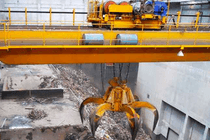
Waste Handling
-
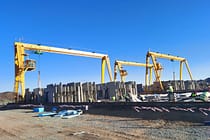
Precast
-
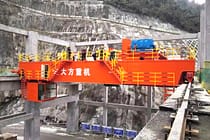
Power
-

Stone
-
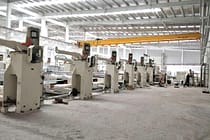
Papermaking
-
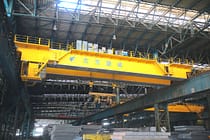
Metal Production
-
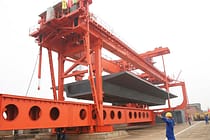
Bridge Construction
-
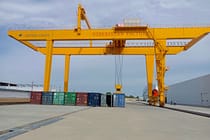
Port Cranes: For Container and Bulk Material Handling
-

Overhead Cranes for Petroleum and Gas Industry: Enhance Operational Efficiency
-

Marine Cranes for Efficient Cargo Loading on Ships
-

Overhead Cranes for the Automotive Industry: Efficient Automation Solutions
-
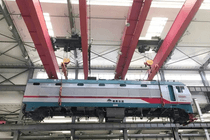
Overhead Crane Solutions for Railways: Track Laying, Rolling Stock Maintenance, and Container Handling
-

Overhead Cranes for Food and Beverages: Reliable Solutions for Efficient Handling
-

Overhead Cranes for Efficient Cement, Glass, Brick and Precast Concrete Manufacturing
-
Overhead Cranes for Aviation Industry: Aircraft Maintenance and Assembly
-

Aerospace Overhead Cranes: Precision Lifting for Rocket Launch and Transport
-
-
Products
-
Overhead Cranes
-
Single Girder Overhead Cranes
-

Double Girder Overhead Cranes
-
European Type Single Girder Overhead Cranes
-
European Type Double Girder Overhead Cranes
-
Explosion Proof Overhead Cranes
-
Grab And Magnetic Overhead Cranes
-

Monorail Cranes
-

Foundry Overhead Cranes
-
Insulation Overhead Cranes
-
Low Headroom Overhead Cranes
-

Grab Overhead Cranes
-
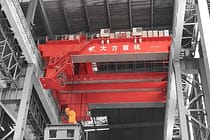
Ladle Overhead Cranes
-
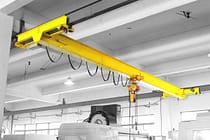
Underhung Overhead Cranes
-

Electromagnetic Overhead Cranes
-
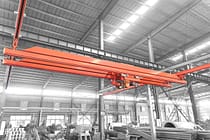
Workstation Cranes
-
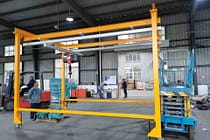
Free Standing Workstation Bridge Cranes
-
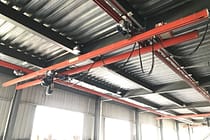
Ceiling Mounted Bridge Crane
-
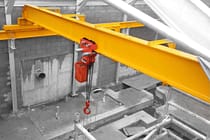
Manual Overhead Cranes
-
-
Gantry Cranes
-
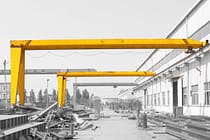
Semi Gantry Cranes
-
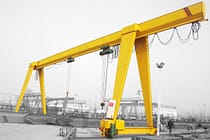
Single Girder Gantry Cranes
-
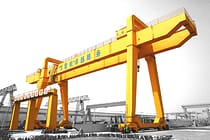
Double Girder Gantry Cranes
-
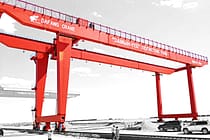
Container Gantry Cranes
-
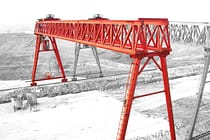
Truss Gantry Cranes
-
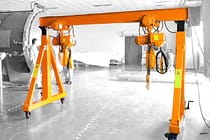
Adjustable Gantry Cranes
-
Portable Gantry Cranes
-
European Gantry Cranes
-
Aluminum Gantry Cranes
-
Rubber Tyred Container Gantry Cranes
-
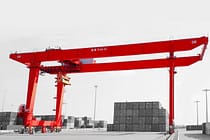
Rail Mounted Container Gantry Cranes
-
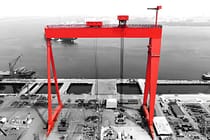
Shipyard Gantry Crane
-
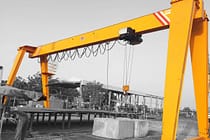
European Single Girder Gantry Cranes
-
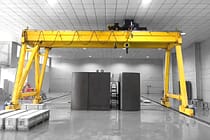
European Double Girder Gantry Cranes
-
- Jib Cranes
- Special Cranes
- Electric Hoists
- Transfer Carts
-
Overhead Cranes
-
Crane Parts
-
Grab Buckets
-
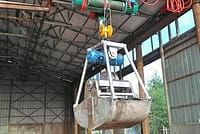
Electric Stainless Steel Grab Bucket
-
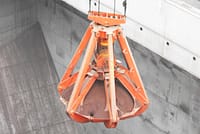
Mechanical Four Rope Orange Peel Grabs
-
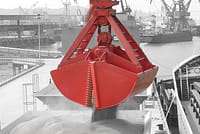
Mechanical Four Rope Clamshell Grabs Bucket
-
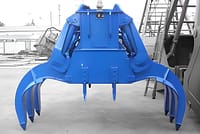
Electro Hydraulic Rectangular Grabs
-
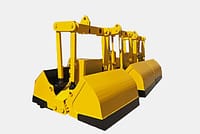
Electro hydraulic Clamshell Grabs
-
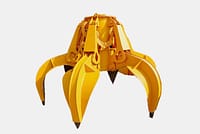
Electro Hydraulic Orange Peel Grabs,Hydraulic Cactus Grab
-
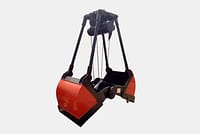
Electric Motor Grab
-
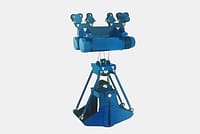
Electric Monorail Grab Bucket with Monorail Hoist
-
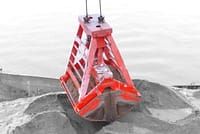
Remote Control Clamshell Grabs
-
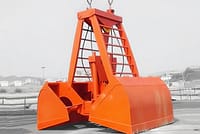
Mechanical Two Rope Clamshell Grabs
-

Timber Grabs
-
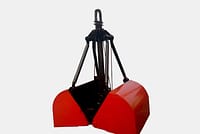
Single Rope Grab Bucket
-
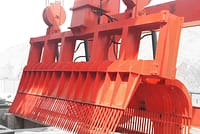
Trash Rack Cleaning Machines
-

Dredging Grabs
-
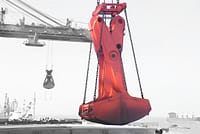
Trimming Grabs
-
- Crane Spreader
-
Crane Spare Parts
-
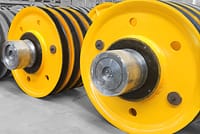
Crane Sheaves
-
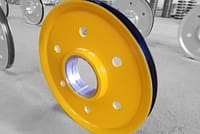
Wire Rope Sheaves
-
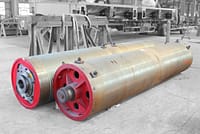
Crane Rope Drum
-
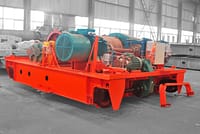
Crane Trolley
-
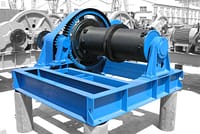
Electric Winch
-

Crane Operator Cabin
-
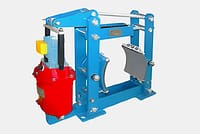
Overhead Crane Brakes
-
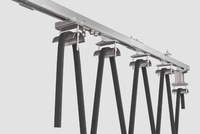
Overhead Crane Cables
-
Overhead Crane Rope Guides
-
Overhead Crane Conductors and Power Supply Lines
-
Overhead Crane Rails
-
Overhead Crane Rail Clips
-
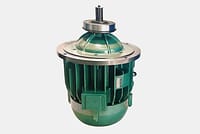
Overhead Crane Motors
-
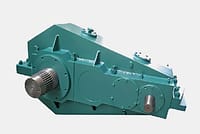
Overhead Crane Reducers
-
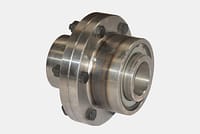
Couplings for Overhead Crane
-
- Crane Wheels
-
Grab Buckets
- Company
- Contact








-
Industries
-
General Manufacturing
-
Waste Handling
-
Precast
-
Power
-
Stone
-
Papermaking
-
Metal Production
-
Bridge Construction
-
Port Cranes: For Container and Bulk Material Handling
-
Overhead Cranes for Petroleum and Gas Industry: Enhance Operational Efficiency
-
Marine Cranes for Efficient Cargo Loading on Ships
-
Overhead Cranes for the Automotive Industry: Efficient Automation Solutions
-
Overhead Crane Solutions for Railways: Track Laying, Rolling Stock Maintenance, and Container Handling
-
Overhead Cranes for Food and Beverages: Reliable Solutions for Efficient Handling
-
Overhead Cranes for Efficient Cement, Glass, Brick and Precast Concrete Manufacturing
-
Overhead Cranes for Aviation Industry: Aircraft Maintenance and Assembly
-
Aerospace Overhead Cranes: Precision Lifting for Rocket Launch and Transport
-
-
Products
-
Overhead Cranes
-
Single Girder Overhead Cranes
-
Double Girder Overhead Cranes
-
European Type Single Girder Overhead Cranes
-
European Type Double Girder Overhead Cranes
-
Explosion Proof Overhead Cranes
-
Grab And Magnetic Overhead Cranes
-
Monorail Cranes
-
Foundry Overhead Cranes
-
Insulation Overhead Cranes
-
Low Headroom Overhead Cranes
-
Grab Overhead Cranes
-
Ladle Overhead Cranes
-
Underhung Overhead Cranes
-
Electromagnetic Overhead Cranes
-
Workstation Cranes
-
Free Standing Workstation Bridge Cranes
-
Ceiling Mounted Bridge Crane
-
Manual Overhead Cranes
-
-
Gantry Cranes
-
Semi Gantry Cranes
-
Single Girder Gantry Cranes
-
Double Girder Gantry Cranes
-
Container Gantry Cranes
-
Truss Gantry Cranes
-
Adjustable Gantry Cranes
-
Portable Gantry Cranes
-
European Gantry Cranes
-
Aluminum Gantry Cranes
-
Rubber Tyred Container Gantry Cranes
-
Rail Mounted Container Gantry Cranes
-
Shipyard Gantry Crane
-
European Single Girder Gantry Cranes
-
European Double Girder Gantry Cranes
-
- Jib Cranes
- Special Cranes
- Electric Hoists
- Transfer Carts
-
Overhead Cranes
-
Crane Parts
-
Grab Buckets
-
Electric Stainless Steel Grab Bucket
-
Mechanical Four Rope Orange Peel Grabs
-
Mechanical Four Rope Clamshell Grabs Bucket
-
Electro Hydraulic Rectangular Grabs
-
Electro hydraulic Clamshell Grabs
-
Electro Hydraulic Orange Peel Grabs,Hydraulic Cactus Grab
-
Electric Motor Grab
-
Electric Monorail Grab Bucket with Monorail Hoist
-
Remote Control Clamshell Grabs
-
Mechanical Two Rope Clamshell Grabs
-
Timber Grabs
-
Single Rope Grab Bucket
-
Trash Rack Cleaning Machines
-
Dredging Grabs
-
Trimming Grabs
-
- Crane Spreader
-
Crane Spare Parts
-
Crane Sheaves
-
Wire Rope Sheaves
-
Crane Rope Drum
-
Crane Trolley
-
Electric Winch
-
Crane Operator Cabin
-
Overhead Crane Brakes
-
Overhead Crane Cables
-
Overhead Crane Rope Guides
-
Overhead Crane Conductors and Power Supply Lines
-
Overhead Crane Rails
-
Overhead Crane Rail Clips
-
Overhead Crane Motors
-
Overhead Crane Reducers
-
Couplings for Overhead Crane
-
- Crane Wheels
-
Grab Buckets
- Company
- Contact



Field Weakening Speed Control in Crane Drive System: Principles and Implementation
Table of Contents
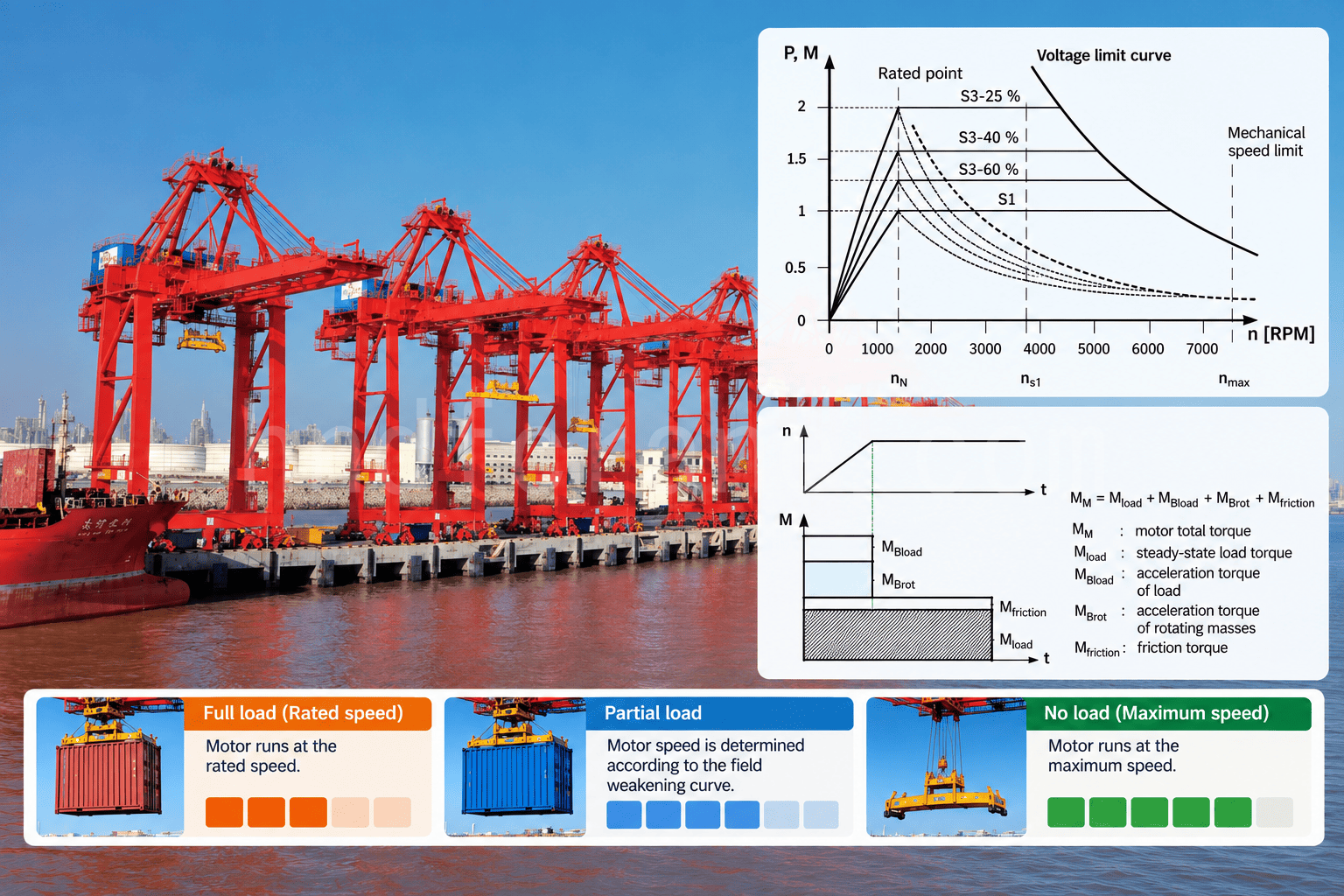
Crane drive field weakening speed control is often used in hoisting mechanisms to improve operating efficiency. The basic idea is simple: the motor runs at the highest speed under no-load conditions, runs at rated speed under heavy load, and uses a calculated field weakening curve to determine the proper speed for loads between heavy load and no load.
For overhead crane and gantry crane hoist drives, this helps increase lifting speed under no-load or light-load conditions, reduce hoisting time, shorten the working cycle, and improve equipment productivity.
Some special applications must follow their own design data. For example, on a shipbuilding gantry crane, if the no-load, half-load, and full-load speeds are 3, 6, and 9 m/min respectively, and the motor field weakening ratio cannot reach three times the rated speed, the full-load operating speed may be lower than the rated speed.
The following discussion uses container quay cranes and ship unloaders as examples because both have high efficiency requirements. The load of a hoisting mechanism does not reach the rated load every cycle. For a container quay crane, the container weight is usually between 3 and 40 tons, depending on the goods inside the container. When the load is heavy, the lifting speed is lower. When the load is light, the lifting speed can be increased, reducing the cycle time from the equipment side.
The operating condition of a ship unloader is relatively simpler. During the full-hatch stage, grab unloading is usually close to full load. When the grab opens, the mechanism is under light load, so the system mainly needs high and low speed ranges. During the clean-up stage, the weight of material grabbed each time varies greatly. In this condition, light-load high-speed operation can significantly shorten the work cycle.
Principle of Field Weakening Speed Control
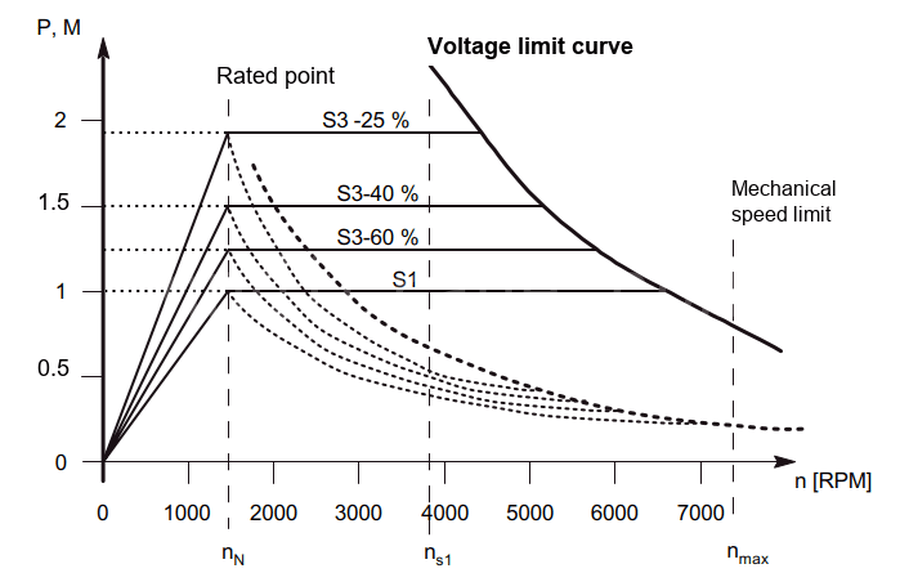
As shown in Fig. 1-1, the solid line represents the relationship between speed and power, while the dashed line represents the relationship between speed and output torque.
When the motor accelerates from zero speed to rated speed n_N, the motor output power is proportional to speed, while the output torque remains at rated torque. This range is called the constant-torque characteristic range.
When the motor runs from rated speed n_N to maximum speed n_max, the motor output power remains constant at rated power, while the output torque is inversely proportional to speed. This range is called the constant-power characteristic range.
The S1, S3-60%, S3-40%, and S3-25% curves in Fig. 1-1 are related to motor performance and are shown only as examples.
When the load reaches the rated load, the motor runs below rated speed and remains in the constant-torque range. The output torque can stay constant, while the output power depends on motor speed.
When the load is below the rated load, the motor can enter the field weakening range and run above rated speed. In this constant-power range, output power remains constant and output torque decreases as motor speed increases.
In design work, the voltage limit characteristic curve and the mechanical speed limit should be considered carefully. Actual operation should keep a reasonable margin from these limits.
Field Weakening Curve and Load Weight Detection
The field weakening curve can be calculated from the mechanical performance and is usually provided by the OEM. After the field weakening curve is available, it can be configured in the control program with a certain margin, such as 5%.
The premise of load-dependent speed control is accurate load weight detection. In practice, load detection is often one of the difficult points.
Method 1: Load Detection by Weighing Sensor
During hoisting acceleration, the PLC program calculates the load weight from the analog output of the weighing sensor. It then calculates the motor speed reference from the load weight and the field weakening curve and sends the reference to the inverter, so the motor runs at the calculated speed.
However, weighing sensor data can drift, and measurement accuracy is difficult to guarantee. This creates a high risk. If the calculated field weakening speed is inaccurate, the speed may be too high, while the hoist motor output torque may be insufficient. This can lead to a loss-of-control accident, such as overspeed.
Method 2: Load Estimation by Motor Current
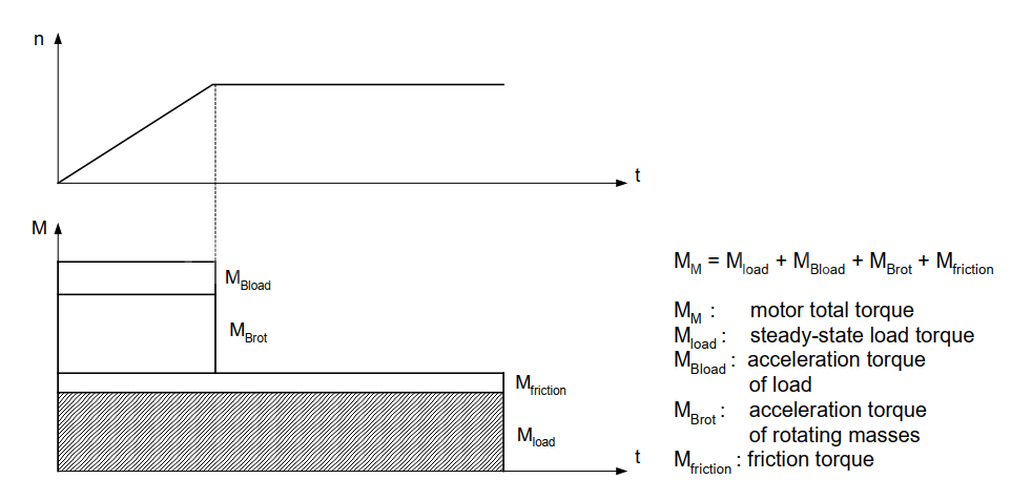
To address the accuracy problem of weighing sensors, a common load estimation method can be implemented in the PLC program. The hoist motor current can be used to calculate load weight. In steady motor operation, motor output torque is proportional to load weight, and motor current is approximately proportional to output torque. Therefore, motor current can be used to estimate load weight.
As shown in Fig. 1-2, during acceleration, the motor output torque includes four parts, and M_LOAD is proportional to the load.
The proportional coefficient K between motor current A and load T must be determined by actual measurement during commissioning:
T = K x A
The measurement method is as follows:
- Lift a known load T_LOAD until it is suspended above the ground, then accelerate it from standstill to base speed, or rated speed.
- Obtain motor current A. Current sampling must be performed during the acceleration stage because the field weakening speed must be calculated from the load weight during acceleration. To improve data accuracy, sampling in the middle of acceleration is recommended. For example, if the acceleration time from zero to base speed is 3 seconds, sampling can start after 1.5 seconds of operation. Sample once every 100 ms, collect 5 samples in total, and use the average of the 5 samples as motor current A_M.
- Calculate K: K = T_LOAD / A_M
- During actual operation, read current value A using the same method. Then calculate load weight by T = K x A and combine the result with the field weakening curve to calculate the motor field weakening speed.
Important points:
- For safety, if current sampling fails or the sampling result is uncertain, the motor should be allowed to run only at rated speed.
- The field weakening speed calculated during hoisting may also be used as a reference for lowering.
- After each working cycle ends, the field weakening speed should be reset to rated speed. The speed reference should be updated only after a valid field weakening speed is recalculated.
Siemens Implementation and Retrofit Notes
Early Siemens systems used Technology Boards such as T300, which integrated the field weakening speed control function. Users only needed some simple application development and careful on-site commissioning before use. The T300 was installed beside the CUVC board in the Masterdrive 6SE70 electronic box, and an EPROM was inserted on the T300, so the program was stored in the EPROM.
With the newer SINAMICS drive system, Siemens developed the SIMOCRANE crane control software package on the SIMOTION platform. It included crane technology programs such as field weakening speed control. As SIMOTION was phased out, SIMOCRANE was transferred to the CU320 hardware platform and still supports field weakening speed control.
Retrofit projects require special attention. The T300 cannot be used in a SINAMICS system, so its functions must be migrated to a PLC, CU320, or another platform. Otherwise, a crane with field weakening function may be modified into a crane with only two speeds: high speed and low speed.
After the function principle and implementation method are understood, the project team can decide whether to develop the function independently or purchase a mature software package. For engineering applications, it is important not only to know what the function does, but also to understand why it works.

I am Cindy, with 10 years of working experience in the crane industry and accumulated a wealth of professional knowledge. I have chosen the satisfying cranes for 500+ customers. If you have any needs or questions about cranes, please feel free to contact me, I will use my expertise and practical experience to help you solve the problem!
Send Your Inquiry
- Email: sales@hndfcrane.com
- WhatsApp: +86 191 3738 6654
- Telegram: +86 191 3738 6654
- Tel: +86-373-581 8299
- Fax: +86-373-215 7000
- Add: Changnao Industrial District, Xinxiang City, Henan Province, China
 WeChat
- Overhead Cranes
- Double Girder Overhead Cranes
- Single Girder Overhead Cranes
- European Type Single Girder Overhead Cranes
- Explosion Proof Overhead Cranes
- Grab And Magnetic Overhead Cranes
- Monorail Cranes
- Foundry Overhead Cranes
- Workstation Cranes
- Jib Cranes
- Wall Mounted Jib Cranes
- Wall Travelling Jib Cranes
- Free Standing Jib Cranes
- Aluminum Jib Cranes: Lightweight, Smooth Rotating Arm for Easy Lifting
- Balance Jib Cranes: Efficient Light Lifting for Short Distance Mechanical Assembly
- Manual Free Standing Jib Cranes: Efficient Manual Lifting Solutions for Limited Space Operations
- Electric Free Standing Jib Cranes: Fully Electric Solution for High Capacity Fast Lifting
- Articulating Jib Cranes: Precision Lifting with Dual Arm Flexibility
- Gantry Cranes
- Double Girder Gantry Cranes
- Semi Gantry Cranes
- Single Girder Gantry Cranes
- Truss Gantry Cranes
- Container Gantry Cranes
- Adjustable Gantry Cranes
- Portable Gantry Cranes
- European Gantry Cranes
- Industries
- General Manufacturing
- Waste Handling
- Precast
- Power
- Stone
- Papermaking
- Metal Production
- Bridge Construction
- Port Cranes: For Container and Bulk Material Handling
- Overhead Cranes for Petroleum and Gas Industry: Enhance Operational Efficiency
- Marine Cranes for Efficient Cargo Loading on Ships
- Overhead Cranes for the Automotive Industry: Efficient Automation Solutions
- Electric Hoists
- Electric Wire Rope Hoists
- Electric Chain Hoists
- European Type Electric Hoists
- European Electric Chain Hoists: Smooth Operation, Low Noise, and Energy Efficiency
- Manual Lever Hoists: Ideal for Pulling and Lifting Tasks
- Hand Chain Hoists: Manual Lifting for Areas Without Power
- Low Headroom Electric Hoists: Compact Design for Maximum Space Efficiency
- Pneumatic Chain Hoists: Smooth Handling for Industrial Use
- Explosion Proof Manual Chain Hoists: Spark Resistant Copper Alloy Construction for Hazardous Areas
- Explosion Proof Electric Chain Hoists for Hazardous Area Lifting
- Contact Us
- Email: sales@hndfcrane.com
- WhatsApp: +86 191 3738 6654
- Telegram: +86 191 3738 6654
- Tel: +86-373-581 8299
-