
-
Industries
-
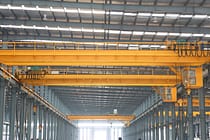
General Manufacturing
-
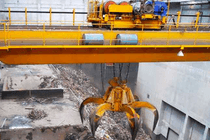
Waste Handling
-
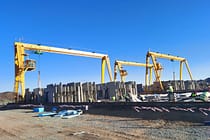
Precast
-
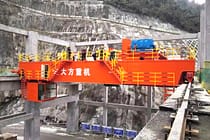
Power
-
Stone
-
Papermaking
-
Metal Production
-
Bridge Construction
-
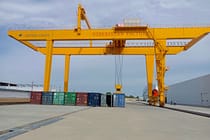
Port Cranes: For Container and Bulk Material Handling
-
Overhead Cranes for Petroleum and Gas Industry: Enhance Operational Efficiency
-
Marine Cranes for Efficient Cargo Loading on Ships
-
Overhead Cranes for the Automotive Industry: Efficient Automation Solutions
-
Overhead Crane Solutions for Railways: Track Laying, Rolling Stock Maintenance, and Container Handling
-
Overhead Cranes for Food and Beverages: Reliable Solutions for Efficient Handling
-
Overhead Cranes for Efficient Cement, Glass, Brick and Precast Concrete Manufacturing
-
Overhead Cranes for Aviation Industry: Aircraft Maintenance and Assembly
-
Aerospace Overhead Cranes: Precision Lifting for Rocket Launch and Transport
-
-
Products
-
Overhead Cranes
-
Single Girder Overhead Cranes
-
Double Girder Overhead Cranes
-
European Type Single Girder Overhead Cranes
-
European Type Double Girder Overhead Cranes
-
Explosion Proof Overhead Cranes
-
Grab And Magnetic Overhead Cranes
-
Monorail Cranes
-
Foundry Overhead Cranes
-
Workstation Cranes
-
Insulation Overhead Cranes
-
Low Headroom Overhead Cranes
-
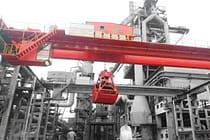
Grab Overhead Cranes
-
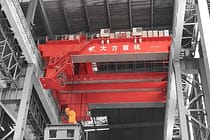
Ladle Overhead Cranes
-
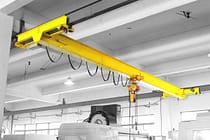
Underhung Overhead Cranes
-
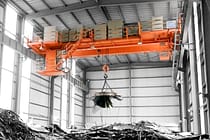
Electromagnetic Overhead Cranes
-
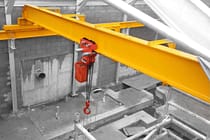
Manual Overhead Cranes
-
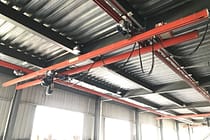
Ceiling Mounted Bridge Crane
-
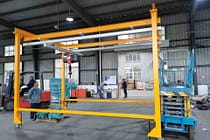
Free Standing Workstation Bridge Cranes
-
-
Gantry Cranes
-
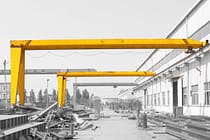
Semi Gantry Cranes
-
Single Girder Gantry Cranes
-
Double Girder Gantry Cranes
-
Container Gantry Cranes
-
Truss Gantry Cranes
-
Adjustable Gantry Cranes
-
Portable Gantry Cranes
-
European Gantry Cranes
-
Aluminum Gantry Cranes
-
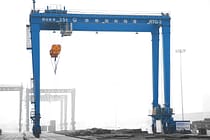
Rubber Tyred Container Gantry Cranes
-
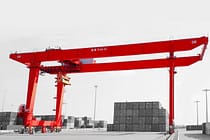
Rail Mounted Container Gantry Cranes
-
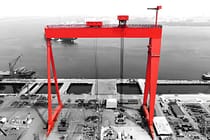
Shipyard Gantry Crane
-
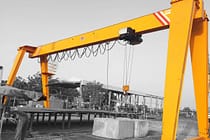
European Single Girder Gantry Cranes
-
European Double Girder Gantry Cranes
-
- Jib Cranes
- Special Cranes
- Electric Hoists
- Transfer Carts
-
Overhead Cranes
-
Crane Parts
-
Grab Buckets
-
Electric Stainless Steel Grab Bucket
-
Mechanical Four Rope Orange Peel Grabs
-
Mechanical Four Rope Clamshell Grabs Bucket
-
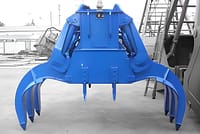
Electro Hydraulic Rectangular Grabs
-
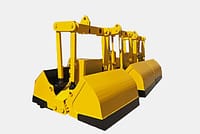
Electro hydraulic Clamshell Grabs
-
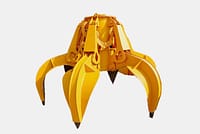
Electro Hydraulic Orange Peel Grabs,Hydraulic Cactus Grab
-
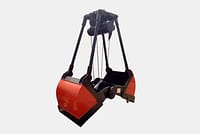
Electric Motor Grab
-
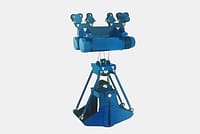
Electric Monorail Grab Bucket with Monorail Hoist
-
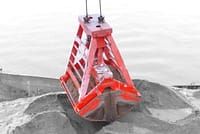
Remote Control Clamshell Grabs
-
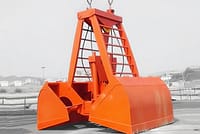
Mechanical Two Rope Clamshell Grabs
-
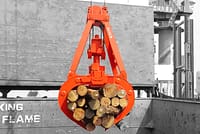
Timber Grabs
-
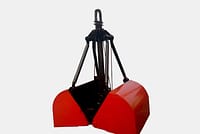
Single Rope Grab Bucket
-
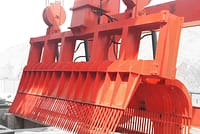
Trash Rack Cleaning Machines
-
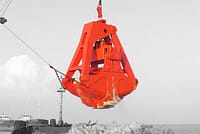
Dredging Grabs
-
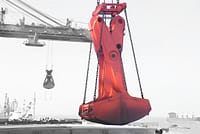
Trimming Grabs
-
- Crane Spreader
-
Crane Spare Parts
-
Wire Rope Sheaves
-
Crane Rope Drum
-
Crane Trolley
-
Electric Winch
-
Crane Operator Cabin
-
Overhead Crane Brakes
-
Overhead Crane Cables
-
Overhead Crane Rope Guides
-
Overhead Crane Conductors and Power Supply Lines
-
Overhead Crane Rails
-
Overhead Crane Rail Clips
-
Overhead Crane Motors
-
Overhead Crane Reducers
-
Couplings for Overhead Crane
-
- Crane Wheels
-
Grab Buckets
- Company
- Contact

-
Industries
-
General Manufacturing
-
Waste Handling
-
Precast
-
Power
-
Stone
-
Papermaking
-
Metal Production
-
Bridge Construction
-
Port Cranes: For Container and Bulk Material Handling
-
Overhead Cranes for Petroleum and Gas Industry: Enhance Operational Efficiency
-
Marine Cranes for Efficient Cargo Loading on Ships
-
Overhead Cranes for the Automotive Industry: Efficient Automation Solutions
-
Overhead Crane Solutions for Railways: Track Laying, Rolling Stock Maintenance, and Container Handling
-
Overhead Cranes for Food and Beverages: Reliable Solutions for Efficient Handling
-
Overhead Cranes for Efficient Cement, Glass, Brick and Precast Concrete Manufacturing
-
Overhead Cranes for Aviation Industry: Aircraft Maintenance and Assembly
-
Aerospace Overhead Cranes: Precision Lifting for Rocket Launch and Transport
-
-
Products
-
Overhead Cranes
-
Single Girder Overhead Cranes
-
Double Girder Overhead Cranes
-
European Type Single Girder Overhead Cranes
-
European Type Double Girder Overhead Cranes
-
Explosion Proof Overhead Cranes
-
Grab And Magnetic Overhead Cranes
-
Monorail Cranes
-
Foundry Overhead Cranes
-
Workstation Cranes
-
Insulation Overhead Cranes
-
Low Headroom Overhead Cranes
-
Grab Overhead Cranes
-
Ladle Overhead Cranes
-
Underhung Overhead Cranes
-
Electromagnetic Overhead Cranes
-
Manual Overhead Cranes
-
Ceiling Mounted Bridge Crane
-
Free Standing Workstation Bridge Cranes
-
-
Gantry Cranes
-
Semi Gantry Cranes
-
Single Girder Gantry Cranes
-
Double Girder Gantry Cranes
-
Container Gantry Cranes
-
Truss Gantry Cranes
-
Adjustable Gantry Cranes
-
Portable Gantry Cranes
-
European Gantry Cranes
-
Aluminum Gantry Cranes
-
Rubber Tyred Container Gantry Cranes
-
Rail Mounted Container Gantry Cranes
-
Shipyard Gantry Crane
-
European Single Girder Gantry Cranes
-
European Double Girder Gantry Cranes
-
- Jib Cranes
- Special Cranes
- Electric Hoists
- Transfer Carts
-
Overhead Cranes
-
Crane Parts
-
Grab Buckets
-
Electric Stainless Steel Grab Bucket
-
Mechanical Four Rope Orange Peel Grabs
-
Mechanical Four Rope Clamshell Grabs Bucket
-
Electro Hydraulic Rectangular Grabs
-
Electro hydraulic Clamshell Grabs
-
Electro Hydraulic Orange Peel Grabs,Hydraulic Cactus Grab
-
Electric Motor Grab
-
Electric Monorail Grab Bucket with Monorail Hoist
-
Remote Control Clamshell Grabs
-
Mechanical Two Rope Clamshell Grabs
-
Timber Grabs
-
Single Rope Grab Bucket
-
Trash Rack Cleaning Machines
-
Dredging Grabs
-
Trimming Grabs
-
- Crane Spreader
-
Crane Spare Parts
-
Wire Rope Sheaves
-
Crane Rope Drum
-
Crane Trolley
-
Electric Winch
-
Crane Operator Cabin
-
Overhead Crane Brakes
-
Overhead Crane Cables
-
Overhead Crane Rope Guides
-
Overhead Crane Conductors and Power Supply Lines
-
Overhead Crane Rails
-
Overhead Crane Rail Clips
-
Overhead Crane Motors
-
Overhead Crane Reducers
-
Couplings for Overhead Crane
-
- Crane Wheels
-
Grab Buckets
- Company
- Contact



HD vs LD Overhead Crane: Which Design Saves More Headroom
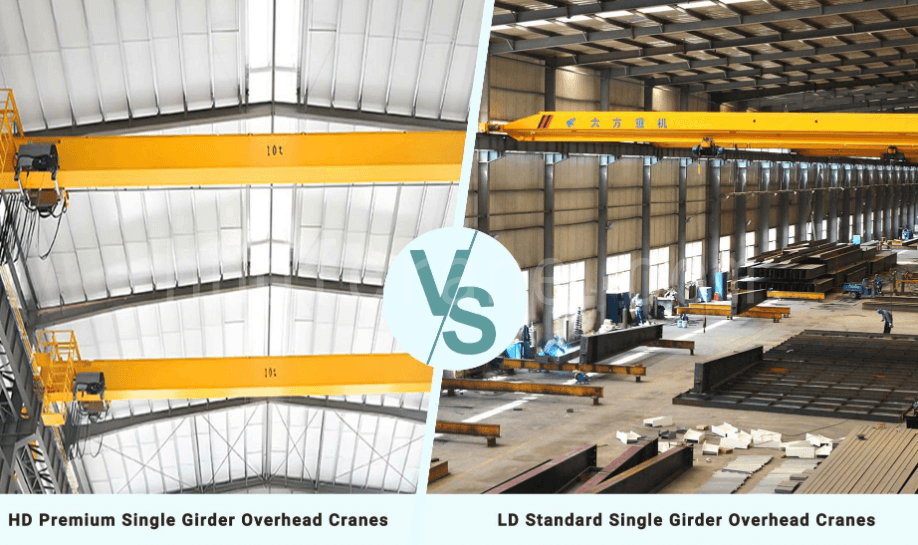
Table of Contents
A Real Workshop Selection Problem
A manufacturing customer planning a new workshop required a 10-ton single girder overhead crane for material handling and equipment installation. The building structure had already been finalized, with the following basic parameters:
- Workshop height: 10 meters
- Workshop width: 18 meters
- Required crane span: 16.5 meters
- Lifting capacity: 10 tons
Because the building height was fixed, lifting height and space utilization became critical factors during the crane selection process. In workshops with limited vertical clearance, even a small difference in hook height can directly affect equipment installation, mold handling, and material stacking efficiency. Under these same workshop conditions, the customer faced a typical engineering decision:
Should the project choose a traditional LD standard single girder overhead crane or a HD premium overhead crane with a more advanced configuration? Although both cranes can achieve the same lifting capacity and span, their design philosophy, structural configuration, and hoisting systems are fundamentally different. These differences ultimately affect lifting height, structural load, operational efficiency, and long-term operating cost.
This article uses the above workshop case to analyze the structural differences between HD and LD overhead cranes, and explains how these differences influence headroom requirements, lifting height, and project investment.
HD and LD Overhead Crane Girder Structure Comparison
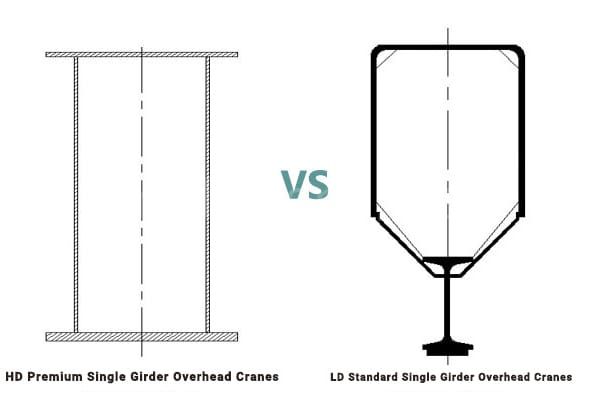
| Item | HD Premium Overhead Crane | LD Standard Overhead Crane |
|---|---|---|
| Girder Type | Welded box girder structure | Rolled I-beam girder with reinforcement plates |
| Design Standard | FEM / DIN design philosophy | GB traditional design |
| Structural Characteristics | Closed box section with higher torsional rigidity and uniform stress distribution | Open section structure with simpler load distribution |
| Structural Optimization | Optimized design reduces unnecessary material while maintaining strength and deflection limits | Conventional design with higher structural weight |
| Self Weight | Typically 30–40% lighter under comparable span and capacity | Higher self weight |
| Wheel Pressure | Lower wheel pressure on runway beams | Higher wheel pressure |
Although both girder designs can meet the same lifting capacity requirements, the optimized box girder structure used in HD cranes significantly reduces structural weight and wheel pressure. This improves overall efficiency and reduces load on the workshop structure.
However, when it comes to lifting performance inside a limited building height, the most significant difference actually comes from the electric hoist configuration, which will be discussed in the next section.
Electric Hoist Configuration and Installation Method
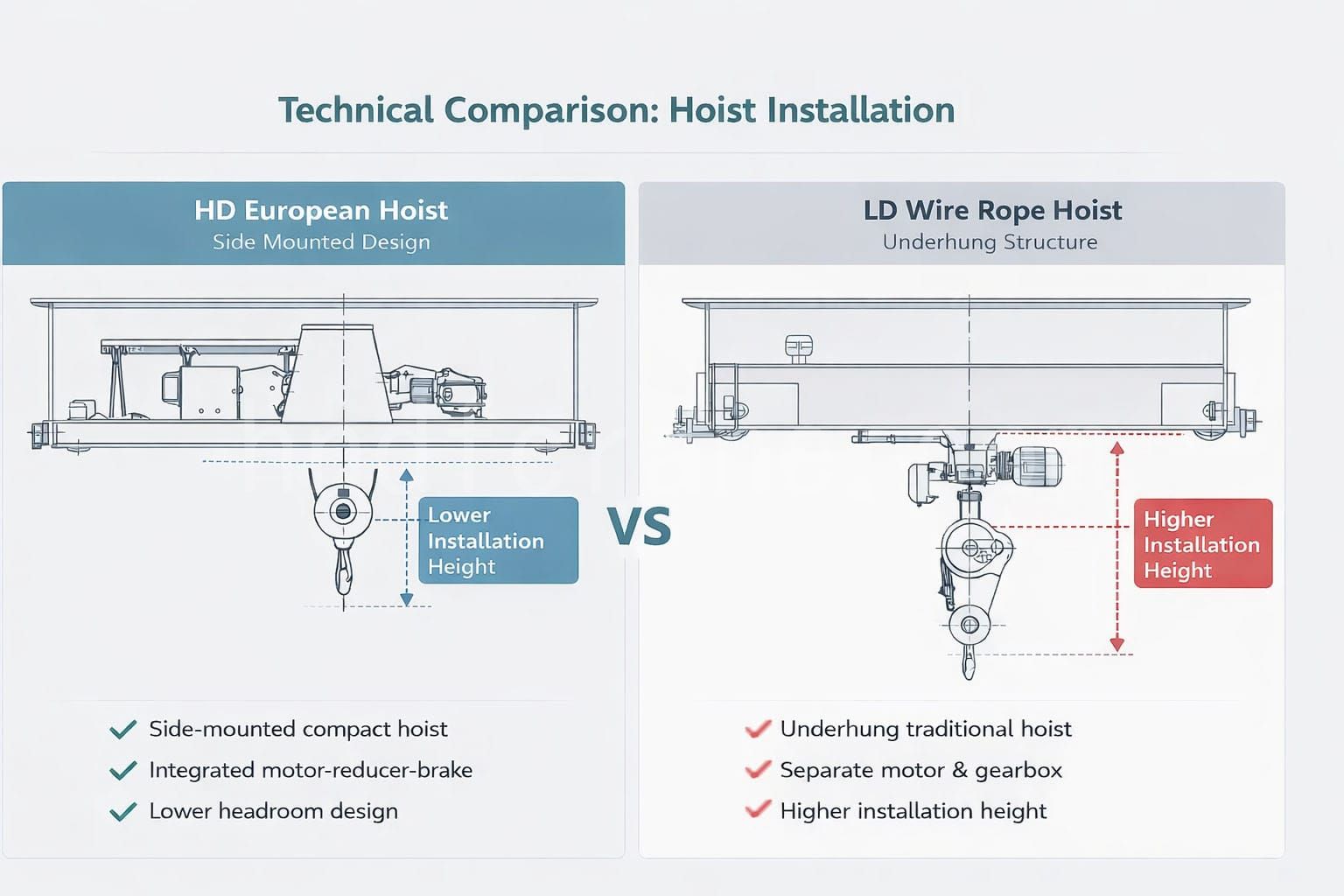
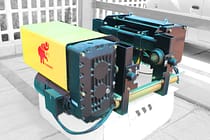
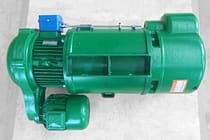
HD premium single girder overhead crane is equipped with european type electric hoists, while LD standard single girder overhead crane typically use traditional CD/MD electric wire rope hoists.
| Item | HD Premium Overhead Crane | LD Standard Overhead Crane |
|---|---|---|
| Hoist Type | European type electric hoist | CD/MD traditional electric wire rope hoist |
| Installation Method | Side-mounted beside the girder | Suspended directly under the girder |
| Structural Design | Integrated motor, reducer, and brake compact design | Motor and reducer separated design |
| Wire Rope Strength | 2160 N/mm² | 1670 N/mm² |
| Wire Rope Diameter | 9 mm | 15 mm |
| Rope Guide Material | Nylon guide (lower friction) | Cast iron guide (higher friction) |
| Lubrication | Usually no lubrication required | Requires regular lubrication |
| Headroom Requirement | Lower installation height | Higher installation height |
| Lifting Height Potential | Higher hook position within the same building height | Lower hook position |
The most significant difference between the two crane types lies in the installation method of the hoist. The HD overhead crane uses a side-mounted European compact hoist, where the hoisting unit is positioned beside the main girder. This configuration allows the hook to travel closer to the girder, reducing the installation height of the hoisting system.
In contrast, the LD overhead crane uses a traditional under-slung CD/MD hoist, which hangs completely below the girder. This design occupies more vertical space and increases the headroom requirement.
As a result, under identical workshop conditions, the HD overhead crane can typically achieve greater lifting height within the same building structure. This structural difference becomes particularly important in workshops where building height is limited, which will be demonstrated in the following real project case.
Real Workshop Case: Lifting Height Advantage and Cost Comparison
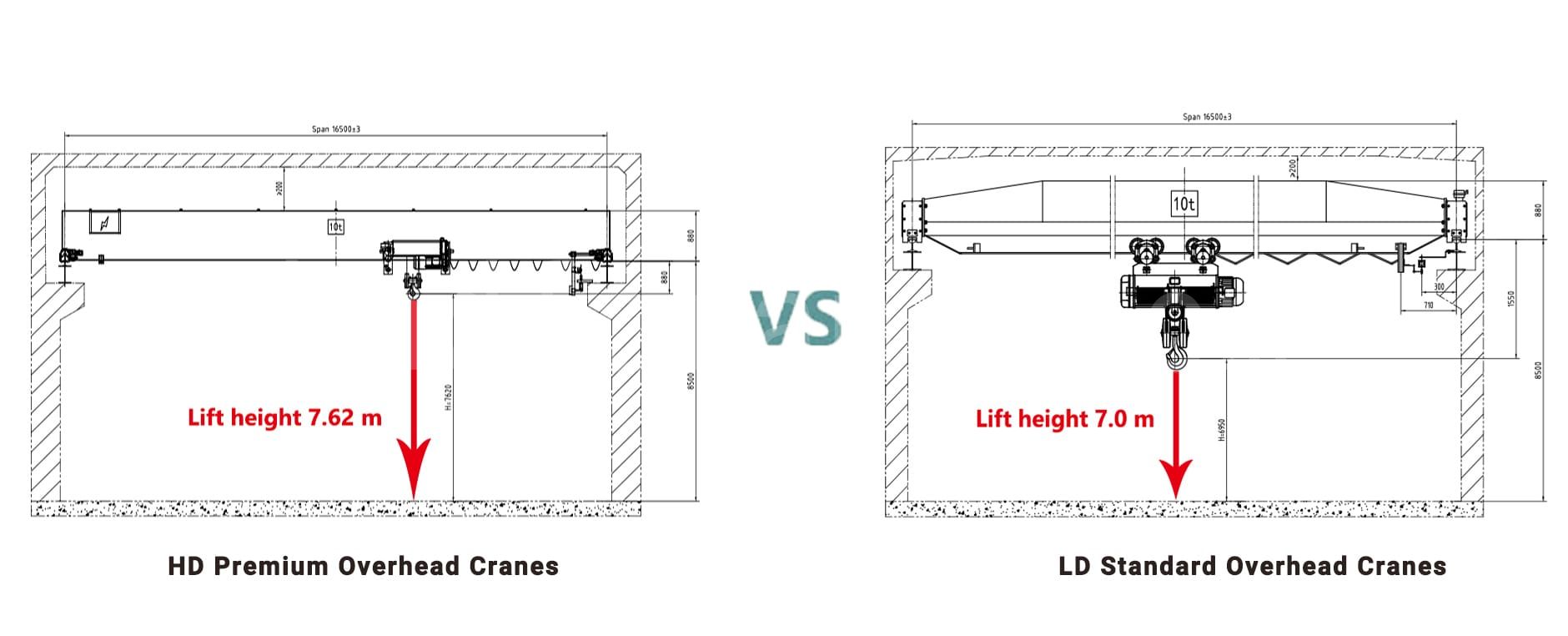
Based on the workshop conditions described earlier, two crane solutions were proposed for the project: an LD overhead crane and a HD overhead crane. Both options met the required 10-ton lifting capacity and 16.5-meter span. However, due to the different hoist installation configurations, the achievable lifting height inside the workshop was not the same.
Engineering calculations and CAD layout analysis showed that the HD overhead crane could provide 0.62 meters more lifting height under the hook than the LD overhead crane. This improvement was achieved without any modification to the building structure, but simply through the compact side-mounted hoist design used in the HD crane. In practical workshop operations, even a small increase in hook height can improve operational flexibility for tasks such as mold installation, equipment assembly, material stacking, and maintenance operations.
From a cost perspective, the LD standard overhead crane solution was quoted at USD 5,260, while the HD overhead crane was priced at USD 5,674—a difference of only USD 414 (approximately 7.9%). Considering the additional 0.62 meters of lifting height gained within the same building, this small price difference often represents a practical trade-off for projects where vertical space is limited.
This example is provided for reference only. Actual crane prices may vary depending on lifting capacity, span, lifting height, duty class, and project specifications. If you are planning a new workshop or upgrading an existing crane system, feel free to contact our engineering team for a customized crane solution and quotation.
Conclusion
The LD single girder overhead crane remains a practical and cost-effective solution for many traditional workshops, especially where budget control and moderate duty cycles are the main considerations.
However, for facilities where vertical space is limited, the HD European-type crane offers clear advantages through its optimized girder structure and compact hoist design. Even within the same building height, it can deliver greater lifting clearance and improved operational flexibility.
In the workshop case discussed above, an additional investment of USD 414 allowed the HD crane to achieve 0.62 meters more lifting height, demonstrating how design optimization can significantly improve space utilization without altering the building structure. Ultimately, the choice between HD and LD cranes should be based on a balance between initial cost, structural efficiency, and long-term operational needs.

I am Cindy, with 10 years of working experience in the crane industry and accumulated a wealth of professional knowledge. I have chosen the satisfying cranes for 500+ customers. If you have any needs or questions about cranes, please feel free to contact me, I will use my expertise and practical experience to help you solve the problem!
Send Your Inquiry
- Email: sales@hndfcrane.com
- WhatsApp: +86 191 3738 6654
- Telegram: +86 191 3738 6654
- Tel: +86-373-581 8299
- Fax: +86-373-215 7000
- Add: Changnao Industrial District, Xinxiang City, Henan Province, China
 WeChat
- Overhead Cranes
- European Type Double Girder Overhead Cranes: High Efficiency, Safety, and Reliability
- Double Girder Overhead Cranes
- Free Standing Workstation Bridge Cranes: Efficient Lifting Solutions for Modern Industrial Facilities
- Ceiling Mounted Bridge Crane: Column-Free Design for Unobstructed Floor Space
- Underhung Overhead Cranes: Lightweight Track Mounted Solution for Workshops and Warehouses
- Electromagnetic Overhead Cranes: Efficient Solution for Handling Slabs, Billets, and Scrap Metal
- Ladle Overhead Cranes: Reliable Hot Metal Handling Solutions for Steel Mills
- Grab Overhead Crane: Heavy Duty Lifting with Precision Control for Bulk Materials
- Low Headroom Overhead Crane: Space Saving Lift Efficiency Solution
- Manual Overhead Cranes: Efficient Solutions for Environments Without Power
- 5~50T QY Insulation Overhead Cranes for Safe Lifting in Hazardous Environments
- Cleanroom Cranes
- Workstation Cranes
- Foundry Overhead Cranes
- Monorail Cranes
- Grab And Magnetic Overhead Cranes
- Explosion Proof Overhead Cranes
- European Type Single Girder Overhead Cranes
- Single Girder Overhead Cranes
- Jib Cranes
- Wall Mounted Jib Cranes
- Wall Travelling Jib Cranes
- Free Standing Jib Cranes
- Aluminum Jib Cranes: Lightweight, Smooth Rotating Arm for Easy Lifting
- Balance Jib Cranes: Efficient Light Lifting for Short Distance Mechanical Assembly
- Manual Free Standing Jib Cranes: Efficient Manual Lifting Solutions for Limited Space Operations
- Electric Free Standing Jib Cranes: Fully Electric Solution for High Capacity Fast Lifting
- Articulating Jib Cranes: Precision Lifting with Dual Arm Flexibility
- Smart Jib Cranes: Intelligent Floating Solutions with Zero-Gravity Lifting
- FEM Standard Jib Cranes: High Performance Systems with European Hoists
- Portable Jib Cranes: Mobile Base Solution for Multiple Work Areas
- Tie Rod Free Standing Jib Cranes with I-Beam: Triangular Braced Stable Design
- Tie Rod Free Standing Jib Cranes with C-Beam: Ultra-Smooth Manual Flow for Workstations
- Enclosed Track Jib Cranes: Truss Boom Workstation Lifting Systems
- Gantry Cranes
- Double Girder Gantry Cranes
- Semi Gantry Cranes
- Single Girder Gantry Cranes
- Truss Gantry Cranes
- Container Gantry Cranes
- Adjustable Gantry Cranes
- Portable Gantry Cranes
- European Gantry Cranes
- Small Aluminum Gantry Cranes: Lightweight, Portable, and Customizable for High Efficiency Lifting
- 35T Mobile Rubber Tyred Container Gantry Cranes for Efficient Handling
- RMG Rail Mounted Container Gantry Cranes for Efficient Handling
- Shipyard Gantry Crane: Aerial Flip Design Easily Helps You Achieve Hull Assembly
- European Double Girder Gantry Cranes: European Type Winch Design for Efficient Lifting
- European Single Girder Gantry Cranes: Innovative European Technology for Outdoor Loading and Unloading
- Industries
- Power
- Stone
- Bridge Construction
- Port Cranes: For Container and Bulk Material Handling
- Aerospace Overhead Cranes: Precision Lifting for Rocket Launch and Transport
- Overhead Cranes for Aviation Industry: Aircraft Maintenance and Assembly
- Overhead Cranes for Efficient Cement, Glass, Brick and Precast Concrete Manufacturing
- Overhead Crane Solutions for Railways: Track Laying, Rolling Stock Maintenance, and Container Handling
- Overhead Cranes for Food and Beverages: Reliable Solutions for Efficient Handling
- Overhead Cranes for the Automotive Industry: Efficient Automation Solutions
- Marine Cranes for Efficient Cargo Loading on Ships
- Overhead Cranes for Petroleum and Gas Industry: Enhance Operational Efficiency
- General Manufacturing
- Metal Production
- Papermaking
- Precast
- Waste Handling
- Electric Hoists
- Electric Wire Rope Hoists
- Electric Chain Hoists
- European Type Electric Hoists
- European Electric Chain Hoists: Smooth Operation, Low Noise, and Energy Efficiency
- Manual Lever Hoists: Ideal for Pulling and Lifting Tasks
- Hand Chain Hoists: Manual Lifting for Areas Without Power
- Low Headroom Electric Hoists: Compact Design for Maximum Space Efficiency
- Pneumatic Chain Hoists: Smooth Handling for Industrial Use
- Explosion Proof Manual Chain Hoists: Spark Resistant Copper Alloy Construction for Hazardous Areas
- Crane Parts
- Diesel Winch for Non-Electric Environments: High-Power Lifting and Pulling
- Crane Hooks
- Open Winch Trolley: Customizable Hoisting Trolley for Overhead and Gantry Cranes
- Electric Wire Rope Winch: Compact Hoisting System for Space-Limited
- Friction Winch: Professional Solution for Ship Traction and Mining Hoisting
- Slow Speed Electric Winch: Reliable Heavy-Duty Lifting for Industrial Applications
- Industrial High Speed Electric Winch: Fast, Reliable, and Customizable
- Crane C Hooks for Steel Coil Lifting
- Overhead Crane Reducers Explained: Types for Every Lifting Need
- Overhead Crane Motors for Lifting Efficiency and Precision
- Couplings for Overhead Crane
- Overhead Crane Rail Clips Selection Based on Load and Track Conditions
- Overhead Crane Rails Solutions for Industrial Stability and Precision
- Overhead Crane Rope Guides: Enhancing Wire Rope Finishing Efficiently
- Overhead Crane Conductors and Power Supply Lines: Reliable Power Supply Solutions
- Overhead Crane Cables: Reliable Mobile Power Solutions
- Overhead Crane Brakes: Critical for Safe Operations
- Customizable Crane Operator Cabins: Enhanced Comfort and Protection
- Crane Lifting Tongs
- Crane Grab Buckets
- Crane Rope Drum
- Electric Winch
- Crane Trolley
- Wire Rope Sheaves
- Contact Us
- Email: sales@hndfcrane.com
- WhatsApp: +86 191 3738 6654
- Telegram: +86 191 3738 6654
- Tel: +86-373-581 8299
-