
-
Industries
-
General Manufacturing
-
Waste Handling
-
Precast
-
Power
-
Stone
-
Papermaking
-
Metal Production
-
Bridge Construction
-
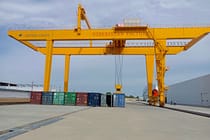
Port Cranes: For Container and Bulk Material Handling
-
Overhead Cranes for Petroleum and Gas Industry: Enhance Operational Efficiency
-

Marine Cranes for Efficient Cargo Loading on Ships
-

Overhead Cranes for the Automotive Industry: Efficient Automation Solutions
-
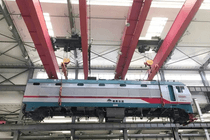
Overhead Crane Solutions for Railways: Track Laying, Rolling Stock Maintenance, and Container Handling
-
Overhead Cranes for Food and Beverages: Reliable Solutions for Efficient Handling
-
Overhead Cranes for Efficient Cement, Glass, Brick and Precast Concrete Manufacturing
-
Overhead Cranes for Aviation Industry: Aircraft Maintenance and Assembly
-
Aerospace Overhead Cranes: Precision Lifting for Rocket Launch and Transport
-
-
Products
-
Overhead Cranes
-
Single Girder Overhead Cranes
-
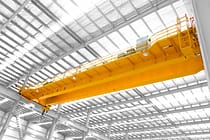
Double Girder Overhead Cranes
-
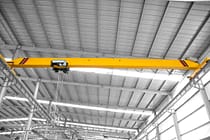
European Type Single Girder Overhead Cranes
-
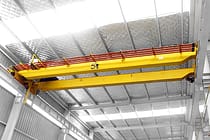
European Type Double Girder Overhead Cranes
-
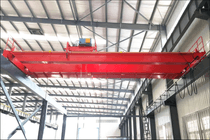
Explosion Proof Overhead Cranes
-
Grab And Magnetic Overhead Cranes
-
Monorail Cranes
-
Foundry Overhead Cranes
-
Workstation Cranes
-
Insulation Overhead Cranes
-
Low Headroom Overhead Cranes
-
Grab Overhead Cranes
-
Ladle Overhead Cranes
-
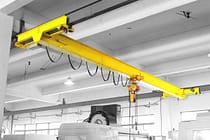
Underhung Overhead Cranes
-
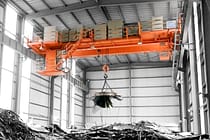
Electromagnetic Overhead Cranes
-
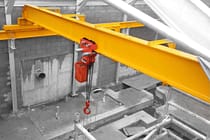
Manual Overhead Cranes
-
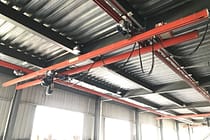
Ceiling Mounted Bridge Crane
-
Free Standing Workstation Bridge Cranes
-
-
Gantry Cranes
-
Semi Gantry Cranes
-
Single Girder Gantry Cranes
-
Double Girder Gantry Cranes
-
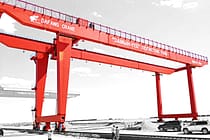
Container Gantry Cranes
-
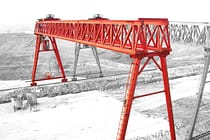
Truss Gantry Cranes
-
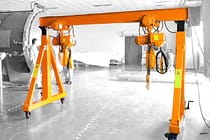
Adjustable Gantry Cranes
-
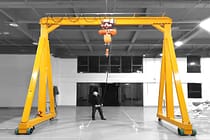
Portable Gantry Cranes
-
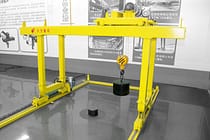
European Gantry Cranes
-
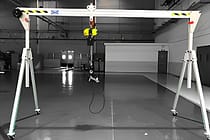
Aluminum Gantry Cranes
-
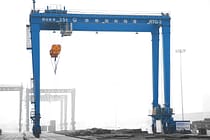
Rubber Tyred Container Gantry Cranes
-
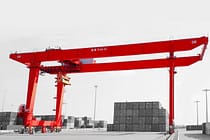
Rail Mounted Container Gantry Cranes
-
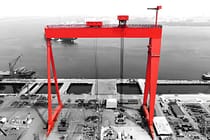
Shipyard Gantry Crane
-
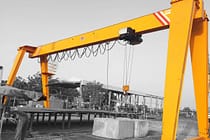
European Single Girder Gantry Cranes
-
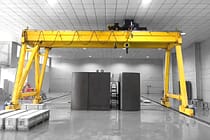
European Double Girder Gantry Cranes
-
- Jib Cranes
- Special Cranes
- Electric Hoists
- Transfer Carts
-
Overhead Cranes
-
Crane Parts
-
Grab Buckets
-
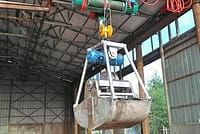
Electric Stainless Steel Grab Bucket
-
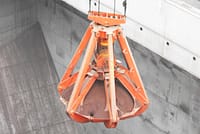
Mechanical Four Rope Orange Peel Grabs
-
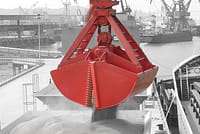
Mechanical Four Rope Clamshell Grabs Bucket
-
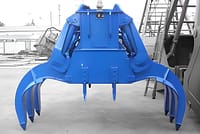
Electro Hydraulic Rectangular Grabs
-
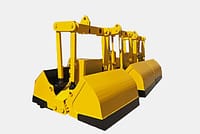
Electro hydraulic Clamshell Grabs
-
Electro Hydraulic Orange Peel Grabs,Hydraulic Cactus Grab
-
Electric Motor Grab
-
Electric Monorail Grab Bucket with Monorail Hoist
-
Remote Control Clamshell Grabs
-
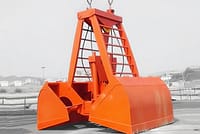
Mechanical Two Rope Clamshell Grabs
-
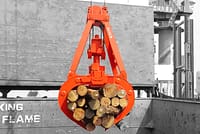
Timber Grabs
-
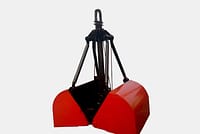
Single Rope Grab Bucket
-
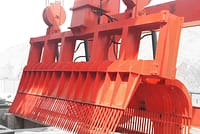
Trash Rack Cleaning Machines
-
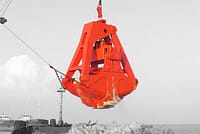
Dredging Grabs
-
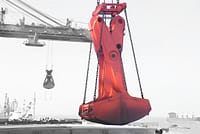
Trimming Grabs
-
- Crane Spreader
-
Crane Spare Parts
-
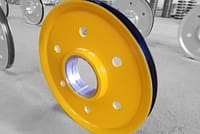
Wire Rope Sheaves
-
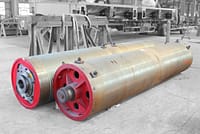
Crane Rope Drum
-
Crane Trolley
-
Electric Winch
-
Crane Operator Cabin
-
Overhead Crane Brakes
-
Overhead Crane Cables
-
Overhead Crane Rope Guides
-
Overhead Crane Conductors and Power Supply Lines
-
Overhead Crane Rails
-
Overhead Crane Rail Clips
-
Overhead Crane Motors
-
Overhead Crane Reducers
-
Couplings for Overhead Crane
-
- Crane Wheels
-
Grab Buckets
- Company
- Contact


-
Industries
-
General Manufacturing
-
Waste Handling
-
Precast
-
Power
-
Stone
-
Papermaking
-
Metal Production
-
Bridge Construction
-
Port Cranes: For Container and Bulk Material Handling
-
Overhead Cranes for Petroleum and Gas Industry: Enhance Operational Efficiency
-
Marine Cranes for Efficient Cargo Loading on Ships
-
Overhead Cranes for the Automotive Industry: Efficient Automation Solutions
-
Overhead Crane Solutions for Railways: Track Laying, Rolling Stock Maintenance, and Container Handling
-
Overhead Cranes for Food and Beverages: Reliable Solutions for Efficient Handling
-
Overhead Cranes for Efficient Cement, Glass, Brick and Precast Concrete Manufacturing
-
Overhead Cranes for Aviation Industry: Aircraft Maintenance and Assembly
-
Aerospace Overhead Cranes: Precision Lifting for Rocket Launch and Transport
-
-
Products
-
Overhead Cranes
-
Single Girder Overhead Cranes
-
Double Girder Overhead Cranes
-
European Type Single Girder Overhead Cranes
-
European Type Double Girder Overhead Cranes
-
Explosion Proof Overhead Cranes
-
Grab And Magnetic Overhead Cranes
-
Monorail Cranes
-
Foundry Overhead Cranes
-
Workstation Cranes
-
Insulation Overhead Cranes
-
Low Headroom Overhead Cranes
-
Grab Overhead Cranes
-
Ladle Overhead Cranes
-
Underhung Overhead Cranes
-
Electromagnetic Overhead Cranes
-
Manual Overhead Cranes
-
Ceiling Mounted Bridge Crane
-
Free Standing Workstation Bridge Cranes
-
-
Gantry Cranes
-
Semi Gantry Cranes
-
Single Girder Gantry Cranes
-
Double Girder Gantry Cranes
-
Container Gantry Cranes
-
Truss Gantry Cranes
-
Adjustable Gantry Cranes
-
Portable Gantry Cranes
-
European Gantry Cranes
-
Aluminum Gantry Cranes
-
Rubber Tyred Container Gantry Cranes
-
Rail Mounted Container Gantry Cranes
-
Shipyard Gantry Crane
-
European Single Girder Gantry Cranes
-
European Double Girder Gantry Cranes
-
- Jib Cranes
- Special Cranes
- Electric Hoists
- Transfer Carts
-
Overhead Cranes
-
Crane Parts
-
Grab Buckets
-
Electric Stainless Steel Grab Bucket
-
Mechanical Four Rope Orange Peel Grabs
-
Mechanical Four Rope Clamshell Grabs Bucket
-
Electro Hydraulic Rectangular Grabs
-
Electro hydraulic Clamshell Grabs
-
Electro Hydraulic Orange Peel Grabs,Hydraulic Cactus Grab
-
Electric Motor Grab
-
Electric Monorail Grab Bucket with Monorail Hoist
-
Remote Control Clamshell Grabs
-
Mechanical Two Rope Clamshell Grabs
-
Timber Grabs
-
Single Rope Grab Bucket
-
Trash Rack Cleaning Machines
-
Dredging Grabs
-
Trimming Grabs
-
- Crane Spreader
-
Crane Spare Parts
-
Wire Rope Sheaves
-
Crane Rope Drum
-
Crane Trolley
-
Electric Winch
-
Crane Operator Cabin
-
Overhead Crane Brakes
-
Overhead Crane Cables
-
Overhead Crane Rope Guides
-
Overhead Crane Conductors and Power Supply Lines
-
Overhead Crane Rails
-
Overhead Crane Rail Clips
-
Overhead Crane Motors
-
Overhead Crane Reducers
-
Couplings for Overhead Crane
-
- Crane Wheels
-
Grab Buckets
- Company
- Contact



New Overhead Crane vs Used Overhead Crane: Cost, Safe, and Lifecycle Comparison
Table of Contents
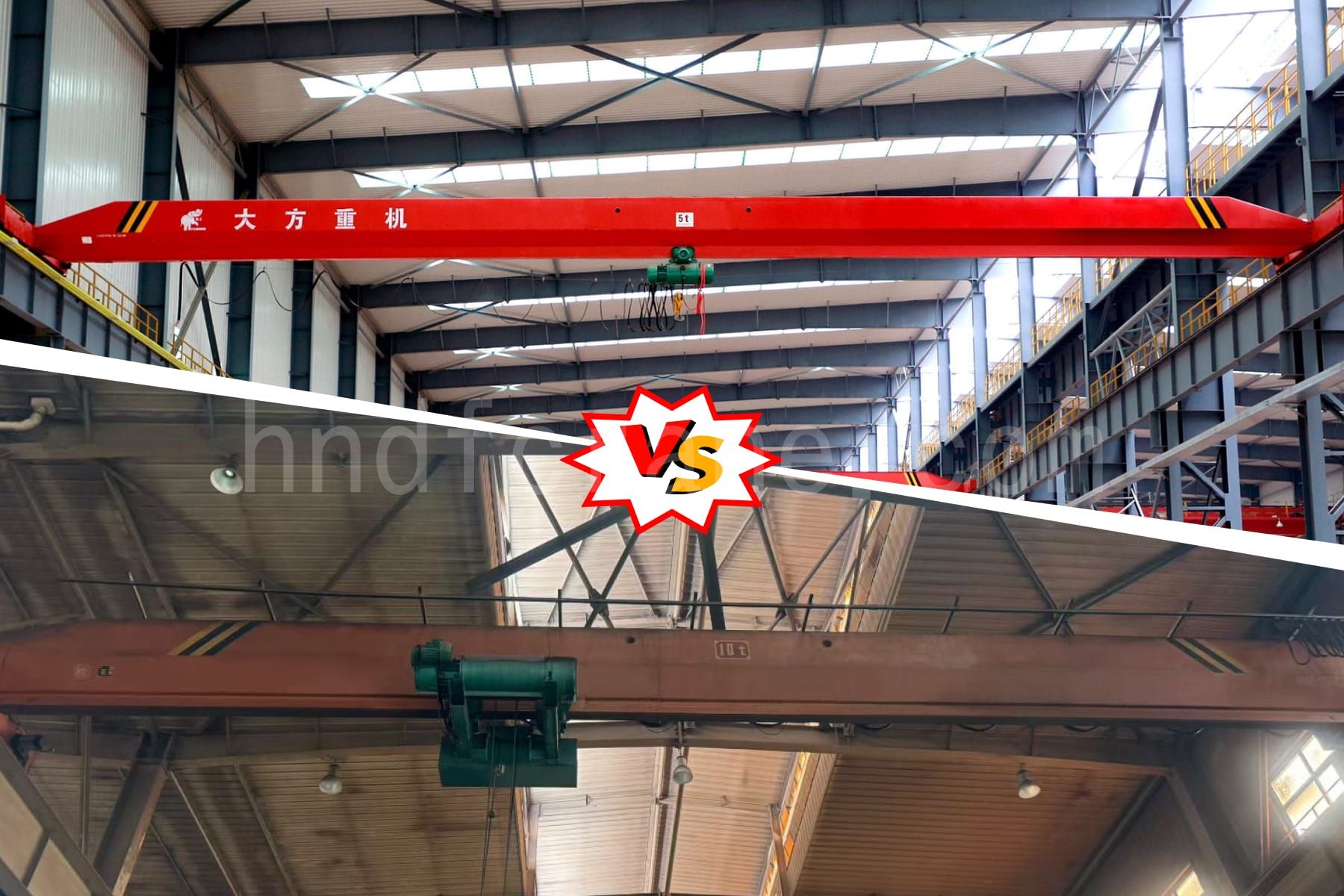
In crane procurement, “new” and “used” cranes are not just a matter of age—they are fundamentally different solutions in terms of technical condition, risk, and management. Their suitability depends on how well the equipment matches the application, not on the equipment itself.
The main advantage of used cranes is cost. With similar specifications, used cranes are typically 40%–60% cheaper than new ones, making them attractive for projects with tight budgets or short timelines. However, they often fall short in technical transparency, remaining service life, operational predictability, and after-sales support, requiring more careful inspection and maintenance.
From an engineering and operational perspective, this article compares new and used cranes across four dimensions: budget, safety and technical requirements, service life, and after-sales support, providing guidance for different types of projects and enterprises.
Quick Comparison: New vs Used Overhead Crane
| Decision Factor | New Overhead Crane | Used Overhead Crane |
| Upfront Price | Higher initial investment | 40–60% lower purchase price |
| Long-term Cost | Predictable and stable | Similar over long term due to higher maintenance |
| Safety & Technical Condition | Full technical transparency, design life starts from zero | Condition depends on past usage; higher uncertainty |
| Service Life | Full design life (typically 15–20+ years) | Remaining service life only |
| Maintenance & Support | Full manufacturer support, easy spare parts access | Depends on model age and source; parts availability may vary |
| Best-fit Projects | Long-term, safety-critical, continuous operation | Short-term, temporary, low-risk applications |
| Management Requirement | Standard operation & maintenance | Higher inspection, monitoring, and management effort |
Price Comparison: Upfront Cost Advantage of Used Cranes
For an LD single girder overhead crane (10 t capacity, 7.5 m span, 9 m lifting height), the upfront price difference between new and used equipment is significant.
- New crane price: USD 3,325
- Used crane price: USD 1,458
Choosing a used crane in this configuration typically results in an upfront cost reduction of nearly 50–60% compared to a new crane.
Key point: The primary advantage of a used overhead crane lies in its significantly lower purchase price, which can be a decisive factor for budget-constrained or short-term projects.
Safety & Technical Condition
New overhead crane offers a high level of technical transparency. The crane is designed based on a defined duty class and working cycle, with fatigue life calculations already completed at the design stage. Structural components such as girders, end trucks, and welded joints start their service life from zero. Hoisting mechanisms, brakes, and safety devices are factory-tested before delivery, so their performance limits and operating conditions are clearly known.
Used overhead crane is not necessarily unsafe, but its main challenge lies in the uncertainty of past usage. The actual loads handled, lifting frequency, impact conditions, and maintenance quality over its previous service life cannot be fully reconstructed, even with inspection and testing. As a result, safety evaluation relies more heavily on inspection depth, engineering judgment, and the buyer's ability to manage uncertainty.
From a practical engineering perspective:
- For low-risk applications, where loads are stable and the company has proper inspection, monitoring, and maintenance procedures in place, the safety risks of a used crane can be effectively managed.
- For safety-critical or continuous-production applications, such as heavy-duty handling or processes where downtime and accidents carry high consequences, buyers usually prefer a new crane due to its clearer technical condition and lower uncertainty.
Lifecycle: Design Life vs Remaining Life
The service life of an overhead crane is a key factor in procurement decisions, especially when comparing new and used equipment. The main difference lies not in whether the crane can operate, but in how much usable life remains.
New overhead crane is delivered with its full design service life available. Under normal operating conditions and proper maintenance, a typical overhead crane is designed to operate for 15–20 years or more, depending on duty class and usage frequency. This makes new cranes suitable for long-term projects, permanent facilities, and operations with stable or increasing production demand.
Used overhead crane, by contrast, has already consumed part of its service life. Even if the crane is still in good working condition, its remaining usable life is shorter, and this remaining life depends heavily on how it was previously used, maintained, and loaded. For example, a crane previously operated in high-duty or multi-shift conditions may have significantly less remaining life than one used intermittently.
Maintenance & Support: Service, Spare Parts, and Support
New cranes typically come with a complete manufacturer support system, including equipment drawings, technical specifications, spare parts lists, and standardized maintenance procedures. Key components such as motors, gearboxes, brakes, and control systems have clear model classifications, with well-defined paths for maintenance, upgrades, and technical support.
The after-sales capability of used cranes largely depends on their source and manufacturing age. Some equipment may face difficulties in obtaining spare parts or technical support if models are discontinued, systems have been modified multiple times, or non-standard configurations are used. Any failure of critical components can result in unpredictable downtime, directly affecting production continuity.
Conclusions:
- High demands for operational continuity and quick response → New cranes offer greater assurance
- Mature in-house maintenance capabilities and spare parts channels → Used cranes may be acceptable
Selection Summary: How to Make the Right Choice
From an engineering perspective, the choice between new and used cranes essentially reflects usage strategy and risk preference:
- Used cranes are suitable for applications with limited budgets, defined service periods, and controllable risks.
- New cranes are better suited for long-term operation, high safety requirements, and critical production tasks.
A rational crane procurement decision should be based on a comprehensive assessment of operating conditions, workload, safety requirements, and maintenance capabilities—not on price alone. Only when the equipment is closely matched to the application can a crane continue to deliver value throughout its lifecycle.

I am Cindy, with 10 years of working experience in the crane industry and accumulated a wealth of professional knowledge. I have chosen the satisfying cranes for 500+ customers. If you have any needs or questions about cranes, please feel free to contact me, I will use my expertise and practical experience to help you solve the problem!
Send Your Inquiry
- Email: sales@hndfcrane.com
- WhatsApp: +86 191 3738 6654
- Telegram: +86 191 3738 6654
- Tel: +86-373-581 8299
- Fax: +86-373-215 7000
- Add: Changnao Industrial District, Xinxiang City, Henan Province, China
 WeChat
- Overhead Cranes
- European Type Double Girder Overhead Cranes: High Efficiency, Safety, and Reliability
- Double Girder Overhead Cranes
- Free Standing Workstation Bridge Cranes: Efficient Lifting Solutions for Modern Industrial Facilities
- Ceiling Mounted Bridge Crane: Column-Free Design for Unobstructed Floor Space
- Underhung Overhead Cranes: Lightweight Track Mounted Solution for Workshops and Warehouses
- Electromagnetic Overhead Cranes: Efficient Solution for Handling Slabs, Billets, and Scrap Metal
- Ladle Overhead Cranes: Reliable Hot Metal Handling Solutions for Steel Mills
- Grab Overhead Crane: Heavy Duty Lifting with Precision Control for Bulk Materials
- Low Headroom Overhead Crane: Space Saving Lift Efficiency Solution
- Manual Overhead Cranes: Efficient Solutions for Environments Without Power
- 5~50T QY Insulation Overhead Cranes for Safe Lifting in Hazardous Environments
- Cleanroom Cranes
- Workstation Cranes
- Foundry Overhead Cranes
- Monorail Cranes
- Grab And Magnetic Overhead Cranes
- Explosion Proof Overhead Cranes
- European Type Single Girder Overhead Cranes
- Single Girder Overhead Cranes
- Jib Cranes
- Wall Mounted Jib Cranes
- Wall Travelling Jib Cranes
- Free Standing Jib Cranes
- Aluminum Jib Cranes: Lightweight, Smooth Rotating Arm for Easy Lifting
- Balance Jib Cranes: Efficient Light Lifting for Short Distance Mechanical Assembly
- Manual Free Standing Jib Cranes: Efficient Manual Lifting Solutions for Limited Space Operations
- Electric Free Standing Jib Cranes: Fully Electric Solution for High Capacity Fast Lifting
- Articulating Jib Cranes: Precision Lifting with Dual Arm Flexibility
- Smart Jib Cranes: Intelligent Floating Solutions with Zero-Gravity Lifting
- FEM Standard Jib Cranes: High Performance Systems with European Hoists
- Portable Jib Cranes: Mobile Base Solution for Multiple Work Areas
- Tie Rod Free Standing Jib Cranes with I-Beam: Triangular Braced Stable Design
- Tie Rod Free Standing Jib Cranes with C-Beam: Ultra-Smooth Manual Flow for Workstations
- Enclosed Track Jib Cranes: Truss Boom Workstation Lifting Systems
- Gantry Cranes
- Double Girder Gantry Cranes
- Semi Gantry Cranes
- Single Girder Gantry Cranes
- Truss Gantry Cranes
- Container Gantry Cranes
- Adjustable Gantry Cranes
- Portable Gantry Cranes
- European Gantry Cranes
- Small Aluminum Gantry Cranes: Lightweight, Portable, and Customizable for High Efficiency Lifting
- 35T Mobile Rubber Tyred Container Gantry Cranes for Efficient Handling
- RMG Rail Mounted Container Gantry Cranes for Efficient Handling
- Shipyard Gantry Crane: Aerial Flip Design Easily Helps You Achieve Hull Assembly
- European Double Girder Gantry Cranes: European Type Winch Design for Efficient Lifting
- European Single Girder Gantry Cranes: Innovative European Technology for Outdoor Loading and Unloading
- Industries
- Power
- Stone
- Bridge Construction
- Port Cranes: For Container and Bulk Material Handling
- Aerospace Overhead Cranes: Precision Lifting for Rocket Launch and Transport
- Overhead Cranes for Aviation Industry: Aircraft Maintenance and Assembly
- Overhead Cranes for Efficient Cement, Glass, Brick and Precast Concrete Manufacturing
- Overhead Crane Solutions for Railways: Track Laying, Rolling Stock Maintenance, and Container Handling
- Overhead Cranes for Food and Beverages: Reliable Solutions for Efficient Handling
- Overhead Cranes for the Automotive Industry: Efficient Automation Solutions
- Marine Cranes for Efficient Cargo Loading on Ships
- Overhead Cranes for Petroleum and Gas Industry: Enhance Operational Efficiency
- General Manufacturing
- Metal Production
- Papermaking
- Precast
- Waste Handling
- Electric Hoists
- Electric Wire Rope Hoists
- Electric Chain Hoists
- European Type Electric Hoists
- European Electric Chain Hoists: Smooth Operation, Low Noise, and Energy Efficiency
- Manual Lever Hoists: Ideal for Pulling and Lifting Tasks
- Hand Chain Hoists: Manual Lifting for Areas Without Power
- Low Headroom Electric Hoists: Compact Design for Maximum Space Efficiency
- Pneumatic Chain Hoists: Smooth Handling for Industrial Use
- Explosion Proof Manual Chain Hoists: Spark Resistant Copper Alloy Construction for Hazardous Areas
- Crane Parts
- Diesel Winch for Non-Electric Environments: High-Power Lifting and Pulling
- Crane Hooks
- Open Winch Trolley: Customizable Hoisting Trolley for Overhead and Gantry Cranes
- Electric Wire Rope Winch: Compact Hoisting System for Space-Limited
- Friction Winch: Professional Solution for Ship Traction and Mining Hoisting
- Slow Speed Electric Winch: Reliable Heavy-Duty Lifting for Industrial Applications
- Industrial High Speed Electric Winch: Fast, Reliable, and Customizable
- Crane C Hooks for Steel Coil Lifting
- Overhead Crane Reducers Explained: Types for Every Lifting Need
- Overhead Crane Motors for Lifting Efficiency and Precision
- Couplings for Overhead Crane
- Overhead Crane Rail Clips Selection Based on Load and Track Conditions
- Overhead Crane Rails Solutions for Industrial Stability and Precision
- Overhead Crane Rope Guides: Enhancing Wire Rope Finishing Efficiently
- Overhead Crane Conductors and Power Supply Lines: Reliable Power Supply Solutions
- Overhead Crane Cables: Reliable Mobile Power Solutions
- Overhead Crane Brakes: Critical for Safe Operations
- Customizable Crane Operator Cabins: Enhanced Comfort and Protection
- Crane Lifting Tongs
- Crane Grab Buckets
- Crane Rope Drum
- Electric Winch
- Crane Trolley
- Wire Rope Sheaves
- Contact Us
- Email: sales@hndfcrane.com
- WhatsApp: +86 191 3738 6654
- Telegram: +86 191 3738 6654
- Tel: +86-373-581 8299
-