
-
Industries
-
General Manufacturing
-
Waste Handling
-
Precast
-
Power
-
Stone
-
Papermaking
-
Metal Production
-
Bridge Construction
-
Port Cranes: For Container and Bulk Material Handling
-
Overhead Cranes for Petroleum and Gas Industry: Enhance Operational Efficiency
-
Marine Cranes for Efficient Cargo Loading on Ships
-
Overhead Cranes for the Automotive Industry: Efficient Automation Solutions
-
Overhead Crane Solutions for Railways: Track Laying, Rolling Stock Maintenance, and Container Handling
-
Overhead Cranes for Food and Beverages: Reliable Solutions for Efficient Handling
-
Overhead Cranes for Efficient Cement, Glass, Brick and Precast Concrete Manufacturing
-
Overhead Cranes for Aviation Industry: Aircraft Maintenance and Assembly
-
Aerospace Overhead Cranes: Precision Lifting for Rocket Launch and Transport
-
-
Products
-
Overhead Cranes
-
Single Girder Overhead Cranes
-
Double Girder Overhead Cranes
-
European Type Single Girder Overhead Cranes
-
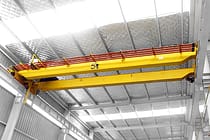
European Type Double Girder Overhead Cranes
-
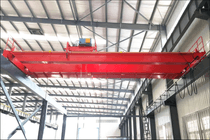
Explosion Proof Overhead Cranes
-
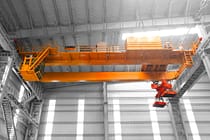
Grab And Magnetic Overhead Cranes
-
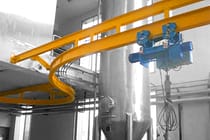
Monorail Cranes
-
Foundry Overhead Cranes
-
Insulation Overhead Cranes
-
Low Headroom Overhead Cranes
-
Grab Overhead Cranes
-
Ladle Overhead Cranes
-
Underhung Overhead Cranes
-
Electromagnetic Overhead Cranes
-
Workstation Cranes: Lightweight Design, Easy Installation, and Effortless Operation
-
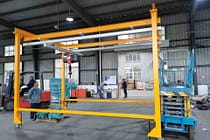
Free Standing Workstation Bridge Cranes
-
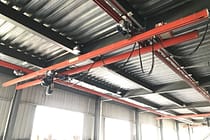
Ceiling Mounted Bridge Crane
-
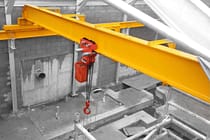
Manual Overhead Cranes
-
-
Gantry Cranes
-
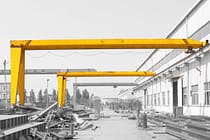
Semi Gantry Cranes
-
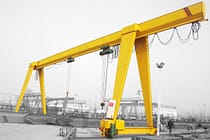
Single Girder Gantry Cranes
-
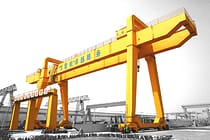
Double Girder Gantry Cranes
-
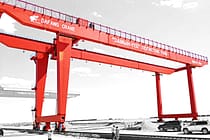
Container Gantry Cranes
-
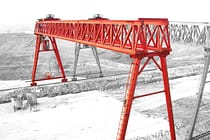
Truss Gantry Cranes
-
Adjustable Gantry Cranes
-
Portable Gantry Cranes
-
European Gantry Cranes
-
Aluminum Gantry Cranes
-
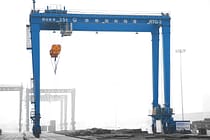
Rubber Tyred Container Gantry Cranes
-
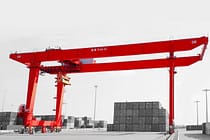
Rail Mounted Container Gantry Cranes
-
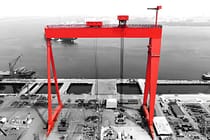
Shipyard Gantry Crane
-
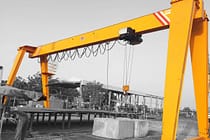
European Single Girder Gantry Cranes
-
European Double Girder Gantry Cranes
-
- Jib Cranes
- Special Cranes
- Electric Hoists
- Transfer Carts
-
Overhead Cranes
-
Crane Parts
-
Grab Buckets
-
Electric Stainless Steel Grab Bucket
-
Mechanical Four Rope Orange Peel Grabs
-
Mechanical Four Rope Clamshell Grabs Bucket
-
Electro Hydraulic Rectangular Grabs
-
Electro hydraulic Clamshell Grabs
-
Electro Hydraulic Orange Peel Grabs,Hydraulic Cactus Grab
-
Electric Motor Grab
-
Electric Monorail Grab Bucket with Monorail Hoist
-
Remote Control Clamshell Grabs
-
Mechanical Two Rope Clamshell Grabs
-
Timber Grabs
-
Single Rope Grab Bucket
-
Trash Rack Cleaning Machines
-
Dredging Grabs
-
Trimming Grabs
-
- Crane Spreader
-
Crane Spare Parts
-
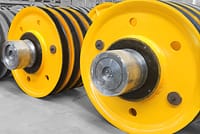
Crane Sheaves
-
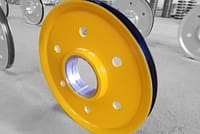
Wire Rope Sheaves
-
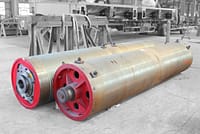
Crane Rope Drum
-
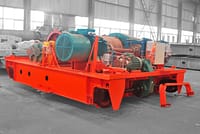
Crane Trolley
-
Electric Winch
-
Crane Operator Cabin
-
Overhead Crane Brakes
-
Overhead Crane Cables
-
Overhead Crane Rope Guides
-
Overhead Crane Conductors and Power Supply Lines
-
Overhead Crane Rails
-
Overhead Crane Rail Clips
-
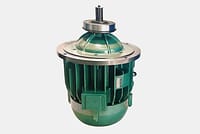
Overhead Crane Motors
-
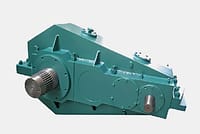
Overhead Crane Reducers
-
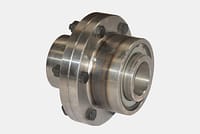
Couplings for Overhead Crane
-
- Crane Wheels
-
Grab Buckets
- Company
- Contact

-
Industries
-
General Manufacturing
-
Waste Handling
-
Precast
-
Power
-
Stone
-
Papermaking
-
Metal Production
-
Bridge Construction
-
Port Cranes: For Container and Bulk Material Handling
-
Overhead Cranes for Petroleum and Gas Industry: Enhance Operational Efficiency
-
Marine Cranes for Efficient Cargo Loading on Ships
-
Overhead Cranes for the Automotive Industry: Efficient Automation Solutions
-
Overhead Crane Solutions for Railways: Track Laying, Rolling Stock Maintenance, and Container Handling
-
Overhead Cranes for Food and Beverages: Reliable Solutions for Efficient Handling
-
Overhead Cranes for Efficient Cement, Glass, Brick and Precast Concrete Manufacturing
-
Overhead Cranes for Aviation Industry: Aircraft Maintenance and Assembly
-
Aerospace Overhead Cranes: Precision Lifting for Rocket Launch and Transport
-
-
Products
-
Overhead Cranes
-
Single Girder Overhead Cranes
-
Double Girder Overhead Cranes
-
European Type Single Girder Overhead Cranes
-
European Type Double Girder Overhead Cranes
-
Explosion Proof Overhead Cranes
-
Grab And Magnetic Overhead Cranes
-
Monorail Cranes
-
Foundry Overhead Cranes
-
Insulation Overhead Cranes
-
Low Headroom Overhead Cranes
-
Grab Overhead Cranes
-
Ladle Overhead Cranes
-
Underhung Overhead Cranes
-
Electromagnetic Overhead Cranes
-
Workstation Cranes: Lightweight Design, Easy Installation, and Effortless Operation
-
Free Standing Workstation Bridge Cranes
-
Ceiling Mounted Bridge Crane
-
Manual Overhead Cranes
-
-
Gantry Cranes
-
Semi Gantry Cranes
-
Single Girder Gantry Cranes
-
Double Girder Gantry Cranes
-
Container Gantry Cranes
-
Truss Gantry Cranes
-
Adjustable Gantry Cranes
-
Portable Gantry Cranes
-
European Gantry Cranes
-
Aluminum Gantry Cranes
-
Rubber Tyred Container Gantry Cranes
-
Rail Mounted Container Gantry Cranes
-
Shipyard Gantry Crane
-
European Single Girder Gantry Cranes
-
European Double Girder Gantry Cranes
-
- Jib Cranes
- Special Cranes
- Electric Hoists
- Transfer Carts
-
Overhead Cranes
-
Crane Parts
-
Grab Buckets
-
Electric Stainless Steel Grab Bucket
-
Mechanical Four Rope Orange Peel Grabs
-
Mechanical Four Rope Clamshell Grabs Bucket
-
Electro Hydraulic Rectangular Grabs
-
Electro hydraulic Clamshell Grabs
-
Electro Hydraulic Orange Peel Grabs,Hydraulic Cactus Grab
-
Electric Motor Grab
-
Electric Monorail Grab Bucket with Monorail Hoist
-
Remote Control Clamshell Grabs
-
Mechanical Two Rope Clamshell Grabs
-
Timber Grabs
-
Single Rope Grab Bucket
-
Trash Rack Cleaning Machines
-
Dredging Grabs
-
Trimming Grabs
-
- Crane Spreader
-
Crane Spare Parts
-
Crane Sheaves
-
Wire Rope Sheaves
-
Crane Rope Drum
-
Crane Trolley
-
Electric Winch
-
Crane Operator Cabin
-
Overhead Crane Brakes
-
Overhead Crane Cables
-
Overhead Crane Rope Guides
-
Overhead Crane Conductors and Power Supply Lines
-
Overhead Crane Rails
-
Overhead Crane Rail Clips
-
Overhead Crane Motors
-
Overhead Crane Reducers
-
Couplings for Overhead Crane
-
- Crane Wheels
-
Grab Buckets
- Company
- Contact



Single Girder Overhead Crane and Jib Crane Exported to Argentina for an Elevator Manufacturer
Table of Contents
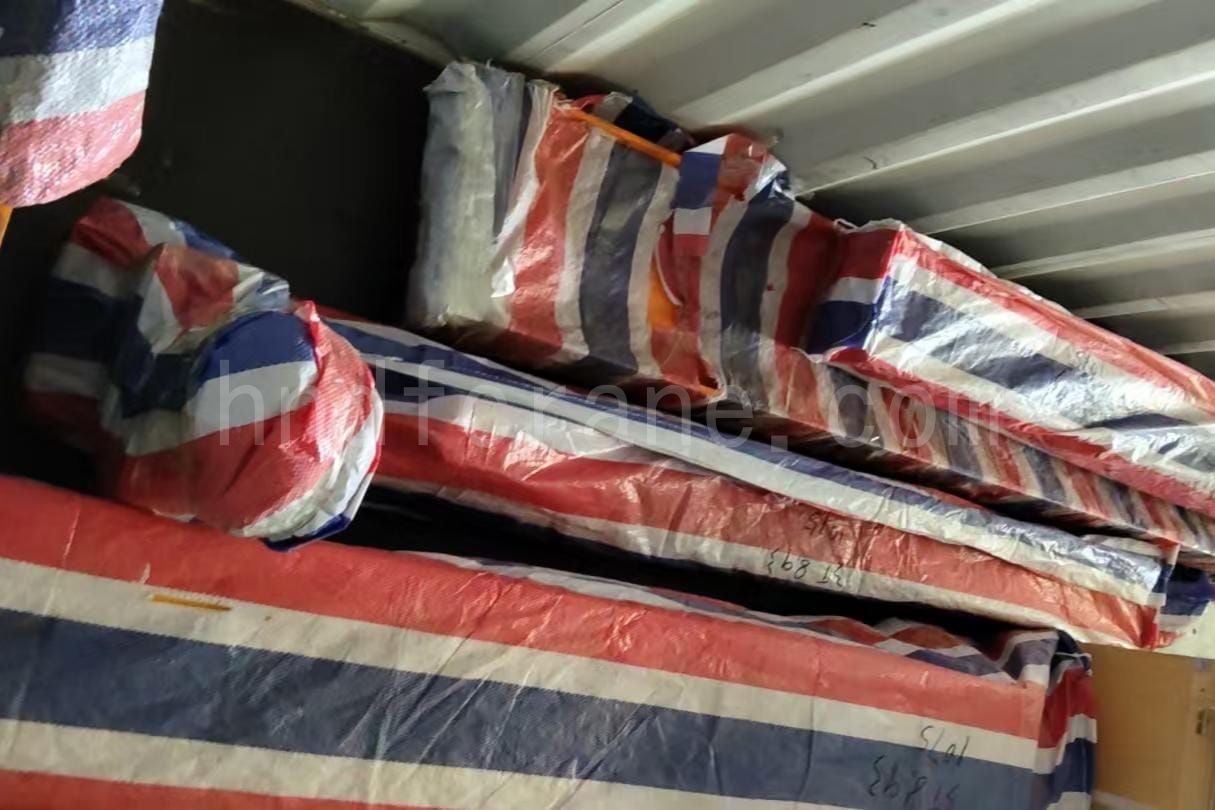
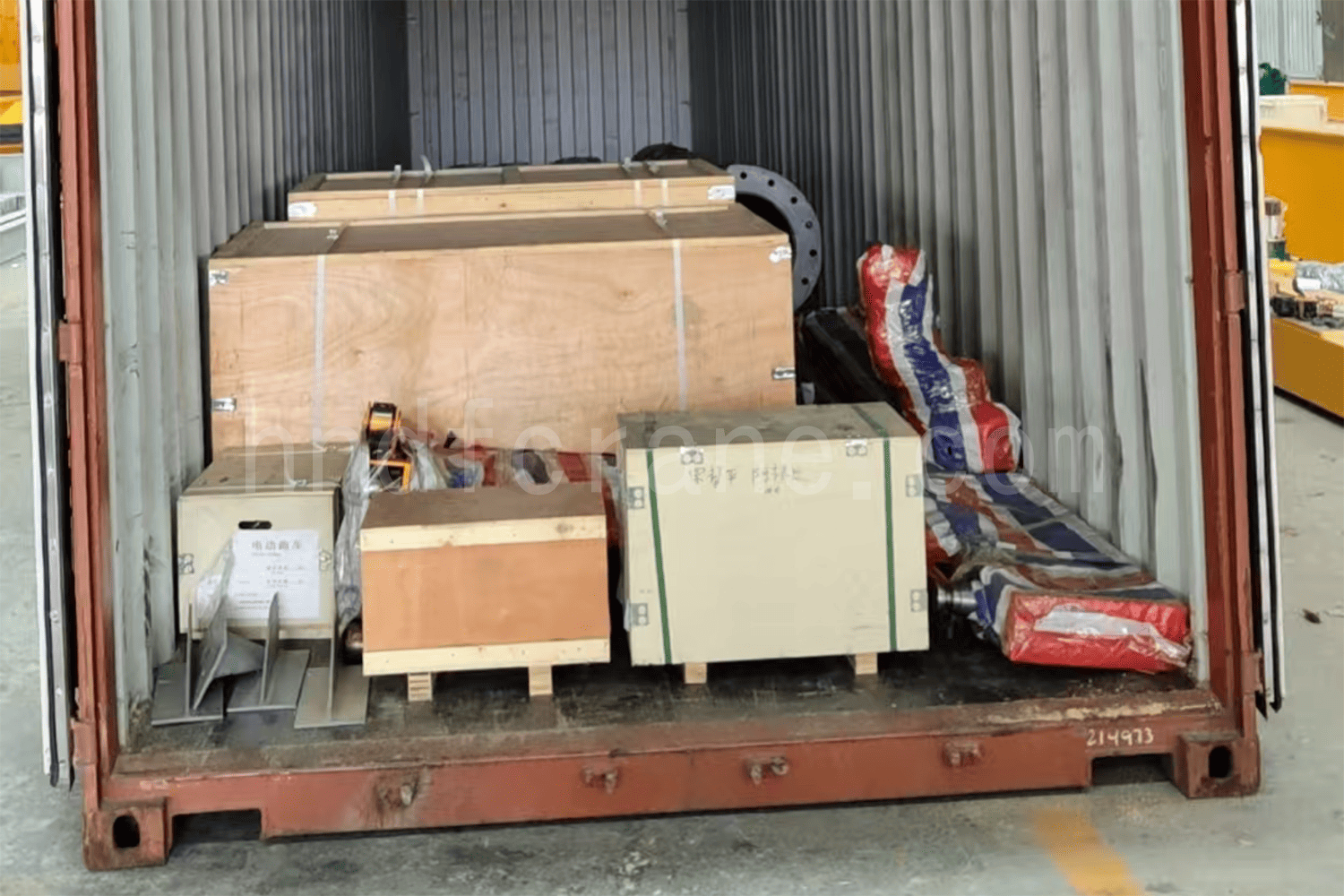
We customized and delivered a complete workshop material handling solution for an elevator manufacturing company in Argentina, including a 3t single girder overhead crane, a 1.5t free standing jib crane, a 500kg battery-powered vacuum suction lifter, as well as supporting rails, busbar systems, and other accessories. During the project, the customer requested a change to the runway length of the overhead crane. We quickly coordinated with our engineering and production teams to complete the design adjustment, ensuring that the project schedule was not affected. During the installation stage, we provided installation manuals and free remote installation guidance to assist the customer's local team in successfully completing the equipment installation and commissioning.
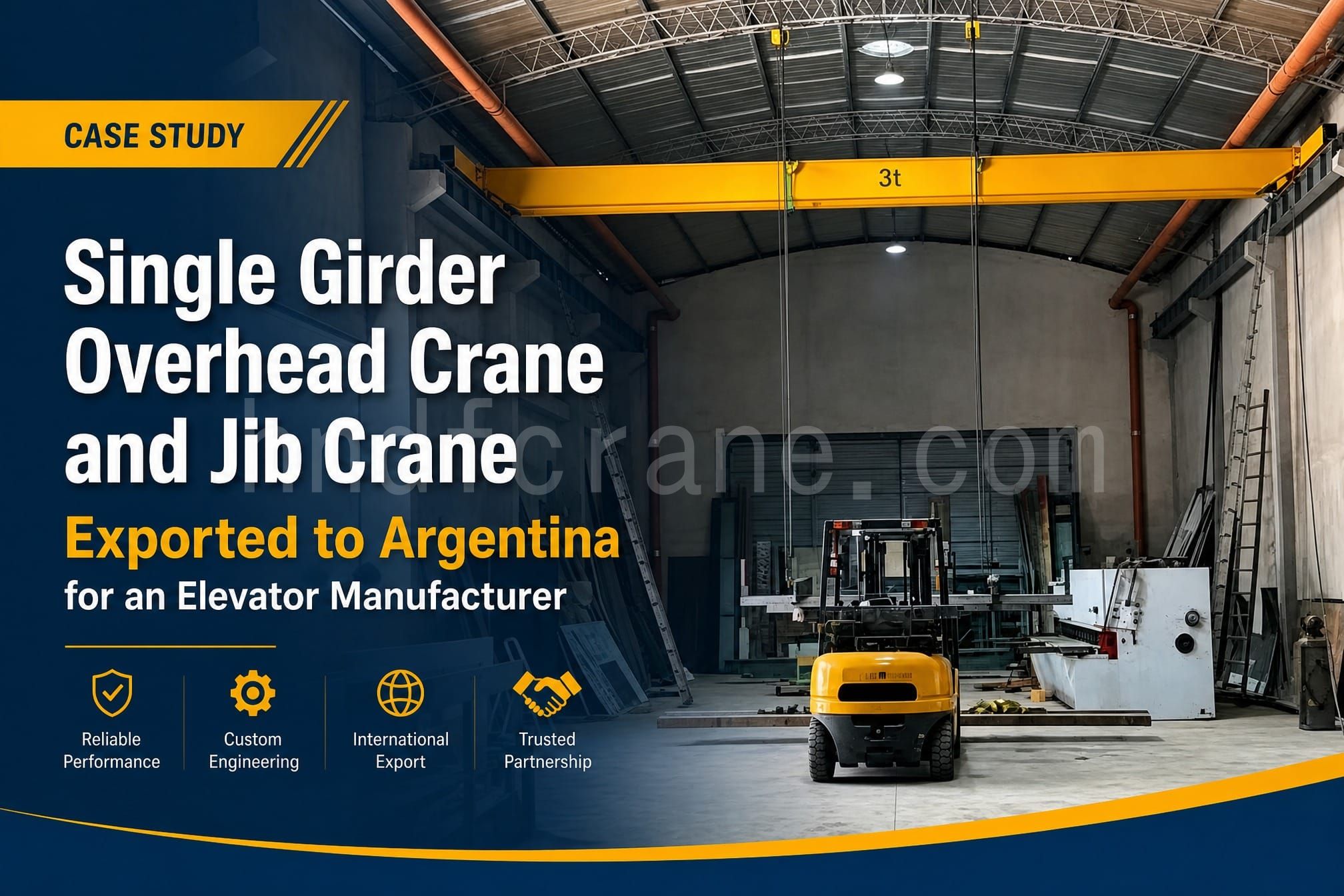
At the end of last year, an elevator manufacturing company in Argentina contacted us with clear requirements for workshop lifting equipment:
- 3t Single Girder Overhead Crane: Used for large-area material handling inside the workshop;
- 1.5t Jib Crane: Designed for frequent lifting operations at fixed workstations;
- 500kg Battery-Powered Vacuum Suction Lifter: Used for the handling and transfer of elevator panels.
In addition to equipment types and specifications, the customer also had clear requirements for the electrical system: all Schneider electrical components and Schneider VFDs were required, with a 48V control voltage.
The customer also provided workshop and crane runway beam drawings, requiring the lifting equipment to precisely match the existing workshop structure. Based on the customer's drawings and production line layout, we carried out targeted configurations for the overhead crane, jib crane, and vacuum suction lifter.
Customized Solution to Meet Multi-Scenario Material Handling Requirements
Based on the customer's workshop layout and application requirements, we configured:
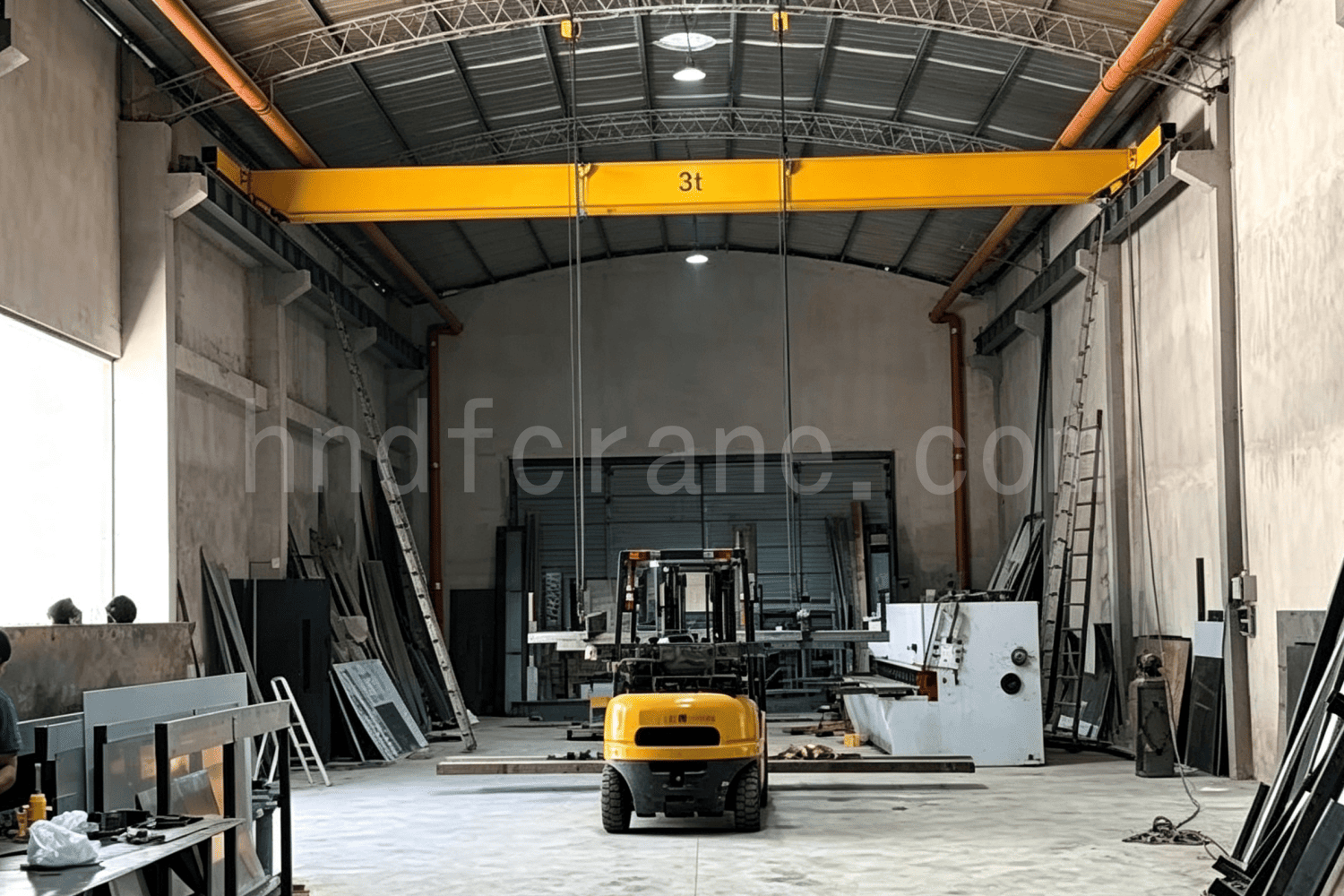
- 3-ton Single Girder Overhead Crane: The crane has a span of 8.93m, a runway length of 34.9m, and a lifting height of 4.97m. It can cover the main working areas of the workshop and achieve material transfer between different locations. The equipment adopts Schneider electrical components and a variable frequency control system, combined with pendant control and wireless remote control, meeting the requirements for smooth operation and flexible control in the production environment.
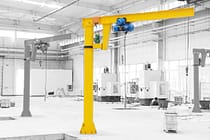
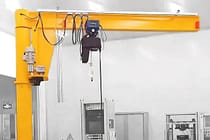
- 1.5-ton Pillar-Mounted Jib Crane: The equipment has an effective working radius of 4.5m and a lifting height of 5.75m.
- 500kg Battery-Powered Vacuum Suction Lifter: The equipment uses 12 suction cups for stable adsorption and supports manual tilting and manual rotation. It helps reduce scratches and deformation that may occur with traditional lifting methods during handling, improving workpiece transfer efficiency.
In addition, according to the workshop drawings provided by the customer, we also designed the supporting systems simultaneously, including a 34.9m crane runway beam, 3050 square steel rails, and a 10mm² seamless busbar system, ensuring that the overhead crane running system accurately matched the customer's existing workshop structure and reduced on-site adjustment work.
Requirement Change: Quick Response to Ensure Project Progress
During the project confirmation process, the customer adjusted some configurations of the single girder overhead crane according to the actual installation requirements of the workshop.
- The single girder overhead crane runway length was changed from 33m to 34.9m;
- The seamless busbar system was adjusted to 34.9m accordingly;
- The square steel rail length was also adjusted to 34.9m;
- The crane runway beam was redesigned and manufactured according to the latest construction drawings provided by the customer (48kg/m I-beam, 34.9m × 2);
- The control system was adjusted to 48V control voltage.
After receiving the customer's modification requirements, we immediately communicated the latest requirements to the engineering and production teams and quickly completed the solution adjustment, minimizing the impact of the changes on the project schedule.
- Engineering team quickly completed the solution review: Based on the latest workshop drawings provided by the customer, our engineers recalculated the building dimensions, span, installation position, and operating space of the equipment to confirm that the overhead crane, rails, and related installation conditions met the requirements, avoiding dimensional deviations during later installation.
- Production team updated the manufacturing plan simultaneously: After the technical solution was confirmed, the production department immediately updated the production documents and adjusted the processing dimensions of the rails, busbar system, and runway beams accordingly. Meanwhile, according to the 48V control voltage requirement, we reconfirmed the specifications of the control transformer and related electrical components to ensure that the control system matched the customer's site requirements.
Remote Installation Support: Helping Local Team Install the Equipment Independently
For overseas projects, sending engineers overseas is not the only option. Visa applications, international travel, and on-site service can increase project costs. For small and medium-sized projects, this approach is often not economical.
Based on the actual situation of this project, we adopted a service model combining “installation documents + online technical support”. The customer's local installation team was responsible for on-site installation, while our engineers provided continuous remote technical support. This approach ensured installation quality while effectively reducing the customer's installation costs.
We provided a detailed crane installation manual covering the complete installation process, including bridge assembly, electric hoist installation, rail installation, and installation precautions, providing guidance for the customer's on-site installation team.
We did not simply send the installation documents to the customer and end our service. Instead, we continued to provide remote technical support throughout the entire installation process.
Whenever installation issues occurred on site, the customer could communicate with our engineers through photos, videos, video conferences, or text descriptions. Our engineers analyzed the problems based on equipment drawings, technical documents, and actual site conditions, and provided corresponding solutions in a timely manner.
During the electrical system commissioning stage of the overhead crane, the customer's on-site engineering team consulted us about the wiring logic inside the control cabinet and the connection methods of different electrical components.
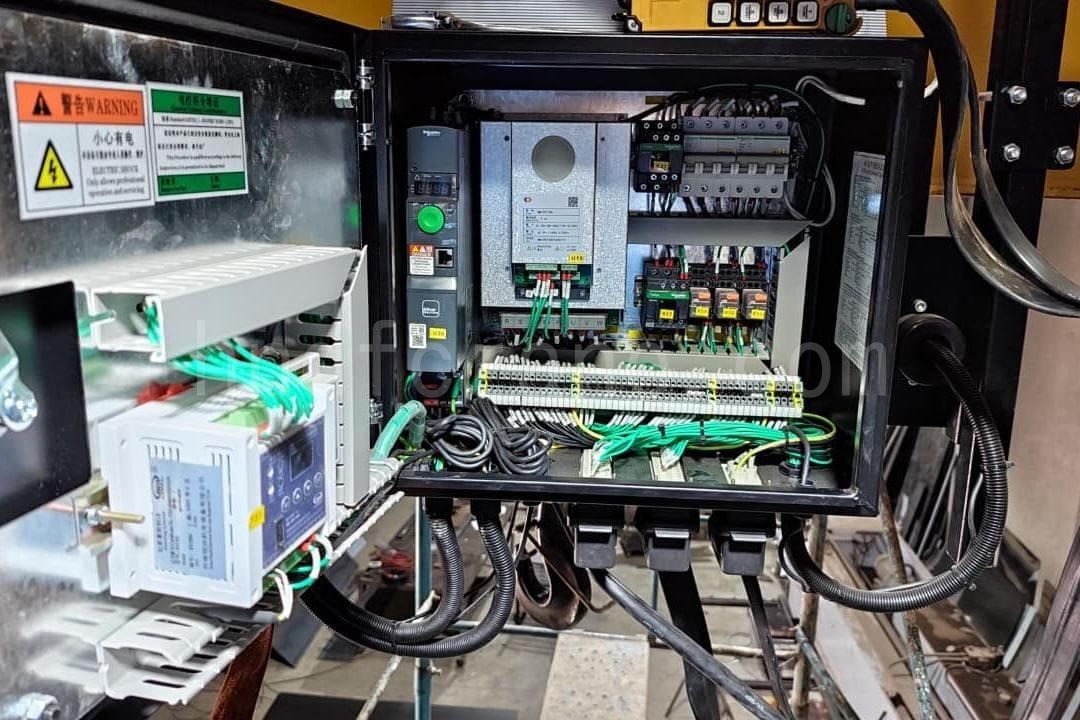
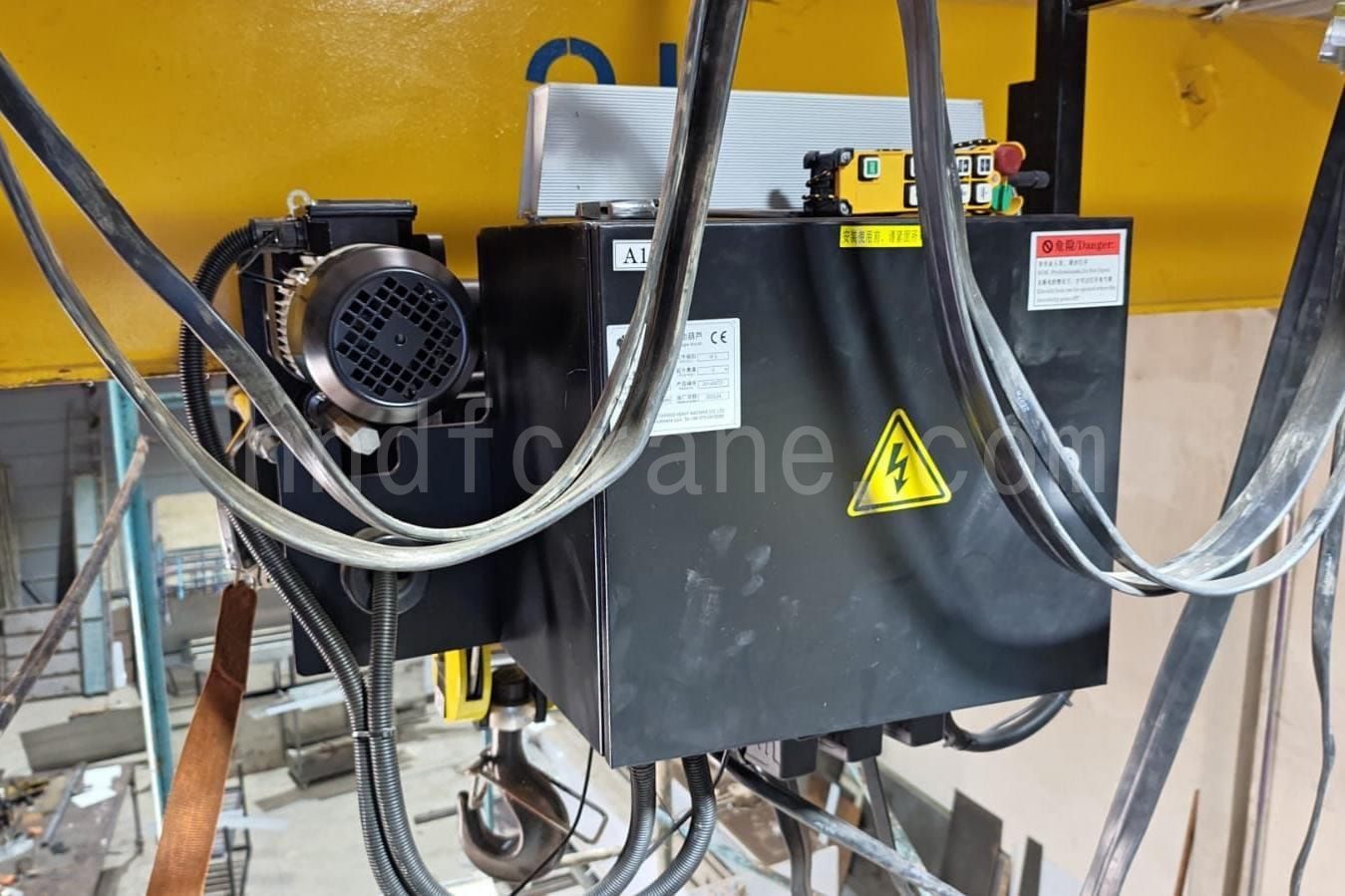
We prepared complete electrical wiring diagrams for the customer, helping local electricians complete power connections, control wiring, and subsequent commissioning work, ensuring that the electrical system was installed correctly according to the design requirements.
For every installation detail raised by the customer, we confirmed each item carefully and provided guidance through marked pictures, diagrams, or written explanations, ensuring that the local installation team could independently complete equipment installation and commissioning.
DAFANG Crane: Custom Crane Solutions for Your Specific Application
Whether it is lifting equipment planning for overseas new factories, complete workshop lifting system solutions, or upgrading existing equipment and optimizing current working conditions, we can provide customized solutions based on actual project requirements.
We do not simply provide standard single machines. Instead, we consider workshop dimensions, building structures, workstation layouts, material types, lifting frequency, and local electrical standards to comprehensively plan overhead cranes, jib cranes, vacuum suction lifters, as well as supporting equipment such as runway beams, rails, and busbar systems. Equipment is configured according to actual lifting requirements to avoid unnecessary functional overlap or investment.
For overseas projects, we can provide full-process services from solution design, equipment manufacturing, and export delivery to installation and commissioning support. Combined with remote installation guidance and overseas after-sales support, we help customers successfully complete equipment implementation on site.
If you are building a new workshop, expanding a production line, or looking to optimize your existing workshop lifting equipment configuration, please send us your workshop drawings, dimensions, and basic lifting requirements. Our engineering team will develop a suitable overseas workshop lifting solution based on your actual working conditions.

I am Cindy, with 10 years of working experience in the crane industry and accumulated a wealth of professional knowledge. I have chosen the satisfying cranes for 500+ customers. If you have any needs or questions about cranes, please feel free to contact me, I will use my expertise and practical experience to help you solve the problem!
Send Your Inquiry
- Email: sales@hndfcrane.com
- WhatsApp: +86 191 3738 6654
- Telegram: +86 191 3738 6654
- Tel: +86-373-581 8299
- Fax: +86-373-215 7000
- Add: Changnao Industrial District, Xinxiang City, Henan Province, China
 WeChat
- Overhead Cranes
- Double Girder Overhead Cranes
- Single Girder Overhead Cranes
- European Type Single Girder Overhead Cranes
- Explosion Proof Overhead Cranes
- Grab And Magnetic Overhead Cranes
- Monorail Cranes
- Foundry Overhead Cranes
- Workstation Cranes: Lightweight Design, Easy Installation, and Effortless Operation
- Jib Cranes
- Wall Mounted Jib Cranes
- Wall Travelling Jib Cranes
- Free Standing Jib Cranes
- Aluminum Jib Cranes: Lightweight, Smooth Rotating Arm for Easy Lifting
- Balance Jib Cranes: Efficient Light Lifting for Short Distance Mechanical Assembly
- Manual Free Standing Jib Cranes: Efficient Manual Lifting Solutions for Limited Space Operations
- Electric Free Standing Jib Cranes: Fully Electric Solution for High Capacity Fast Lifting
- Articulating Jib Cranes: Precision Lifting with Dual Arm Flexibility
- Gantry Cranes
- Double Girder Gantry Cranes
- Semi Gantry Cranes
- Single Girder Gantry Cranes
- Truss Gantry Cranes
- Container Gantry Cranes
- Adjustable Gantry Cranes
- Portable Gantry Cranes
- European Gantry Cranes
- Industries
- General Manufacturing
- Waste Handling
- Precast
- Power
- Stone
- Papermaking
- Metal Production
- Bridge Construction
- Port Cranes: For Container and Bulk Material Handling
- Overhead Cranes for Petroleum and Gas Industry: Enhance Operational Efficiency
- Marine Cranes for Efficient Cargo Loading on Ships
- Overhead Cranes for the Automotive Industry: Efficient Automation Solutions
- Electric Hoists
- Electric Wire Rope Hoists
- Electric Chain Hoists
- European Type Electric Hoists
- European Electric Chain Hoists: Smooth Operation, Low Noise, and Energy Efficiency
- Manual Lever Hoists: Ideal for Pulling and Lifting Tasks
- Hand Chain Hoists: Manual Lifting for Areas Without Power
- Low Headroom Electric Hoists: Compact Design for Maximum Space Efficiency
- Pneumatic Chain Hoists: Smooth Handling for Industrial Use
- Explosion Proof Manual Chain Hoists: Spark Resistant Copper Alloy Construction for Hazardous Areas
- Explosion Proof Electric Chain Hoists for Hazardous Area Lifting
- Contact Us
- Email: sales@hndfcrane.com
- WhatsApp: +86 191 3738 6654
- Telegram: +86 191 3738 6654
- Tel: +86-373-581 8299
-